
The term “manufacturing” covers a vast range of industries, and a software solution that works for an automotive plant won’t fit a pharmaceutical lab. The challenges are completely different. One needs to manage complex assemblies and just-in-time supply chains, while the other is focused on strict regulatory compliance and electronic batch records. This is why choosing a Manufacturing Execution System (MES) requires an industry-specific approach. The right system understands your unique operational pains. To help you find a solution that speaks your language, this article breaks down some of the best mes software examples by their primary use case, from food and beverage to aerospace and defense.
Key Takeaways
- An MES is the bridge between planning and production: It translates high-level orders from your ERP system into clear, manageable tasks for your shop floor, ensuring your business goals and factory operations are perfectly aligned.
- Choose a system that solves your biggest problem: The best MES for you depends on your main goal, so determine if you need to prioritize production scheduling, regulatory compliance, or detailed part traceability to narrow your options.
- Turn shop floor data into actionable improvements: An MES provides the live visibility needed to spot bottlenecks, reduce waste, and strengthen quality control, helping you make smart decisions based on facts instead of assumptions.
What Is MES Software (and What Does It Actually Do)?
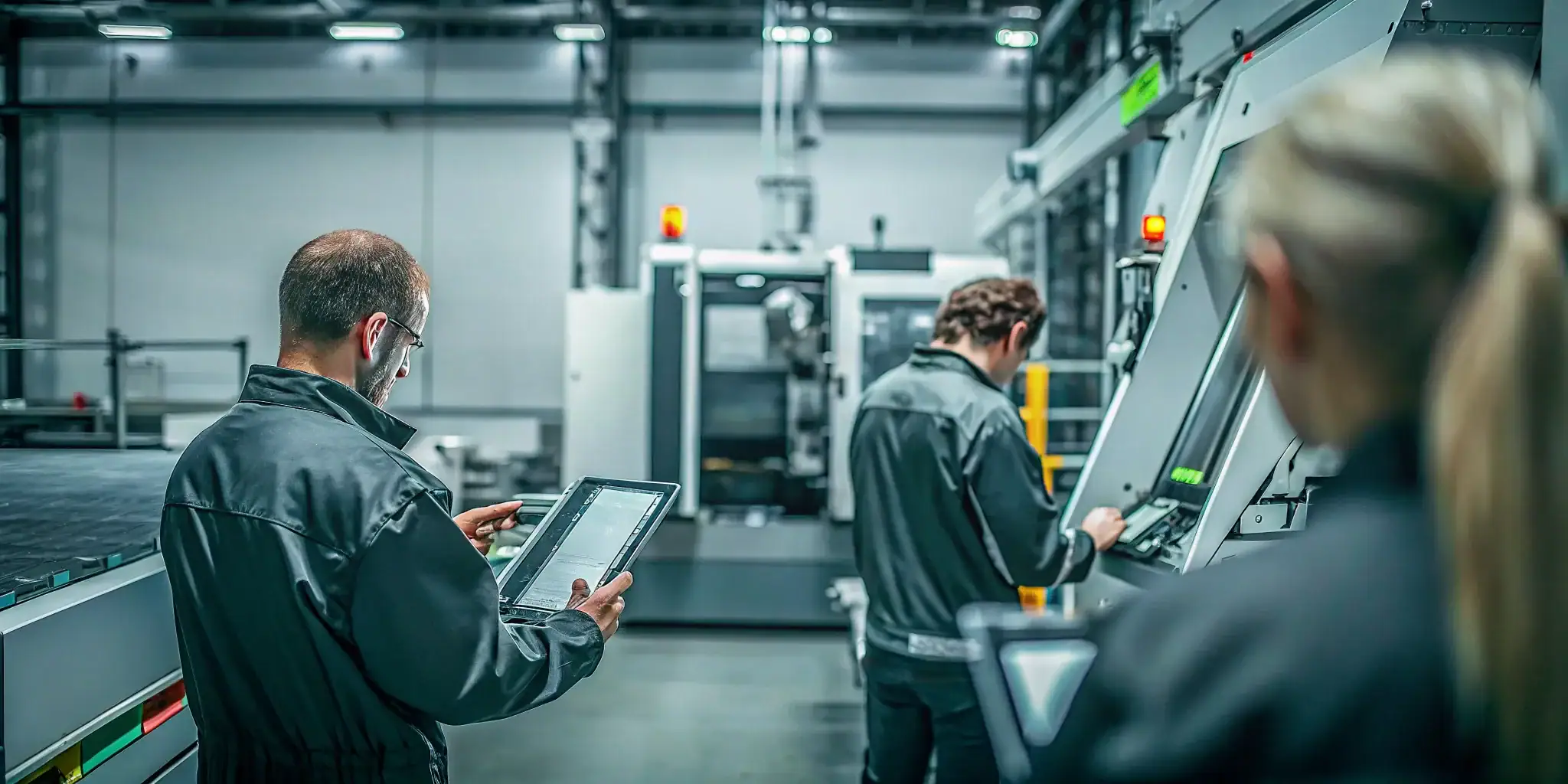
If you’ve ever wondered what connects your high-level business plans to the actual work happening on your factory floor, the answer is often a Manufacturing Execution System (MES). Think of an MES as the digital command center for your production operations. It’s a software system designed to monitor, track, and control the entire process of turning raw materials into finished goods.
An MES acts as the critical bridge between your Enterprise Resource Planning (ERP) system and your shop floor machinery. While your ERP handles business logistics like orders, billing, and high-level planning, the MES gets into the nitty-gritty of execution. It takes the production orders from the ERP and manages every step on the factory floor to make them happen efficiently. This includes managing work orders, providing digital instructions to operators, and ensuring the right resources (materials, machines, and people) are in the right place at the right time.
At its core, an MES is all about visibility and control. It provides a real-time view of what’s happening in your facility by gathering information from various sources. This continuous stream of shop floor data collection allows you to track key performance indicators, monitor machine uptime, manage quality control, and trace products from start to finish. By having this detailed, live information, you can spot bottlenecks, reduce waste, and make informed decisions that keep production on schedule and within budget. In short, an MES transforms your shop floor from a black box into a transparent, data-driven operation.
What to Look For in an MES
Choosing an MES is a big decision, and the right system should feel like a natural extension of your team. While the market is full of options, the best software shares a few core capabilities that are essential for modern manufacturing. Think of these as the non-negotiables. A solid MES connects your business goals with your shop floor reality, turning raw data into clear, actionable insights. It’s not just about tracking what’s happening; it’s about understanding why it’s happening and how you can make it better. As you evaluate different systems, focus on these key areas to find a solution that truly fits your operational needs and helps you grow.
Production Scheduling and Work Order Management
At its heart, an MES should bring order to the chaos of the shop floor. Look for a system with robust production scheduling that helps you plan, manage, and track every job from start to finish. This feature allows you to see your entire workflow, allocate resources effectively, and make sure you have the right people and machines available to hit your deadlines. With clear work order management, you can eliminate guesswork and ensure every operator knows exactly what needs to be done and when. This level of organization is the foundation for delivering work on time and keeping your customers happy.
Real-Time Data Collection and Machine Monitoring
You can’t improve what you can’t measure. An essential feature of any modern MES is its ability to collect data directly from the shop floor in real time. This means gathering live information from machines, sensors, and operators to give you an up-to-the-minute picture of your operations. With real-time machine monitoring, you can instantly spot bottlenecks, identify machine downtime as it happens, and track performance against your goals. This immediate feedback loop empowers you to solve problems quickly, reduce costly delays, and make informed decisions based on what’s actually happening on the floor, not on last week’s reports.
Quality Management and Process Control
Maintaining high quality is crucial for your reputation and your bottom line. A strong MES includes features for quality management that help you enforce standards and catch issues before they become major problems. The system should allow you to build quality checks directly into your production process, prompting operators to perform inspections and record results. By tracking quality data consistently, you can identify trends, pinpoint the root causes of defects, and take corrective action. This proactive approach to quality control helps you reduce scrap, minimize rework, and ensure every product that leaves your facility meets your exact specifications.
Traceability, Compliance, and Reporting
In many industries, especially aerospace and medical, being able to prove how a product was made is just as important as making it. An MES provides the detailed traceability you need by creating a complete digital record of every step in the production process. It tracks materials, operators, machine settings, and quality checks for every single part or batch. This creates an invaluable audit trail for compliance and reporting. Having access to these insight-rich analytics not only helps you meet strict industry regulations but also gives you the data to analyze performance and confidently stand behind your products.
ERP Integration and Scalability
Your MES shouldn’t be an island. To get a complete view of your business, it needs to communicate seamlessly with your other systems, especially your Enterprise Resource Planning (ERP) software. While the ERP handles the big-picture business functions like finance and inventory, the MES manages the day-to-day details of the shop floor. A strong integration ensures data flows smoothly between the two, giving you a single source of truth for everything from order status to production costs. It’s also important to choose a system that can scale with you. Your MES should be flexible enough to adapt as your business grows and your processes evolve.
15 Top MES Software Examples by Use Case
Finding the right MES isn’t a one-size-fits-all process. The best system for a pharmaceutical lab will have different features than one for an automotive assembly line. Your industry, company size, and specific operational challenges all play a huge role in determining which software is the right fit. To help you get a clearer picture of what’s available, I’ve grouped some of the top MES solutions by their primary use case.
Think of this list as a starting point. As you review these options, consider how their core strengths align with your biggest operational headaches and your long-term growth plans. Whether you need to tighten up your scheduling, meet strict compliance standards, or manage complex assembly, there’s likely a specialized solution designed for you.
Best for Production Scheduling and Shop Floor Management
If your main goal is to get a firm grip on your production timeline and create a more efficient, predictable shop floor, you need a system built for exactly that. These tools focus on optimizing workflows, managing work orders, and giving you a clear, visual representation of every job in progress. They help answer the critical questions: “What’s next?” and “Are we on track?”
1. JobPack
JobPack is specifically designed to perfect production scheduling and give you total command over shop floor management. It’s an excellent choice for manufacturers who need to streamline operations, reduce bottlenecks, and ensure on-time delivery. The system provides powerful, visually intuitive tools that help you see your entire production landscape at a glance. This allows you to make quick, informed decisions to keep jobs moving smoothly and efficiently, directly connecting your shop floor data to your ERP for a single source of truth.
Best for Discrete and Automotive Manufacturing
Discrete manufacturing, especially in the automotive sector, involves complex assembly lines, a high volume of individual parts, and heavily automated processes. An MES in this space must be able to manage intricate bill of materials (BOMs), track components through every stage of production, and integrate seamlessly with robotics and other automated equipment to keep the line moving without a hitch.
2. Siemens Opcenter Execution
Siemens Opcenter Execution is a powerhouse in complex, highly automated discrete manufacturing environments. It’s particularly well-suited for the automotive industry, where managing intricate assembly processes and maintaining high levels of automation are critical. The platform provides robust tools to synchronize production activities, enforce quality standards, and provide complete traceability from individual components to the finished vehicle, making it a go-to for large-scale, sophisticated operations.
3. Rockwell Automation FactoryTalk MES
Rockwell Automation’s FactoryTalk MES is another top contender for discrete manufacturing. It provides a suite of applications designed to manage production operations with a strong focus on real-time monitoring and control. This system helps manufacturers improve asset utilization, track key performance indicators (KPIs), and enforce standardized workflows across the plant. Its ability to connect with a wide range of factory floor equipment makes it a solid choice for facilities looking to digitize and optimize their assembly processes.
Best for Process and Batch Manufacturing
Unlike discrete manufacturing, process and batch manufacturing deals with formulas, recipes, and bulk materials. Industries like chemicals, plastics, and metals require an MES that can manage recipe variations, track lot genealogy, and ensure process consistency from one batch to the next. The focus here is on formulation, quality, and adherence to precise production parameters.
4. AVEVA MES
AVEVA MES is a leader in the process manufacturing world, especially for operations that rely on batch recipes and precise formulation management. It excels at helping you digitize your standard operating procedures (SOPs), manage recipe execution, and track materials throughout the production cycle. This ensures batch-to-batch consistency and provides the detailed electronic records needed for quality control and compliance, making it ideal for industries where process repeatability is key.
5. SAP Manufacturing Execution
SAP offers a robust MES module, SAP Manufacturing Execution, that is designed to manage and monitor work-in-progress and production activities. It integrates directly with SAP’s broader ERP ecosystem, providing a unified solution for businesses that already rely on SAP for their core operations. The system is versatile enough to handle various manufacturing environments, offering tools to improve production efficiency, enforce quality checks, and provide real-time visibility into shop floor performance.
Best for Pharmaceuticals and Life Sciences
In the pharmaceutical and life sciences industries, the stakes are incredibly high. MES solutions in this sector must be built around strict regulatory compliance, including Good Manufacturing Practices (GMP) and FDA 21 CFR Part 11. Key features include electronic batch records (EBR), comprehensive audit trails, and meticulous quality management to ensure product safety and efficacy.
6. Werum PAS-X
Werum PAS-X is widely recognized as a global standard for MES in the pharmaceutical and biotech industries. It is specifically designed to manage electronic batch records (EBR) and ensure strict adherence to GMP guidelines. The system provides a complete, paperless manufacturing environment that guides operators through every step of the process, automatically capturing data and creating a detailed, compliant record. For pharma companies, it’s an essential tool for ensuring quality and streamlining regulatory approvals.
7. GE Digital Proficy
GE Digital’s Proficy suite is another strong player in the life sciences sector, offering comprehensive MES solutions tailored for pharmaceutical and biotech manufacturing. It helps companies move toward paperless production by digitizing batch records, managing SOPs, and providing real-time process monitoring. Proficy focuses on improving operational efficiency and ensuring consistent quality while maintaining the rigorous documentation and traceability required for regulatory compliance in this highly controlled industry.
Best for Food and Beverage
The food and beverage industry requires an MES that can handle the unique challenges of recipe management, allergen tracking, and farm-to-fork traceability. Compliance with food safety regulations like FSMA is non-negotiable. These systems must provide detailed lot tracking, manage expiration dates, and ensure that quality and safety checks are performed and documented at every stage.
8. Plex MES
Plex MES is well-regarded in the food and beverage industry for its strong capabilities in tracking and traceability. The system is designed to manage the complexities of food production, including recipe management, allergen tracking, and quality control. Plex provides the end-to-end visibility needed to trace ingredients from receipt to shipment, helping companies ensure food safety, comply with regulations, and execute recalls quickly and accurately if needed.
9. FoodReady
As the name suggests, FoodReady is an MES built specifically for the food and beverage industry. It focuses on helping businesses maintain compliance with food safety standards and manage their daily operations efficiently. The platform includes tools for tracking ingredients, managing recipes, monitoring quality control points, and maintaining the detailed documentation required by regulatory bodies. Its specialized focus makes it a practical choice for food producers looking to streamline their safety and compliance efforts.
Best for Aerospace and Defense
Aerospace and defense manufacturing is defined by its complexity, low-volume/high-value products, and stringent regulatory requirements. An MES for this sector must manage incredibly detailed work instructions, maintain comprehensive as-built histories, and ensure full traceability for every component. The focus is on precision, quality, and meticulous documentation to meet strict government and industry standards.
10. iBASEt Solumina
iBASEt Solumina is purpose-built to manage the highly complex and regulated manufacturing operations found in the aerospace and defense industry. It excels at handling intricate, multi-stage production processes that require detailed work instructions and rigorous quality assurance. The platform provides a digital thread that connects engineering, production, and sustainment, creating a complete as-built record for every unit. This makes it an ideal solution for manufacturers of aircraft, defense systems, and other complex, mission-critical equipment.
11. Dassault Systèmes DELMIA Ortems
Dassault Systèmes’ DELMIA Ortems is another powerful solution recognized for its advanced planning and scheduling capabilities in the aerospace and defense sector. It helps manufacturers manage complex production constraints, optimize resource allocation, and adapt to unexpected changes in demand or supply. By providing a more agile and responsive planning environment, DELMIA Ortems enables A&D companies to improve on-time delivery performance and manage the intricate logistics of their supply chains effectively.
Best for Electronics and Semiconductors
The electronics and semiconductor industries are characterized by rapid innovation, short product lifecycles, and extremely complex manufacturing processes. An MES in this space needs to support high-mix, high-volume production, manage microscopic components, and provide the agility to quickly adapt to new product introductions. Traceability and quality control at a micro-level are absolutely essential.
12. Aegis FactoryLogix
Aegis FactoryLogix is a comprehensive MES platform particularly well-suited for complex electronics assembly and other intricate industries like medical devices. It provides a holistic solution that connects the entire manufacturing process, from new product introduction (NPI) to full production. The system offers detailed traceability, quality data collection, and real-time operator guidance with interactive work instructions, helping electronics manufacturers improve yield, reduce errors, and accelerate time-to-market in a highly competitive landscape.
13. Tulip Frontline Operations
Tulip offers a flexible, no-code platform that empowers manufacturers to create their own MES applications and workflows. This approach is especially valuable in agile environments like electronics manufacturing, where processes can change rapidly. Tulip allows engineers and operators to build apps for operator guidance, quality checks, and machine monitoring without writing any code. This flexibility helps factories quickly digitize their processes and continuously improve their operations to keep pace with innovation.
Best for Small to Mid-Size Manufacturers
Small to mid-size manufacturers (SMMs) need powerful MES capabilities but often lack the large IT teams and budgets of their enterprise counterparts. The ideal MES for this segment is scalable, easy to implement, and offers a strong return on investment. These solutions often come as integrated platforms that combine MES and ERP functionalities to provide a complete operational view.
14. Epicor MES
Epicor MES is designed to meet the specific needs of small to mid-size manufacturers, providing scalable solutions for production management and real-time machine monitoring. The system helps SMMs gain visibility into their shop floor, track production performance, and identify areas for improvement. By connecting directly to machines and ERP systems, Epicor provides the data-driven insights needed to increase efficiency, reduce downtime, and make more competitive, strategic decisions without the complexity of an enterprise-level deployment.
15. DELMIAworks (IQMS)
DELMIAworks (formerly IQMS) is another strong contender for small to mid-size manufacturers, offering a tightly integrated ERP and MES solution in a single package. This all-in-one approach simplifies implementation and ensures that data flows seamlessly from the shop floor to the front office. The system is designed to manage all aspects of a manufacturing business, from scheduling and production to quality and inventory. This makes it a great fit for growing companies looking for a comprehensive system to manage their entire operation.
How MES Solutions Differ by Industry
A Manufacturing Execution System is not a one-size-fits-all tool. The right MES for your shop depends entirely on what you make and the specific challenges you face. A system designed for the complex assemblies of discrete manufacturing will have different priorities than one built for the strict regulatory environment of pharmaceuticals. Understanding these differences is the first step to finding a solution that truly fits your operational needs and helps you grow. Let’s look at how MES requirements change across a few key industries.
Discrete Manufacturing
In discrete manufacturing, where you’re building distinct items like automotive parts or industrial machinery, the focus is on managing complex assembly processes and work orders. An MES in this space is all about optimizing the flow of production, from individual components to the finished product. These systems are designed to handle high levels of automation and provide real-time visibility into every step. For example, solutions like Siemens Opcenter and Rockwell FactoryTalk are built to manage intricate assemblies and give you the data needed to maintain quality control. A strong production scheduling component is essential here to keep everything moving efficiently.
Pharmaceuticals and Life Sciences
For pharmaceutical and life sciences companies, the top priority is compliance. This industry operates under strict regulations, so an MES must ensure every process meets standards like Good Manufacturing Practices (GMP). The system’s core function is to create and manage secure electronic batch records (EBR), providing an unchangeable audit trail for every product. Specialized software like Werum PAS-X is considered a standard for this, offering robust features for documentation and quality assurance. These tools are critical for streamlining validation processes and proving adherence to regulatory requirements, where there is absolutely no room for error.
Food and Beverage
The food and beverage industry faces its own unique set of challenges, primarily centered on traceability and safety. An MES here needs to track every ingredient from the moment it enters your facility to the final packaged product. This includes managing allergen information, monitoring expiration dates, and ensuring compliance with food safety regulations. A system like FoodReady is tailored specifically for these needs, giving manufacturers the tools to prevent cross-contamination and quickly execute a recall if necessary. This level of detailed ingredient tracking is fundamental to protecting both consumers and your brand’s reputation.
Aerospace and Defense
Manufacturing for aerospace and defense involves producing highly complex, high-stakes components where precision is paramount. The processes are intricate and heavily regulated, requiring an MES that can manage every detail with complete accuracy. These systems are designed to handle complex engineering specifications, maintain detailed production histories, and ensure compliance with stringent government and industry standards. For instance, iBASE-t Solumina is built to support the complicated workflows and rigorous documentation required in this sector. The ability to perform deep data analytics is crucial for identifying opportunities for improvement and ensuring every part meets exact specifications.
What Are the Benefits of an MES?
Implementing a Manufacturing Execution System is about more than just adding another piece of software. It’s about fundamentally changing how you see and manage your operations. An MES connects your high-level business plans with the real-time reality of your shop floor, giving you the clarity to make smarter, faster decisions. By turning raw data into actionable insights, it helps you streamline processes, improve quality, and ultimately deliver better results for your customers and your bottom line.
Reduce Downtime and Waste
An MES gives you a live, transparent view of your entire production process, helping you adopt lean manufacturing principles. Instead of waiting for end-of-shift reports to find out a machine was down, you can see issues the moment they happen. This real-time visibility allows you to spot bottlenecks and inefficiencies before they lead to significant waste or delays.
With smart technology and predictive analysis, you can move from a reactive to a proactive mindset. For example, machine monitoring can alert you to performance dips that signal a need for maintenance, helping you schedule repairs during planned downtime instead of suffering an unexpected breakdown. This approach minimizes scrap, reduces idle time, and keeps your operations running smoothly.
Strengthen Quality Control and Compliance
Maintaining high quality and meeting regulatory standards are non-negotiable. An MES embeds quality control directly into your production workflow. By automatically checking key parameters and recording process data at every step, it ensures that every product is made to spec. If a deviation occurs, the system can flag it immediately, allowing your team to correct the issue before it affects an entire batch.
This continuous oversight is crucial for compliance, especially in industries with strict regulations. An MES creates a detailed, traceable record of every action and material used, making audits much simpler. This digital paper trail, built on accurate shop floor data collection, proves that you’re following required procedures and gives you confidence in your product’s integrity.
Make Data-Driven Decisions
Guesswork has no place in a modern manufacturing environment. An MES replaces assumptions with facts by providing a steady stream of accurate production data. This information helps you measure key performance indicators like Overall Equipment Effectiveness (OEE), understand your true capacity, and identify opportunities for improvement. You can see which jobs are most profitable and which processes are costing you time and money.
Armed with these insights, your team can solve problems faster and make strategic choices with confidence. Whether you’re refining a workflow, reallocating resources, or investing in new equipment, your decisions will be based on solid evidence. This is where powerful data analytics tools become essential, turning raw numbers into a clear roadmap for operational excellence.
Improve Supply Chain Visibility
An MES acts as the critical link between your Enterprise Resource Planning (ERP) system and the machines on your shop floor. It translates high-level business plans into concrete work orders and then feeds real-time progress back into the system. This connection provides a clear, moment-to-moment picture of what’s happening in production, which is vital for managing your broader supply chain.
When you know exactly where every order is in the process, you can provide accurate delivery estimates to customers and manage inventory more effectively. This level of visibility also helps you adapt quickly to unexpected changes, like a delayed material shipment or a sudden rush order. With better production scheduling, you can keep your commitments and ensure the entire supply chain operates in sync.
MES Implementation Challenges (and How to Overcome Them)
Switching to a Manufacturing Execution System is a big step, and like any major upgrade, it comes with a few hurdles. But don’t let that stop you. Knowing what to expect is half the battle, and with a solid plan, you can handle these challenges smoothly. Let’s walk through the most common obstacles and, more importantly, how to get past them so you can start seeing the benefits on your shop floor.
High Upfront Costs and Resource Demands
Let’s be real: implementing an MES requires an upfront investment. The final price tag depends on your shop’s size, the complexity of your work, and the features you need. Before you commit, it’s smart to run a cost-benefit analysis to see how the long-term gains in efficiency and reduced waste will pay for the initial expense. Thinking about the return on investment from the start helps you choose a system that delivers real value, not just a list of features. You can see how other shops have justified the cost by looking at real-world case studies and the results they achieved.
Integration Complexity with Legacy Systems
Your shop already has systems in place, and an MES needs to play nicely with them, especially your ERP. Getting these different technologies to talk to each other can be tricky. The key is to map out a clear integration strategy before you begin. Start by assessing your current software and identifying exactly how the MES will connect to it. A good MES provider will work with you to ensure a smooth connection, feeding critical shop floor data directly into your existing ERP. This is essential for creating a single source of truth for your entire operation, from production scheduling to final reporting.
Data Quality and Ongoing Scalability
Moving from paper logs or spreadsheets to an automated system is a huge improvement, but it also means you have to trust your data. If the information going into the MES is inaccurate, the insights coming out won’t be useful. You can prevent this by setting clear protocols for data entry and training your team on the new process. As your business grows, your MES should be able to grow with you. Choose a flexible and scalable system that can be adapted to your specific needs. The right data analytics tools will help you not only collect accurate information but also turn it into decisions that improve your bottom line.
How to Choose the Right MES for Your Shop
Picking the right MES feels like a huge decision, because it is. It’s an investment that will reshape your operations from the ground up. But it doesn’t have to be overwhelming. The key is to find a system that fits your shop’s unique needs, not the other way around. By asking the right questions upfront, you can find a partner that will help you grow, streamline your processes, and make your team’s life easier. Let’s walk through the most important factors to consider.
What size and complexity is your operation?
First, take a realistic look at your shop. A Manufacturing Execution System is a powerful tool, but you want to make sure your production volume is large enough to make the investment worthwhile. If you’re a smaller manufacturer, you don’t need a complex, enterprise-level system designed for a massive corporation. Instead, look for a solution that offers the specific features you need right now, like better production scheduling or real-time data from a few key machines. The goal is to find a system that solves your current problems without adding unnecessary complexity or cost.
Does it integrate with your existing ERP?
Your MES and ERP should work together like a well-oiled machine. The MES collects detailed data from the shop floor, and the ERP handles the broader business planning. When these two systems are connected, information flows seamlessly between them. This integration is critical for getting a complete picture of your business, from raw material inventory to final delivery. Before you commit to an MES, confirm that it can easily integrate with your ERP. A disconnected system creates data silos and manual work, which is exactly what you’re trying to eliminate.
How customizable and scalable does it need to be?
Your business isn’t static, and your MES shouldn’t be either. It’s crucial to find a system that can adapt to your specific workflows and grow with you. Some systems are rigid, forcing you to change your processes to fit their software. Avoid those. Look for a flexible MES that you can configure to match your needs. Think about your future goals. Do you plan to add new machines, product lines, or even a second facility? Your MES should be able to scale alongside your ambitions, not hold you back.
What level of vendor support and user experience do you need?
The best software in the world won’t do you any good if your team doesn’t use it. A smooth implementation depends on strong vendor support and an intuitive user experience. Does the vendor offer comprehensive training and ongoing support? Is the interface clean and easy for your operators to learn? Getting your team on board is essential for success. You can see how your team might react when you request a demo and let them get a feel for the software. A positive user experience will make the transition much smoother for everyone involved.
Where MES Fits into Industry 4.0
If you think of Industry 4.0 as the blueprint for a smart factory, then a Manufacturing Execution System is the central nervous system that brings it to life. An MES isn’t just another piece of software; it’s the operational hub that connects your machines, your people, and your business goals. It translates high-level strategy into real-world action on the shop floor, making it an essential component of modern manufacturing. By bridging the gap between enterprise-level planning and hands-on production, an MES makes the promise of a fully connected, data-driven factory a reality.
IoT Integration and Real-Time Machine Monitoring
The Industrial Internet of Things (IIoT) has placed sensors on nearly every machine, but all that data is useless without a system to interpret it. This is where an MES shines. It connects directly with these smart devices to collect and process information as it happens. Instead of waiting for end-of-shift reports, you get a live view of your operations. This real-time machine monitoring allows you to track performance, identify bottlenecks, and respond to issues instantly, turning raw data from the shop floor into clear, actionable insights for improving efficiency.
Predictive Analytics and Digital Twin Technology
Modern MES solutions go beyond simply reporting what happened. By incorporating artificial intelligence and machine learning, they can analyze historical and real-time data to predict what will happen next. This is a game-changer for maintenance and quality control. The system can forecast potential equipment failures before they cause downtime or identify process deviations that could lead to defects. These predictive capabilities allow you to move from a reactive to a proactive operational strategy, saving significant time and money while maintaining a competitive edge.
Connecting the Shop Floor to the Top Floor
An MES serves as the critical bridge between your high-level Enterprise Resource Planning (ERP) system and the actual work happening on the factory floor. While your ERP handles the big picture like finance, sales, and inventory, the MES manages the moment-to-moment details of production. When integrated, these systems create a seamless flow of information. This ensures that the strategic goals set in the boardroom are directly supported by the production scheduling and execution on the shop floor, creating a truly aligned and responsive organization.
Related Articles
- MES System for Manufacturing: The Ultimate Guide
- What is MES System Software? A 2026 Guide
- What is a Manufacturing Execution System (MES)?
- Gartner Magic Quadrant for MES: A Complete Guide
Frequently Asked Questions
We’re a growing shop, but not huge. Is an MES overkill for us? That’s a common concern, but the short answer is no. An MES isn’t just for massive corporations anymore. The real question to ask is whether your current methods are holding you back. If you’re struggling to keep track of jobs with spreadsheets, whiteboards, or paper travelers, and it’s causing delays or mistakes, then you’re ready for an MES. Modern systems are scalable, so you can start with the features you need most and expand as your business grows, ensuring the investment makes sense for your current size and budget.
We already use an ERP system. Why would we need an MES as well? Think of it this way: your ERP is great at handling the “business” side of your business, like orders, inventory, and accounting. It knows what needs to be made. An MES, on the other hand, lives on the shop floor and manages the “how.” It takes the order from the ERP and oversees the entire production process in real time, tracking every step, monitoring machines, and collecting performance data. The two systems work together, giving you a complete and accurate picture from the front office to the factory floor.
What does the implementation process actually involve for our team? A good implementation is a partnership between your team and the software provider. It typically starts with a planning phase where you define your specific goals, like reducing downtime or improving on-time delivery. Next comes the technical setup, which involves installing the software and connecting it to your machines and existing systems. The most crucial step, however, is training. A successful rollout depends on your team feeling confident and comfortable using the new tools, so your vendor should provide thorough training and support to ensure a smooth transition for everyone.
An MES provides a lot of data. How do we turn that information into real improvements? The key is to start with a specific goal. Instead of getting overwhelmed by all the new data, focus on one problem you want to solve. For example, if you want to reduce machine downtime, you can use the real-time data to identify which machine stops most often and why. This allows you to make a targeted fix, like adjusting a maintenance schedule, and then use the data to confirm your change worked. It’s about using precise information to make one smart decision at a time, creating a cycle of continuous improvement.
Our biggest challenge is meeting deadlines. Do we need a complex system, or is there a specific feature we should focus on? If on-time delivery is your primary struggle, you should absolutely focus on finding an MES with powerful production scheduling capabilities. This is the feature that will give you the most immediate impact. A strong scheduling tool provides a clear, visual map of all jobs on the shop floor, helping you allocate resources, anticipate bottlenecks, and make realistic promises to your customers. While other features are valuable, mastering your schedule is the foundation for a more efficient and predictable operation.