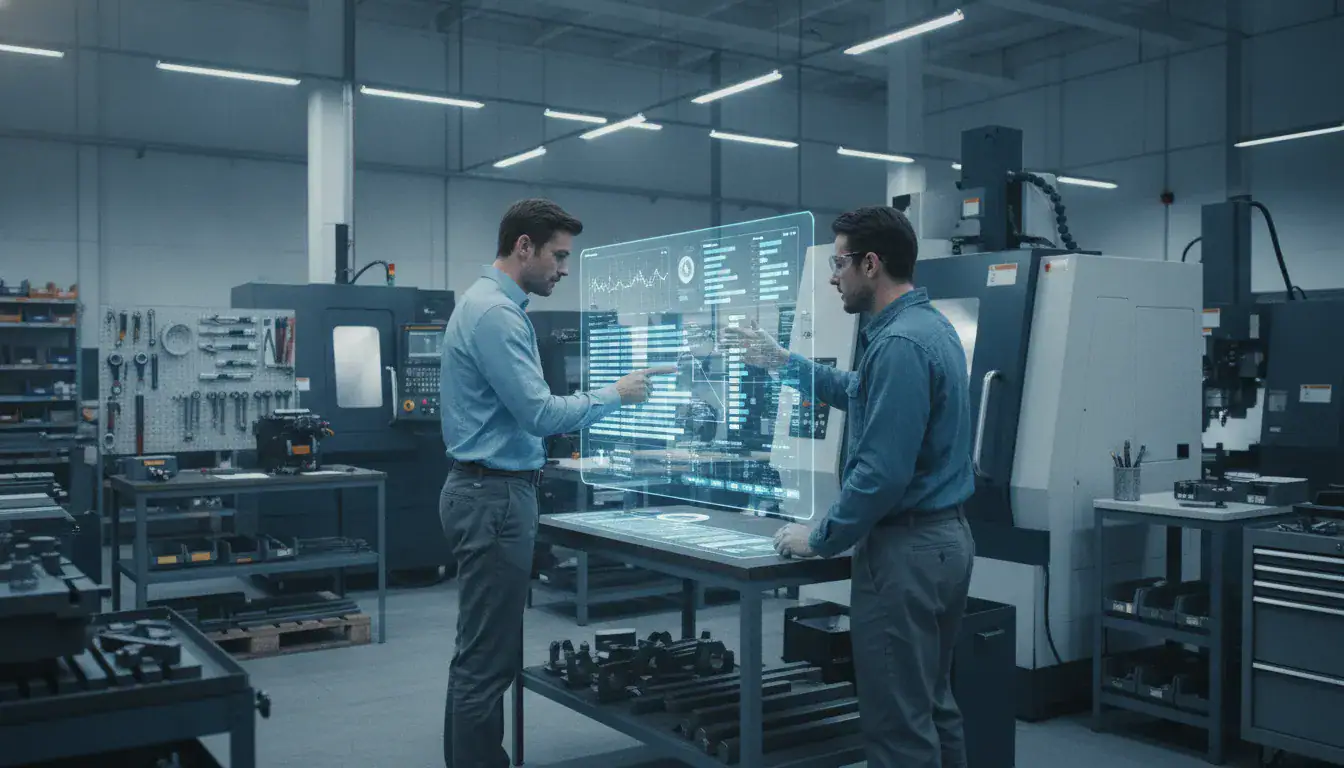

Your factory has more production capacity than you think. It’s likely hidden in small, frequent stops, machines running slightly below their ideal speed, and minor quality issues that add up over time. Finding and reclaiming this hidden capacity is the fastest way to increase output without investing in new equipment. OEE software is the tool that helps you do just that. It shines a light on all the inefficiencies that quietly drain your productivity and profits. By giving you a clear picture of your performance, it provides a roadmap for getting more out of the assets you already own. Let’s explore how you can use it to strengthen your competitive edge.
Key Takeaways
- Translate Machine Data into Clear Actions: OEE software simplifies complex shop floor activity by focusing on three core metrics: Availability, Performance, and Quality. This framework helps you pinpoint the exact reason for production losses—whether it’s downtime, slow cycles, or defects—so you can fix the root cause.
- Choose a Tool That Works for Your Team: The most effective OEE software provides automatic, real-time data collection and integrates seamlessly with your ERP. Look for a system with intuitive dashboards that give everyone, from operators to managers, the specific information they need to make smarter decisions without creating extra work.
- Focus on ROI, Not Just the Price Tag: The true value of OEE software is its ability to increase your plant’s capacity without new equipment. By reducing waste, minimizing downtime, and improving throughput, the right system pays for itself by helping you get more finished products out the door with your existing assets.
What is OEE Software and How Does It Actually Work?
Ever wish your machines could tell you exactly what they need to run better? In a way, they can. OEE (Overall Equipment Effectiveness) software acts as a translator for your machinery, taking complex data from your shop floor and turning it into a clear, simple score that tells you how well you’re doing. The main goal is to track and measure manufacturing productivity by focusing on three critical areas. By giving you a clear picture of what’s happening in real-time, this software helps you spot problems before they become major headaches.
Think of it as a diagnostic tool that helps you reduce downtime, pinpoint bottlenecks, and cut down on waste. Instead of guessing where inefficiencies are, you get actionable insights based on hard data. This is where powerful data analytics come into play, transforming raw numbers into a clear path for improvement. It helps you answer critical questions like, “Why did Line 3 stop unexpectedly?” or “Are we producing parts as fast as we could be?” Without this tool, you’re often relying on manual tracking and anecdotal evidence, which can be slow and inaccurate. OEE software automates this process, delivering consistent and reliable metrics that everyone, from the shop floor to the top floor, can understand and use.
Breaking Down the Three OEE Factors
The OEE score itself is calculated from three straightforward factors. Understanding them is the key to figuring out where you can improve. First is Availability, which simply asks: “Is our equipment running during its planned production time?” It measures any stop time, from unplanned breakdowns to changeovers. Next is Performance, which looks at speed. It answers: “How fast are we producing?” This factor accounts for anything that causes the machine to run slower than its designed speed. Finally, there’s Quality. This one is all about the final product, asking: “How many good parts did we make?” It tracks any parts that don’t meet quality standards, including those that need rework. Together, these three metrics give you a complete picture of your overall equipment effectiveness.
How It Gathers and Analyzes Data Instantly
So, how does the software get all this information? It connects directly to your equipment using sensors, PLCs (Programmable Logic Controllers), or simple input from your operators. This system of shop floor data collection pulls in real-time information like cycle times, production counts, and the reasons for any downtime. The software then instantly crunches these numbers to calculate your Availability, Performance, and Quality scores. It presents everything on easy-to-read dashboards, so your team can see exactly what’s happening at a glance. This isn’t about digging through spreadsheets at the end of the week; it’s about getting live updates that help you fix small issues before they cause major delays.
Why Should You Use OEE Software? The Key Benefits
Adopting OEE software is about trading assumptions for answers. Instead of guessing why a production line is underperforming, you get clear, data-backed insights that point directly to the problem. This shift allows you to make strategic decisions that have a real impact on your bottom line. By tracking availability, performance, and quality, OEE software gives you a complete picture of your operational health. It helps you pinpoint hidden inefficiencies, prevent costly disruptions, and create a more predictable and profitable manufacturing environment. The benefits extend beyond the shop floor, giving your entire organization the confidence to promise and deliver on time.
Keep Your Machines Running and Reduce Downtime
Unplanned downtime is one of the biggest drains on productivity and profit. OEE software helps you get ahead of it by providing a detailed look at why your machines stop running. It automatically logs every stoppage, categorizing it as a planned shutdown, an unexpected breakdown, or a minor interruption. With this information, you can see patterns you might otherwise miss.
This data allows your team to move from a reactive “fix-it-when-it-breaks” approach to a proactive maintenance strategy. By understanding the root causes of interruptions, you can schedule preventative maintenance more effectively and ensure you have the right parts on hand. Real-time machine monitoring gives you the power to address small issues before they become major, costly problems that halt production.
Improve Product Quality and Catch Defects Early
Maintaining high product quality is essential for customer satisfaction and your reputation. OEE software directly impacts this by tracking the “Quality” component of your production, identifying how many good parts are produced versus those that require rework or are scrapped. It gives you instant visibility into quality issues as they happen, not hours later during a final inspection.
This real-time feedback loop is critical. If a machine starts producing parts that are out of spec, your team will know immediately. This allows operators and engineers to intervene quickly, diagnose the cause, and correct the problem before an entire batch is ruined. Effective shop floor data collection helps you trace defects back to a specific machine, shift, or material, making it easier to implement lasting fixes and reduce waste.
Make Your Operations More Efficient with Real Data
Even when machines are running and producing good parts, they may not be operating at their full potential. OEE software tackles this by measuring the “Performance” factor, comparing your actual production speed against its designed capacity. It highlights issues like slow cycle times, small but frequent stops, and reduced speed that quietly eat away at your efficiency.
The software translates complex machine data into easy-to-understand charts and reports. This helps your team find and fix the subtle problems that are often hard to spot, like a machine that’s consistently running 10% slower than it should. With clear data analytics, you can optimize machine settings, refine operator workflows, and ensure every asset is performing at its peak, helping you get more output from the same equipment.
Cut Costs by Making Smarter Decisions
Ultimately, every improvement on the shop floor is about strengthening your financial performance. OEE software connects operational gains directly to cost savings. When you reduce downtime, you get more production hours without investing in new machinery. When you improve quality, you spend less on scrap materials and the labor needed for rework. And when you increase performance, you produce more units in the same amount of time, lowering your cost per part.
These combined benefits create a powerful financial impact. The insights from OEE software support smarter, data-driven decisions across your business, from maintenance scheduling to capital investments. By seeing exactly how your operations are performing, you can focus your resources where they’ll make the biggest difference, as many of our customers have discovered in these case studies.
What to Look For: Must-Have OEE Software Features
When you start comparing OEE software, you’ll notice that not all platforms are built the same. To make sure you’re investing in a tool that will actually move the needle for your shop, you need to look for a few key features. These are the non-negotiables that separate a basic data tracker from a true operational game-changer. Think of this as your checklist for finding a solution that delivers real, measurable results and empowers your team with the information they need to excel.
Automatic Data Collection and Live Monitoring
The days of manually logging machine performance on a clipboard are over—or at least, they should be. Your OEE software should automatically collect data directly from your equipment in real time. This eliminates human error and gives you an accurate, up-to-the-minute picture of what’s happening on the shop floor. This kind of live monitoring is essential for turning raw machine data into clear, actionable insights you can use to address downtime, performance lags, and quality issues as they happen, not after the shift ends. It’s about getting the truth, straight from the source.
Custom Dashboards and Clear Reporting
Raw data is overwhelming. The right software transforms complex numbers into simple, visual dashboards that everyone from the C-suite to the machine operator can understand at a glance. Look for a system that offers customizable reporting, allowing you to tailor what you see based on your role and priorities. A plant manager might need a high-level overview of the entire facility, while an operator needs to see the performance of their specific machine. Clear data analytics make it easy to spot trends, compare historical performance, and make informed decisions quickly.
Easy Integration with Your Current Systems
A new piece of software shouldn’t create more work for your team. It’s crucial that your OEE solution can seamlessly connect with your existing ERP system and other business tools. This integration creates a single source of truth and ensures that data flows smoothly across your entire operation, from the shop floor to the front office. A platform that operates in a silo will only create data bottlenecks and confusion. Look for a flexible system that can either plug into your current setup or function effectively as a standalone solution, depending on your needs.
Find and Fix Bottlenecks with AI Insights
Modern OEE software does more than just report problems—it helps you solve them. The most advanced platforms use AI and machine learning to analyze your data and uncover the root causes of inefficiency. It can identify hidden patterns in machine stops, analyze operator notes to flag recurring issues, and even suggest solutions based on past performance. This proactive approach helps you find and fix bottlenecks before they cause major delays, shifting your team from constantly fighting fires to making strategic, forward-thinking improvements.
A Look at Top OEE Software Solutions
Now that you know what to look for, let’s explore some of the top OEE software solutions on the market. The right choice for your facility depends on your specific goals, existing systems, and the scale of your operations. Some platforms excel at providing a simple, visual overview of your shop floor, while others offer deep, granular analytics designed for complex manufacturing environments. This isn’t an exhaustive list, but it will give you a solid starting point for your research. As you review these options, think about which features align best with your team’s needs and the unique challenges you’re trying to solve. From user-friendly interfaces to powerful, data-rich platforms, there’s a solution out there that can help you get a better handle on your production efficiency.
JobPack Production Scheduling and Monitoring
JobPack stands out by combining powerful production scheduling with real-time OEE data. This integrated approach means you’re not just tracking performance but also actively managing your workflow to improve it. The system is designed to grow with your business; it can handle increased production volumes without sacrificing performance or accuracy. This makes it a robust choice for manufacturers looking to optimize their entire production process, from planning to execution. By connecting scheduling directly with machine monitoring, JobPack gives you the visibility needed to make smart, proactive decisions that keep jobs on time and on budget.
ABB Ability Manufacturing Operations Management
For large-scale operations looking for a comprehensive system, the ABB Ability Manufacturing Operations Management suite is a strong contender. This platform is designed to help factories watch, understand, and improve how well their machines are working. It goes beyond basic OEE tracking to offer a full suite of tools for managing manufacturing operations. Think of it as a central nervous system for your plant, providing the data and controls needed to fine-tune every aspect of production. Its depth makes it particularly well-suited for enterprises that need a powerful, all-in-one solution for operational efficiency.
Evocon Real-Time Visualization Platform
If you’re looking for a solution that’s easy to implement and use, Evocon is worth a look. Its main strength is its simplicity and focus on real-time visualization. Evocon’s OEE software is designed for quick setup, helping you start tracking how well your machines are working almost immediately. This is crucial for teams that need to make fast, on-the-fly decisions on the shop floor. The visual interface makes it easy for everyone, from operators to managers, to understand performance at a glance. It’s a great option for companies that want to get started with OEE without a steep learning curve.
Lineview Monitoring and Reporting Tools
Lineview is focused on delivering tangible results quickly. The company claims that factories often see an initial performance increase of 5-8% within the first six months of using their system. This highlights its effectiveness in identifying and addressing inefficiencies right away. Lineview’s tools are built around clear monitoring and reporting, giving you the insights needed to make targeted improvements. If your primary goal is to see a fast return on your investment by improving performance metrics, Lineview’s results-oriented approach could be a great fit for your facility.
InnoMaint Operational Efficiency Solutions
InnoMaint offers a flexible OEE monitoring solution that excels at both real-time and historical analysis. The platform provides tools to measure and analyze plant performance as it happens, while also letting you look back at historical data to identify long-term trends and patterns. This dual capability allows you to make informed decisions based on a complete picture of your operations. Whether you need to address an immediate production issue or develop a long-term strategy for improvement, InnoMaint gives you the comprehensive data you need to do both effectively.
Common Hurdles When Implementing OEE Software (and How to Clear Them)
Adopting any new technology comes with a learning curve, and OEE software is no exception. But don’t let a few potential bumps in the road keep you from major efficiency gains. Most implementation challenges fall into a few common categories, and with a little foresight, you can clear them easily. Let’s walk through the most frequent hurdles and the straightforward strategies to overcome them, ensuring your transition to data-driven manufacturing is a smooth one.
Ensuring Your Data is Accurate
Your OEE score is only as reliable as the data it’s built on. If you’re still relying on manual tracking with clipboards and spreadsheets, you’re likely dealing with human error, delays, and incomplete information. This can lead to misleading OEE calculations and poor decisions. The most effective way to solve this is by automating your shop floor data collection. Real-time machine monitoring captures every stop, start, and cycle count automatically, giving you a trustworthy foundation for analysis. When your data is accurate and instant, you can confidently identify issues and make changes that truly improve performance.
Getting Your Team On Board and Trained
New software can feel like a threat if your team doesn’t understand its purpose. The biggest hurdle is often cultural, not technical. To get everyone on board, start by communicating the “why.” Explain how OEE software helps the team succeed by reducing frustrating downtime and making their work smoother—it’s not just a tool for management to watch over them. Provide thorough training and choose a system with an intuitive interface that’s easy to learn. When your team sees the software as a helpful tool rather than a chore, they’ll be your biggest advocates for its success.
Connecting New Software with Your Existing Tech
Your new OEE software shouldn’t live on an island. It needs to communicate with the other systems you rely on, especially your ERP. A lack of integration creates data silos and forces you to manually piece together information, defeating the purpose of having a streamlined system. Before you commit to a solution, confirm that it can easily integrate with your existing tech stack. This seamless connection ensures that everyone is working from a single source of truth, from the shop floor to the front office. This unified approach is what turns raw data into powerful data analytics for the entire business.
Tailoring the Software to Fit Your Workflow
Every manufacturing floor is unique, with its own set of machines, processes, and priorities. A rigid, one-size-fits-all OEE solution can force you to change your workflow to fit the software, which is backward. Look for a flexible platform that you can tailor to your specific needs. You should be able to customize dashboards, set alerts for your key metrics, and generate reports that answer your most important questions. A system that adapts to you, like a flexible production scheduling tool, ensures you’re tracking what matters most and empowers your team to focus on continuous improvement.
What’s the Investment? OEE Software Costs and ROI
Let’s talk about the bottom line. Bringing new software into your facility is a big decision, and the cost is always a major factor. But it’s important to view OEE software not as an expense, but as an investment in your plant’s future efficiency and profitability. The right system pays for itself by identifying hidden capacity, reducing waste, and streamlining your entire production flow.
The key is to understand what you’re paying for and what kind of return you can realistically expect. The price tag can vary quite a bit depending on your needs, but so can the financial upside. By looking at common pricing structures, taking advantage of trial periods, and learning how to calculate your potential return on investment, you can make a confident decision that strengthens your operations and your budget. We’ll walk through each of these steps so you know exactly what to expect.
Understanding Pricing Models
When you start looking at OEE software, you’ll notice that pricing isn’t one-size-fits-all. The cost can range from a few hundred dollars a month for a simple dashboard to a significant six- or seven-figure investment for a comprehensive Manufacturing Execution System (MES). This wide spectrum exists because every manufacturer’s needs are different. The final price depends on factors like the number of machines you need to monitor, the complexity of the features you require, and the level of support and integration services included. The goal is to find a solution that provides the right capabilities for your shop floor without paying for features you won’t use. It’s about finding the right partner and system that fits your unique operational needs.
Finding Demos and Free Trials
You wouldn’t buy a new machine without seeing it run, and the same principle applies to software. Most OEE software providers understand this and offer demos or free trials. This is your chance to get a hands-on feel for the system before making any financial commitment. A demo allows you to see how the software collects data, what the dashboards look like, and how intuitive the interface is for your team. It’s the best way to assess whether a platform truly meets your needs and integrates well with your existing workflow. Don’t hesitate to take advantage of these offers; it’s a critical step to ensure you’re choosing the right tool. You can even request a demo to see how a system like JobPack could work on your shop floor.
Calculating Your Return on Investment
Calculating the ROI for OEE software is more straightforward than you might think. It comes down to a simple comparison: weigh the cost of the software against the money you’ll save from operational improvements. Even a modest 15% increase in OEE can translate into significant profit by reducing downtime and increasing throughput. To figure out your potential ROI, consider the savings from reduced scrap, lower raw material costs, and the value of recaptured production time. Looking at real-world case studies can give you a clearer picture of the financial impact. When you can produce more with the same equipment and team, the software quickly begins to pay for itself, turning a smart investment into a powerful competitive advantage.
Which Industries See the Biggest Impact from OEE Software?
While Overall Equipment Effectiveness (OEE) software can bring value to nearly any production floor, some industries feel its impact more immediately and profoundly than others. If your operations involve complex machinery, strict quality standards, or tight deadlines, you’re likely in a prime position to see significant returns. The core value of OEE—turning raw machine data into a clear picture of availability, performance, and quality—is universal, but its application shines brightest where every minute of uptime and every finished part counts.
Industries with high-volume production, intricate assembly lines, or stringent regulatory pressures often become the biggest adopters. Think about sectors where waste is costly, downtime can derail an entire production schedule, and quality control is non-negotiable. From automotive and electronics to food processing and pharmaceuticals, these fields rely on a deep understanding of their operational health. They are often the biggest investors in OEE solutions because the software provides the visibility needed to stay competitive, compliant, and profitable. Let’s look at a few key examples.
Manufacturing and Discrete Production
In the world of discrete manufacturing—where distinct items are produced—OEE is a foundational metric. Industries like metal fabrication, machinery, and general manufacturing use OEE software to pinpoint inefficiencies in assembly lines and CNC machine cells. Because these processes involve multiple steps and machines, a bottleneck in one area can cause a ripple effect of delays. OEE software helps managers see exactly where those slowdowns occur, whether it’s due to a machine needing maintenance or a setup process taking too long. By optimizing each step, manufacturers can increase throughput, meet deadlines, and improve overall plant productivity without adding more equipment.
Food and Beverage Processing
The food and beverage industry operates under immense pressure from government regulations and consumer expectations. OEE software is crucial here for more than just efficiency; it’s a tool for compliance and quality assurance. It helps track production batches, monitor equipment cleaning cycles, and ensure that processes are running within specified parameters to maintain food safety. Furthermore, with a growing focus on sustainability, this industry uses OEE to reduce waste—whether it’s minimizing ingredient spoilage from unexpected downtime or cutting down on packaging errors. This focus on sustainability and regulation makes OEE an essential part of modern food production.
Pharmaceutical and Automotive
The automotive and pharmaceutical industries were among the earliest and most enthusiastic adopters of OEE principles. Automotive manufacturers, driven by lean production philosophies, use OEE to gain clear visibility into every part of the factory floor. For them, maximizing machine uptime is directly tied to profitability. In the pharmaceutical world, the stakes are just as high, with an intense focus on product quality and regulatory compliance. OEE software provides the detailed documentation and process validation needed to meet strict FDA standards. Real-time machine monitoring ensures every product is made consistently and correctly, which is critical when health is on the line.
Electronics Manufacturing
The electronics industry is defined by precision, speed, and rapid innovation. Assembling tiny, complex components requires equipment that performs flawlessly. Even minor slowdowns or small defects can lead to significant losses. This is why the industry places such a strong emphasis on optimizing its production lines. In fact, some analyses show the electronics sector achieving an average OEE performance score of 74.2%, indicating a deep commitment to efficiency. OEE software helps these manufacturers track micro-stoppages, identify patterns in defects, and ensure that their high-speed automated assembly lines are running at peak performance, allowing them to keep up with constant consumer demand.
Frequently Asked Questions
What is a ‘good’ OEE score to aim for? While a perfect 100% score is the theoretical goal, it’s not realistic in practice. A score of 85% is widely considered world-class for discrete manufacturing. However, the most important number is your own baseline. The real power of OEE is in tracking your improvement over time. If you start at 60%, the goal is to get to 65%, then 70%, using the data to make targeted changes. Focus on consistent progress rather than a single magic number.
How can I convince my operators that this software isn’t just ‘big brother’ watching them? This is a common and important concern. The key is to frame the software as a tool that helps everyone win, not as a performance tracker for individuals. Explain that the system monitors the machine’s health, not the operator’s effort. It helps identify frustrating issues like material shortages, tool wear, or maintenance needs that cause slowdowns. When the software helps solve these problems, operators can do their jobs more effectively with less stress, which is a benefit for the entire team.
Is installing OEE software a huge IT project? It doesn’t have to be. Modern OEE systems are designed to be much less disruptive to install than older manufacturing software. Many solutions can connect directly to the existing controllers on your machines or use simple, non-invasive sensors to gather data. The best providers will work closely with your team to ensure a smooth setup. It’s less about a massive IT overhaul and more about a strategic partnership to get the right data flowing.
How quickly can I expect to see a return on my investment? You can often see initial results surprisingly fast. Once the software is running, it immediately highlights the most obvious sources of lost production time—the “low-hanging fruit.” Many companies see a noticeable improvement in performance within the first few months just by addressing these clear issues. The deeper, more significant financial returns build over time as you use the historical data to make smarter decisions about maintenance, scheduling, and process improvements.
Can I start small with just a few machines, or do I have to implement this across my entire plant? Starting small is not only possible, but it’s often the smartest approach. Implementing OEE software on a single bottleneck machine or a pilot production line allows you to learn the system and demonstrate its value on a smaller scale. This helps you build momentum and get your team comfortable with the new process. Once you prove the concept and see the results, you can confidently plan a wider rollout across the rest of your facility.