Production Scheduling
Digital Transformation for Small Manufacturers Roadmap
Published July 15th, 2026
For small-to-medium discrete manufacturers, the phrase “digital transformation” often sounds like an expensive buzzword. When plant managers, operations directors, and business owners hear about Industry 4.0, they picture multi-million dollar software suites, endless consulting fees, and months of disruptive production downtime. For a high-mix, low-volume shop or a contract manufacturer operating on tight margins, a failed software deployment is not just an inconvenience. It is a threat to the business itself.
The truth is that digital transformation for small manufacturers does not require a complete, overnight overhaul of your factory floor. You do not need to replace your legacy machinery or spend a year configuring an enterprise-grade ERP scheduling module that your team will ultimately abandon. By taking a phased, practical approach with clear milestones, small-to-medium manufacturers can eliminate production bottlenecks, boost machine utilization, and achieve rapid time-to-value without risking daily operations.
This practical roadmap outlines how small-to-medium manufacturers can successfully navigate digital transformation for small manufacturers, starting with real-time shop floor visibility and finishing with constraint-aware scheduling.
What Does Digital Transformation Mean for Small Manufacturers?
Digital transformation for small manufacturers is the strategic integration of digital technologies into every area of production operations. It is about replacing manual, error-prone processes with systems that give you real-time visibility and control over your shop floor.
For a job shop or contract manufacturer, this typically means connecting shop floor machines to capture accurate production data. It also means replacing whiteboard or spreadsheet scheduling with dynamic constraint-aware software. And it means deploying digital work instructions that eliminate paper packets. Each phase builds on the previous one, creating compounding efficiency gains without forcing a single high-risk bet on a massive ERP overhaul.
The National Institute of Standards and Technology (NIST) reports that small manufacturers who adopt digital tools see productivity improvements of 15-30 percent and reduced downtime of 20-50 percent within the first year. These gains come not from expensive automation, but from better information flow between the shop floor and the front office.
The Common Obstacles to Manufacturing Digitalization
Before implementing any new technology, it is crucial to recognize the specific barriers that small manufacturers face. Unlike enterprise organizations with dedicated IT departments and unlimited budgets, smaller manufacturers must operate with limited resources and tight cash flow. The most common hurdles include:
- Fear of Disruption: No shop owner can afford to halt production for weeks to train workers on a complicated new system. The cost of downtime can reach thousands of dollars per hour for a busy job shop.
- High Upfront Costs: Enterprise MES and APS platforms often carry six-figure licensing fees and unpredictable implementation costs.
- Data Silos: Many shops run their scheduling on Excel spreadsheets, their billing on legacy ERP systems. And their machine data is locked on the shop floor with no way to connect them.
- The ERP Trap: Attempting to use a standard ERP system to manage complex shop floor scheduling. ERPs are excellent for financial reporting and inventory tracking, but they fail to account for real-time factory floor constraints like changeover times and labor availability.
- Lack of Internal IT Expertise: Small manufacturers rarely have an in-house IT team capable of managing complex software deployments.
To overcome these challenges, small manufacturers need a digital transformation roadmap that delivers quick wins. A successful strategy relies on incremental phases that pay for themselves as you go.
Phase 1: Connect the Shop Floor with Machine Monitoring
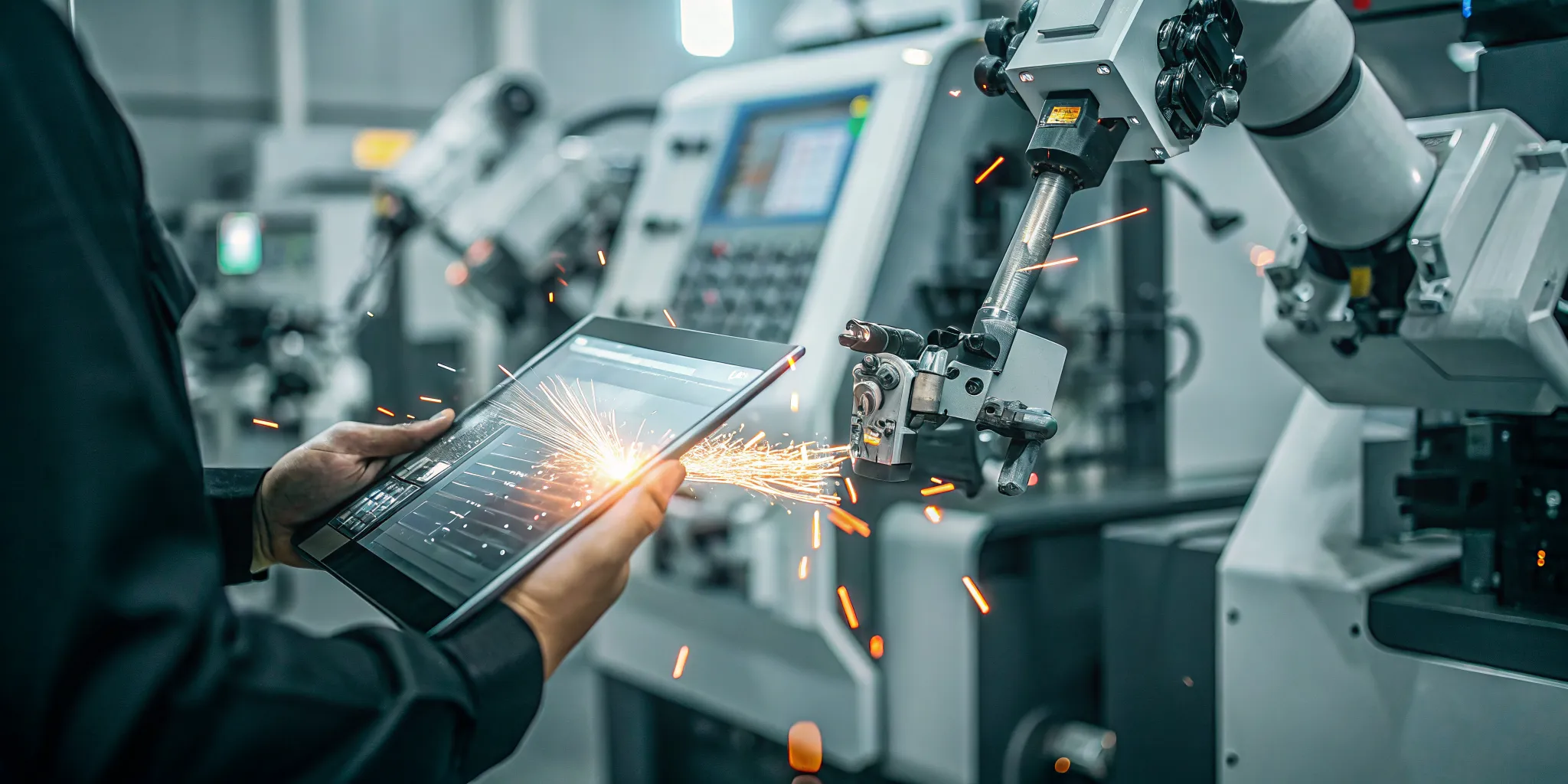
You cannot optimize what you do not measure. For many small manufacturers, the first step in digital transformation is bridging the gap between the factory floor and the front office. This is achieved through real-time machine monitoring, which provides an objective, data-driven view of your production capacity.
Instead of relying on operator logs, which are often filled out at the end of a shift and subject to human error. Automated machine monitoring captures accurate performance data directly from your equipment. Modern shop floor analytics systems can connect to a wide variety of machine tools using standard protocols such as MTConnect, OPC UA, and Modbus. They can even interface with legacy CNC controls from Fanuc, Haas, Mazak, Okuma, and other major brands without requiring expensive retrofits.
By capturing real-time machine status (running, idle, down, or off), cycle times, and part counts, plant managers gain immediate visibility into Overall Equipment Effectiveness (OEE). When a machine goes down unexpectedly, the system alerts managers instantly. Over time, this data reveals hidden capacity, identifies recurring downtime patterns, and justifies equipment investment decisions with hard numbers instead of gut feelings.
To learn more about connecting your equipment to modern office systems, explore our specialized Machine Monitoring and Shop Floor Analytics solutions.
Phase 2: Eliminate Spreadsheet Scheduling with Constraint-Aware APS

Once you have a clear picture of your actual machine capacity and performance, the next step is to optimize how jobs are scheduled and dispatched. This is where most small manufacturers realize the biggest gains relative to their investment.
The traditional method of scheduling via whiteboards or complex Excel spreadsheets is highly reactive and fragile. When a machine breaks down, a key operator calls in sick, or a material delivery is delayed, the entire schedule collapses. Planners then spend hours manually shuffling jobs. According to industry research, production planners at small-to-medium manufacturers spend an average of 8-12 hours per week manually updating schedule spreadsheets.
An Advanced Planning and Scheduling (APS) system solves this by replacing static spreadsheets with a dynamic, constraint-aware scheduling engine. A modern APS takes real-world constraints into account:
| Constraint Type | Spreadsheet | Constraint-Aware APS |
|---|---|---|
| Machine availability | Manually tracked, often stale | Updated in real time from monitoring |
| Changeover time | Estimates based on memory | Actual setup times recorded per job |
| Operator skills | Tribal knowledge | Certifications tracked in system |
| Material availability | Separate inventory check | Integrated with material planning |
| Shared resources | Double-booked regularly | Finite capacity across all work centers |
| What-if scenario | Days to recalculate | Re-simulated in seconds |
With visual Gantt-based drag-and-drop scheduling, planners can run what-if scenario planning in seconds. For example, if a customer asks to rush an order, the planner can simulate the change to see exactly how it impacts every other job in the shop. This eliminates guesswork and ensures reliable lead times of 85-95 percent on-time delivery versus the industry average of 60-70 percent for shops using manual scheduling.
For a detailed breakdown of how to build an optimal scheduling workflow, check out our Step-by-Step Production Schedule Optimization Guide.
Phase 3: Connect Shop Floor Execution with MES Capabilities
In the final phase of the digital roadmap, you connect your advanced scheduling with shop floor execution. This is where Manufacturing Execution System (MES) capabilities come into play. By deploying digital work instructions, paperless dispatch lists, and real-time labor tracking, you create a fully connected, closed-loop manufacturing environment.
Rather than printing paper packets that get lost or coffee-stained, operators access up-to-date digital routing sheets, blueprints, 3D models, and quality checklists directly from tablets at their workstations. When an operator logs into a job, the APS scheduling board updates in real time, showing the exact progress of every production order. Quality checks can be completed digitally at each step. This creates an audit trail that simplifies ISO compliance and customer certifications.
This phase also introduces labor tracking, which captures exactly how long each operation takes. Over time, this data refines your estimated cycle times. The result is a self-improving system where the plan created in the front office is perfectly executed on the floor. Any floor-level deviations are immediately fed back for scheduling adjustments.
How Do High-Mix, Low-Volume Shops Benefit from Digital Transformation?
Consider a typical contract job shop or an engineer-to-order (ETO) manufacturer. They face constant changeovers, variable batch sizes, and unpredictable material lead times. An enterprise ERP system is simply too slow and rigid to handle this level of complexity. These shops need a system that can adapt to constantly changing priorities without breaking the bank.
When these manufacturers implement a phased digital roadmap, the results are immediate and measurable:
- Identify bottleneck operations. Real-time data reveals exactly which work centers are constraining throughput.
- Balance workload across resources. With visibility into capacity, you can shift jobs to underutilized machines.
- Reduce changeover time. Data from machine monitoring reveals actual setup times, enabling continuous improvement.
- Improve on-time delivery. Constraint-aware scheduling creates realistic schedules you can commit to customers.
- Increase machine utilization. Eliminate hidden idle time by scheduling setup work during machine runtime.
To learn more about identifying these operational bottlenecks, read our guide on How to Identify and Resolve Production Schedule Bottlenecks.
What Makes the JobPack 6-Week Implementation Different?
The biggest risk in any digital transformation project is a drawn-out implementation that drains resources and delivers no value until the very end. Enterprise software systems frequently require six to twelve months of planning, custom coding, and training. The result is a system that is too complicated for the shop floor to actually use.
At JobPack, we take a different approach. We believe that small-to-medium manufacturers need rapid time-to-value. Our consultative implementation methodology is designed to get your team up and running in just six weeks. By focusing on a right-sized MES Lite footprint, we help you connect your machines, optimize your scheduling, and train your staff without interrupting your active production lines.
Our phased deployment model means you start seeing value from Phase 1 (machine monitoring) within the first two weeks. This early win builds momentum and confidence across your team before moving to advanced scheduling capabilities. We work closely with your team to integrate our solution with your existing ERP.
If you are ready to move away from spreadsheet-based scheduling and unlock the full potential of your shop floor, discover Why Manufacturers Choose JobPack as their trusted digitalization partner. You can also explore our guide on selecting the right Manufacturing Scheduling Software for Small Business.
Start Small, Scale Smart
Digital transformation does not have to be a daunting or disruptive endeavor. For small manufacturing companies, the key to success is starting small and scaling smart. By beginning with real-time machine monitoring to gain floor-level visibility. And then layering on constraint-aware scheduling and digital work instructions, you can build a highly efficient, resilient production facility.
The manufacturers who succeed are not the ones who spend the most money on software. They are the ones who take consistent, incremental action. Every phase in this roadmap pays for itself before the next one begins. This makes digital transformation for small manufacturers a self-funding journey rather than a financial gamble.
Frequently Asked Questions
How much does digital transformation cost for a small manufacturer?
The cost varies depending on scope, but a phased approach keeps upfront investment manageable. Starting with machine monitoring can cost as little as a few thousand dollars. A full MES-APS deployment for a small manufacturer typically ranges from $15,000 to $60,000. Each phase generates measurable ROI that funds the next phase.
How long does it take to implement a manufacturing execution system?
Enterprise systems typically take 6-12 months, but a right-sized system like JobPack can be deployed in as little as 6 weeks. The phased methodology means you see value from machine monitoring within the first 2 weeks, with scheduling capabilities added in subsequent phases.
Can I connect my old CNC machines to a modern monitoring system?
Yes. Modern machine monitoring platforms support MTConnect, OPC UA, and Modbus. They can also interface with legacy CNC controls from Fanuc, Haas, Mazak, and Okuma without requiring expensive controller upgrades. A simple sensor tap or network connection is all that is needed.
What is the difference between MES and APS software?
A Manufacturing Execution System (MES) tracks and documents the transformation of raw materials to finished goods on the shop floor. It manages work instructions, quality checks, and labor tracking. An Advanced Planning and Scheduling (APS) system focuses on optimizing production schedules by accounting for machine capacity, labor constraints, and material availability. JobPack combines both capabilities in a single platform.
Is digital transformation worth it for a small job shop with 10-30 employees?
Absolutely. Smaller shops often see the highest percentage gains because they start from a baseline of manual processes. Eliminating spreadsheet scheduling alone can save a planner 8-12 hours per week. Machine monitoring uncovers 15-25 percent hidden capacity from existing equipment. The ROI timeline for small manufacturers is usually 6-12 months for a phased deployment.
If you are ready to move away from spreadsheet-based scheduling and unlock the full potential of your shop floor, contact our team of manufacturing experts to discuss a tailored digital transformation roadmap for your facility. Start with a free consultation and discover how JobPack can help you achieve Industry 4.0 without the risk.