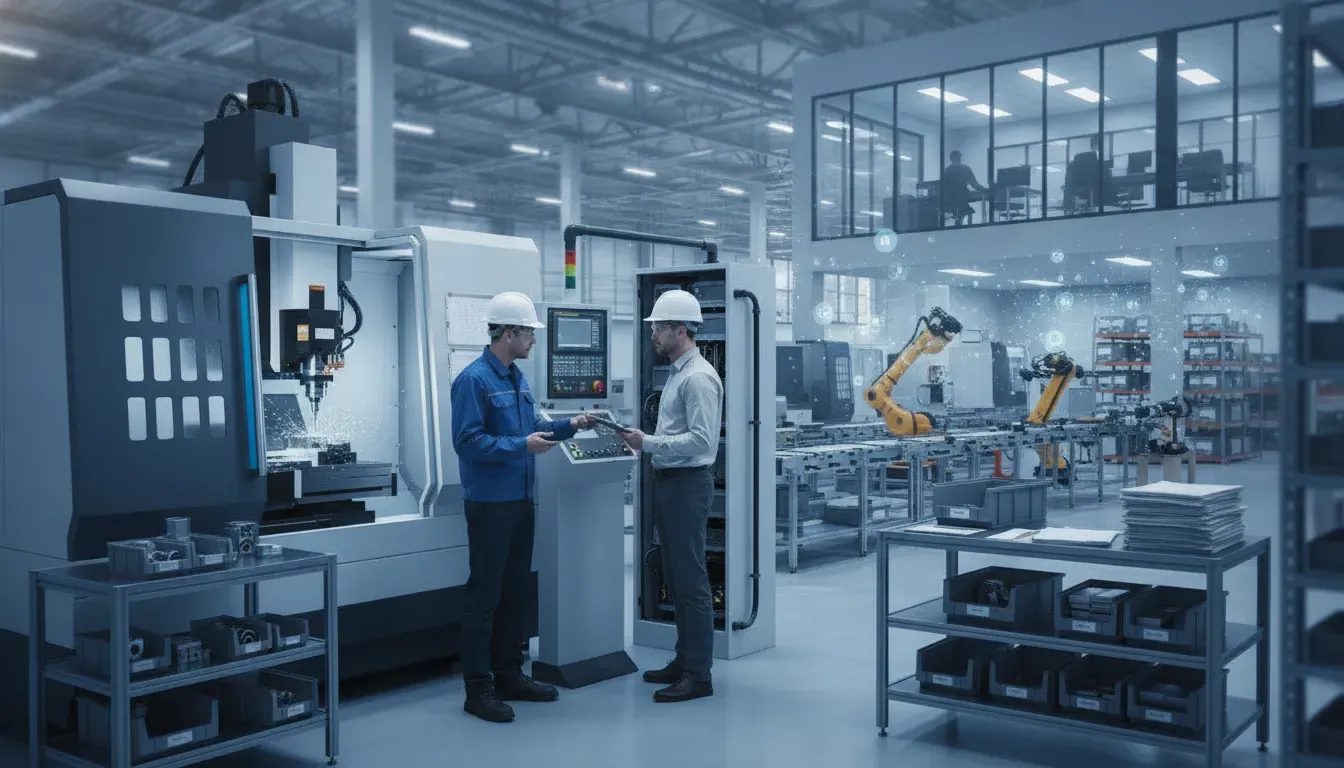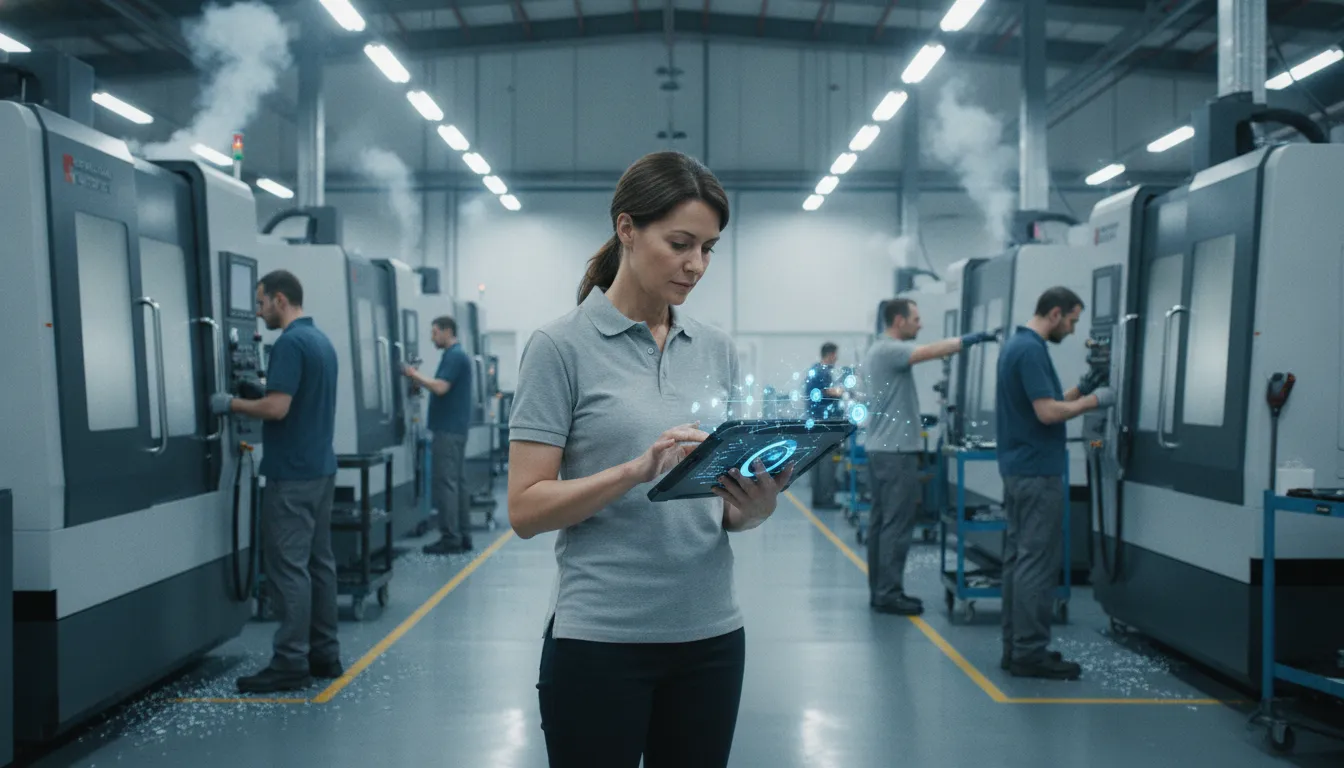

Every machine on your shop floor has a story to tell—a story written in data about cycle times, downtime, and output. The problem is, without the right tools, that story is just a stream of noise. This is where manufacturing analytics comes in. It acts as the translator, turning raw data from your equipment and systems into a clear narrative about your operations. It helps you understand not just what’s happening, but why it’s happening. By learning to read this story, you can pinpoint hidden inefficiencies, predict problems before they stop production, and find the most direct path to improving your workflow. Let’s explore how you can start listening to what your data is telling you.
Key Takeaways
- Shift from guessing to knowing: Use manufacturing analytics to replace gut feelings with hard data. This gives you an honest view of your operations, allowing you to pinpoint the true causes of production delays and inefficiencies.
- Focus on tangible results: Analytics should directly improve your bottom line. Use it to identify bottlenecks, reduce waste, and optimize schedules to lower operational costs and make smarter, more profitable business decisions.
- Adoption is a process, not a project: You don’t need a team of data scientists to start. Focus on a practical approach that integrates with your current systems and builds a culture where your team uses data to solve real problems and work more effectively.
What is Manufacturing Analytics (And Why It Matters)
Think of manufacturing analytics as the story your shop floor is trying to tell you, written in data. It’s the process of collecting information from your machines, systems, and people, and then using it to understand exactly what’s happening in your operations. Instead of relying on gut feelings or outdated reports to figure out why a job is delayed or a machine is down, you get clear, evidence-based answers. This shift from guessing to knowing is what makes analytics so essential. It helps you pinpoint the root causes of production errors and supply chain hiccups, turning raw data into a practical roadmap for improvement and building a smart factory aligned with Industry 4.0 principles.
Breaking Down the Core Components
At its heart, manufacturing analytics is about answering the “why” behind your daily challenges. It uses data collected directly from factory machines and computer systems to uncover the reasons for production errors, delays, or material shortages. The process starts by identifying what you want to measure—things like cycle times, machine uptime, or scrap rates. Then, you gather the relevant data and analyze it to find patterns and trends. This allows you to move beyond simply knowing that a problem occurred to understanding why it happened, giving you the insight needed to make meaningful improvements and prevent it from happening again.
The Role of Data on the Modern Shop Floor
On today’s shop floor, data is generated everywhere—from your CNC machines and operators to incoming orders and outgoing deliveries. Manufacturing analytics brings all of this information together to give you a complete picture of your operations. By connecting data from multiple sources, you can see how different areas of your business affect one another. For example, you can see how a delay in material delivery impacts your production schedule for the entire week. A robust shop floor data collection system is the foundation for this, helping you improve product quality, increase output, and create a more efficient workflow from start to finish.
The Power of Real-Time Monitoring
The real magic happens when you can see data as it’s being created. Real-time monitoring eliminates the lag time between an event and your awareness of it, allowing you to be proactive instead of reactive. This immediate feedback helps reduce human error in reporting and lets your team make quick adjustments on the fly. One of the biggest advantages is predictive maintenance. By using smart sensors and continuous machine monitoring, you can get alerts about potential equipment problems before they cause a breakdown. This transforms costly, unplanned downtime into scheduled, manageable maintenance, keeping your production lines running smoothly.
How Manufacturing Analytics Works
So, how does manufacturing analytics actually turn a stream of numbers into a more efficient shop floor? It’s not about installing a single piece of software and hoping for the best. Instead, it’s a straightforward, four-step process that connects your machines to your business goals. By understanding this workflow, you can see how raw data from the factory floor becomes the clear, actionable information you need to make smarter decisions, reduce waste, and deliver on time. Let’s walk through each step of the process.
Collecting Data from Machines and Sensors
It all starts with the data. To get a clear picture of what’s happening on your shop floor, you need to gather information directly from the source: your machines. This is done by using sensors and connecting your equipment to a central system. This process of shop floor data collection captures everything from cycle times and machine status to part counts and downtime. Think of it as giving each machine a voice. This raw data is the foundation for everything that follows, providing the objective facts needed to improve performance, increase output, and cut costs across your operations.
Analyzing and Processing Your Data
Once you have the data, the next step is to make sense of it. Raw numbers from machines aren’t very useful on their own. This is where analytics software comes in. It processes the vast amounts of information collected from the shop floor, organizing it and searching for patterns, trends, and anomalies. This data analytics engine helps you see what’s really happening in your business. It can pinpoint hidden inefficiencies, identify the root cause of a recurring problem, or highlight your most productive assets, turning a flood of information into clear, understandable insights.
Integrating with Your ERP and Existing Systems
Your analytics tools shouldn’t live on an island. To get the most value, they need to communicate with the other systems you already use, especially your Enterprise Resource Planning (ERP) system. Integrating your shop floor data with your ERP creates a single, unified view of your entire manufacturing process, from initial order to final delivery. This connection ensures that everyone is working with the same information. You can start small with basic analytics and scale up as you go, but integrating your systems is key to breaking down information silos and making truly holistic business decisions.
Turning Your Insights into Action
The final and most important step is putting your insights to work. Data is only valuable if it leads to action. With real-time dashboards and reports, you can see exactly what’s happening on the floor at any given moment. This allows managers and operators to make faster, more informed decisions. For example, if machine monitoring shows a machine is running slower than expected, you can immediately adjust the production schedule to prevent a bottleneck. This ability to react quickly helps reduce human error, minimize delays, and keep production moving smoothly.
The Key Benefits of Manufacturing Analytics
Putting manufacturing analytics to work is about more than just collecting numbers; it’s about gaining a clear, honest look at how your shop floor truly operates. Think of it as turning on the lights in a room you thought you knew well. Suddenly, you can see the hidden obstacles, the missed opportunities, and the most direct paths to your goals. By harnessing the data your machines and processes create every day, you can shift from reacting to problems to proactively improving your entire workflow.
This clarity allows you to answer critical questions with confidence. Why is one shift outperforming another? Which machine is the true bottleneck in your process? Where are you losing money to scrap and rework? With the right data analytics tools, the answers are no longer based on guesswork but on concrete evidence. This empowers your team to make smarter decisions that lead to very real results: improved efficiency, lower operational costs, higher quality products, and a stronger, more resilient business. It’s about transforming raw data into a strategic asset that drives you forward.
Improve Operational Efficiency
One of the most immediate benefits of manufacturing analytics is the ability to see and resolve inefficiencies you might not have known existed. Analytics provides a detailed map of your entire production process, highlighting bottlenecks, downtime, and areas where workflow could be smoother. By understanding exactly how long each step takes and where delays occur, you can make targeted adjustments. This insight allows you to optimize your production scheduling to maximize throughput, ensuring that your people and machines are always working on the right job at the right time. It’s about making small, informed changes that create significant gains in productivity.
Find Opportunities to Reduce Costs
When you improve efficiency, cost reduction naturally follows. Manufacturing analytics gives you the visibility to pinpoint exactly where money is being wasted. This could be in the form of excess material scrap, high energy consumption from idling machines, or unnecessary overtime caused by poor scheduling. By tracking these metrics, you can identify the root causes of overspending and take corrective action. For example, you might discover that a specific machine setup is leading to higher-than-average scrap rates. Armed with this data, you can adjust the process, train operators, and directly impact your bottom line.
Make Smarter, Data-Backed Decisions
In a competitive market, relying on gut feelings alone isn’t enough. Manufacturing analytics replaces guesswork with certainty, empowering your leadership team to make strategic decisions based on hard facts. Whether you’re considering investing in new equipment, changing a workflow, or quoting a complex job, data provides the evidence you need to move forward with confidence. It helps you understand your true capacity and production costs, leading to more accurate quoting and better long-term planning. This data-driven culture is a key reason why JobPack helps manufacturers build more predictable and profitable operations.
Strengthen Quality Control and Cut Waste
Traditionally, quality control catches defects after they’ve already happened, which means the time, materials, and labor are already lost. Analytics flips this model on its head. By monitoring production parameters in real time, you can identify subtle variations that often precede a quality issue. This allows you to intervene before a bad part is made, significantly reducing scrap and rework. Effective shop floor data collection is the foundation, providing the clean, accurate information needed to maintain high standards, cut material waste, and keep your customers happy with consistently great products.
Get Ahead with Predictive Maintenance
Unexpected machine downtime is one of the biggest disruptors on the shop floor, bringing production to a grinding halt. Predictive maintenance uses analytics to prevent this. Instead of reacting to breakdowns or sticking to a rigid preventative maintenance schedule, you can monitor the actual health of your equipment. By tracking performance indicators like vibration, temperature, and cycle times, a machine monitoring system can predict when a component is likely to fail. This allows you to schedule repairs during planned downtime, avoiding costly surprises and extending the life of your valuable assets.
The 4 Types of Manufacturing Analytics You Should Know
Understanding manufacturing analytics is a lot like building a puzzle. You start with the basic pieces and gradually see the bigger picture emerge. Analytics can be broken down into four distinct types, each answering a more complex question than the last. Think of them as levels that build on one another, taking you from simply knowing what’s happening on your shop floor to knowing exactly what you should do next to improve it. Let’s walk through each type so you can see how they connect and create a powerful framework for making decisions.
Descriptive Analytics: What Happened?
This is the foundation of all data analysis. Descriptive analytics organizes your raw data into something you can actually understand. It answers the question, “What happened?” by summarizing past events. Think of your daily production reports, machine uptime summaries, or monthly scrap rates. These are all examples of descriptive analytics in action. As Coursera explains, “Descriptive analytics looks at past data to answer ‘What happened?’ This type of analytics helps organizations understand historical performance and trends, such as how many products were made last month.” It’s the essential first step that gives you a clear snapshot of your operations, powered by effective shop floor data collection.
Diagnostic Analytics: Why Did It Happen?
Once you know what happened, the next logical question is why. That’s where diagnostic analytics comes in. This type of analysis digs deeper into your data to find the root causes of outcomes. For example, if descriptive analytics shows a sudden drop in production, diagnostic analytics would help you pinpoint the reason—maybe a specific machine malfunctioned or a material shipment was delayed. It’s about connecting cause and effect. This process is crucial for troubleshooting and preventing the same issues from happening again. By examining past data, you can identify the reasons behind performance changes, giving you the context needed to make meaningful improvements with your data analytics.
Predictive Analytics: What Will Happen Next?
This is where things get really interesting. Predictive analytics uses historical data, statistical algorithms, and machine learning to forecast future events. It answers the question, “What will happen next?” A common application in manufacturing is predictive maintenance. By analyzing data from a machine’s sensors, you can predict when it’s likely to fail and schedule maintenance before it breaks down, avoiding costly unplanned downtime. According to Coursera, “predictive analytics uses historical data to forecast future outcomes… For example, it can predict when a machine might require maintenance based on usage patterns.” This forward-looking approach, often supported by real-time machine monitoring, helps you shift from being reactive to proactive.
Prescriptive Analytics: What Should We Do About It?
Prescriptive analytics is the most advanced stage, and it’s a true game-changer. It doesn’t just predict what will happen; it recommends specific actions you can take to achieve the best possible outcome. It answers the question, “What should we do about it?” For instance, a prescriptive analytics system could analyze your current orders, material availability, and machine capacity to suggest the most efficient production schedule to meet all your deadlines. It often uses AI to weigh different variables and recommend the optimal path forward. This level of insight empowers you to make complex decisions with confidence, directly impacting your production scheduling and overall efficiency.
How to Prepare for Common Implementation Challenges
Adopting manufacturing analytics is a powerful move, but let’s be honest—it’s not always as simple as flipping a switch. Like any significant operational change, it comes with its own set of hurdles. The good news is that with a bit of foresight, you can prepare for these challenges and set your team up for a smooth transition. The first foray into data analytics can feel like venturing into the unknown, but you don’t have to go it alone.
The most common roadblocks aren’t just about the technology itself; they also involve your data, your existing systems, and your people. You might worry about having too much complex data (or not enough of the right kind), whether a new system will play nice with your current ERP, or how to get your team on board with a new way of working. Thinking through these potential issues ahead of time is the key to a successful implementation. By focusing on managing your data, integrating your systems, building a supportive culture, and choosing the right tools, you can turn these challenges into stepping stones for growth.
Managing Data Complexity and Skill Gaps
The idea of sifting through mountains of production data can feel overwhelming, and you might be concerned that your team lacks the specialized skills to make sense of it all. The reality is, you don’t need a team of data scientists to get started. Thanks to more intuitive platforms, the barriers to entry for incorporating data analytics have lowered significantly. Modern tools are designed for manufacturing professionals, not just IT experts, with visual dashboards that make complex information easy to understand. The key is to find a system that translates raw numbers into clear, actionable insights without requiring a steep learning curve for your team.
Getting Your Systems to Work Together
Another common worry is how a new analytics platform will connect with the systems you already rely on, especially your ERP. The last thing you want is another piece of software that operates in a silo. The best approach is to look for solutions built for integration. You can start small, using basic analytics to gain insights from your existing data, and then scale up as you grow more comfortable. A well-designed system should feed data directly into your ERP, enriching the information you already have and ensuring everyone is working from a single source of truth. This seamless connection is a cornerstone of a successful Industry 4.0 strategy.
Building a Culture That Values Data
Technology is only part of the equation; your team is the other. For manufacturing analytics to truly make an impact, you need buy-in from everyone, from the machine operators to the plant manager. The best way to achieve this is to frame data as a tool for empowerment, not oversight. When your team can see exactly how their work contributes to the bigger picture, it fosters a sense of ownership. For example, understanding why some shifts perform better than others helps leaders make targeted improvements that support everyone. Sharing successes and showing how data helps solve real-world problems on the shop floor will build trust and encourage a data-driven mindset across the organization.
Choosing the Right Tools for Success
With so many options available, picking the right analytics software can feel like a challenge in itself. The key is to look beyond flashy features and focus on what will actually work for your shop floor. You need a tool that is not only powerful but also visually intuitive and adaptable to your unique processes. Look for a partner, not just a vendor—a team that understands manufacturing and can guide you through implementation. Seeing how other companies have succeeded can also provide clarity. Before you commit, request a demo to see the software in action and ask how it can be configured to solve your specific operational challenges.
Related Articles
- manufacturing data analysis Archives – JobPack
- Data Analytics – Production Scheduling Software – JobPack
- Data Analytics with JobPack: What You Don’t Know Is Hurting You – Shop Floor Management Software – JobPack
- How Root Cause Analysis Cuts the Costs of Uncertainty in Manufacturing – Shop Floor Management Software – JobPack
- How Tracking on the Shop Floor Transforms Manufacturing Businesses – Shop Floor Management Software – JobPack
Frequently Asked Questions
Do I need to be a data expert to use manufacturing analytics? Absolutely not. Modern analytics platforms are designed for the people who actually run shop floors, not for data scientists. The best systems present information through clear, visual dashboards that make it easy to understand what’s happening at a glance. The software does the heavy lifting of processing the data so you can focus on making informed decisions, not on becoming a statistician.
How is this different from the reports I already get from my ERP system? Your ERP is fantastic for managing business operations like inventory and orders, but it typically looks at what has already happened. Manufacturing analytics connects directly to your machines to show you what’s happening on the shop floor right now. It enriches your ERP data with real-time production context, helping you understand the “why” behind the numbers and giving you the power to make immediate adjustments that prevent delays.
This sounds great, but where do I even begin? You don’t have to overhaul your entire operation at once. The best approach is to start small by identifying one specific challenge you want to solve. Perhaps it’s frequent downtime on a critical machine or a job that consistently runs over budget. Focusing on a single, high-impact problem allows you to implement a targeted solution, see a clear return, and build momentum for broader improvements.
What’s the real difference between predictive and prescriptive analytics? Think of it as the difference between a forecast and a recommendation. Predictive analytics is like a weather report that tells you it’s likely to rain, giving you a valuable heads-up about a potential problem. Prescriptive analytics is like a GPS that not only warns you about traffic ahead but also suggests the best alternate route. It doesn’t just identify a future issue; it recommends the optimal action to take to get the best result.
How quickly can we expect to see improvements after implementing a system like this? You can often see initial improvements much faster than you might think. Once you start collecting real-time data, you gain immediate visibility into issues like hidden downtime or production bottlenecks. This new clarity allows your team to make small, on-the-fly adjustments that can lead to noticeable efficiency gains within the first few weeks. The deeper, strategic benefits will continue to grow as you gather more data over time.