
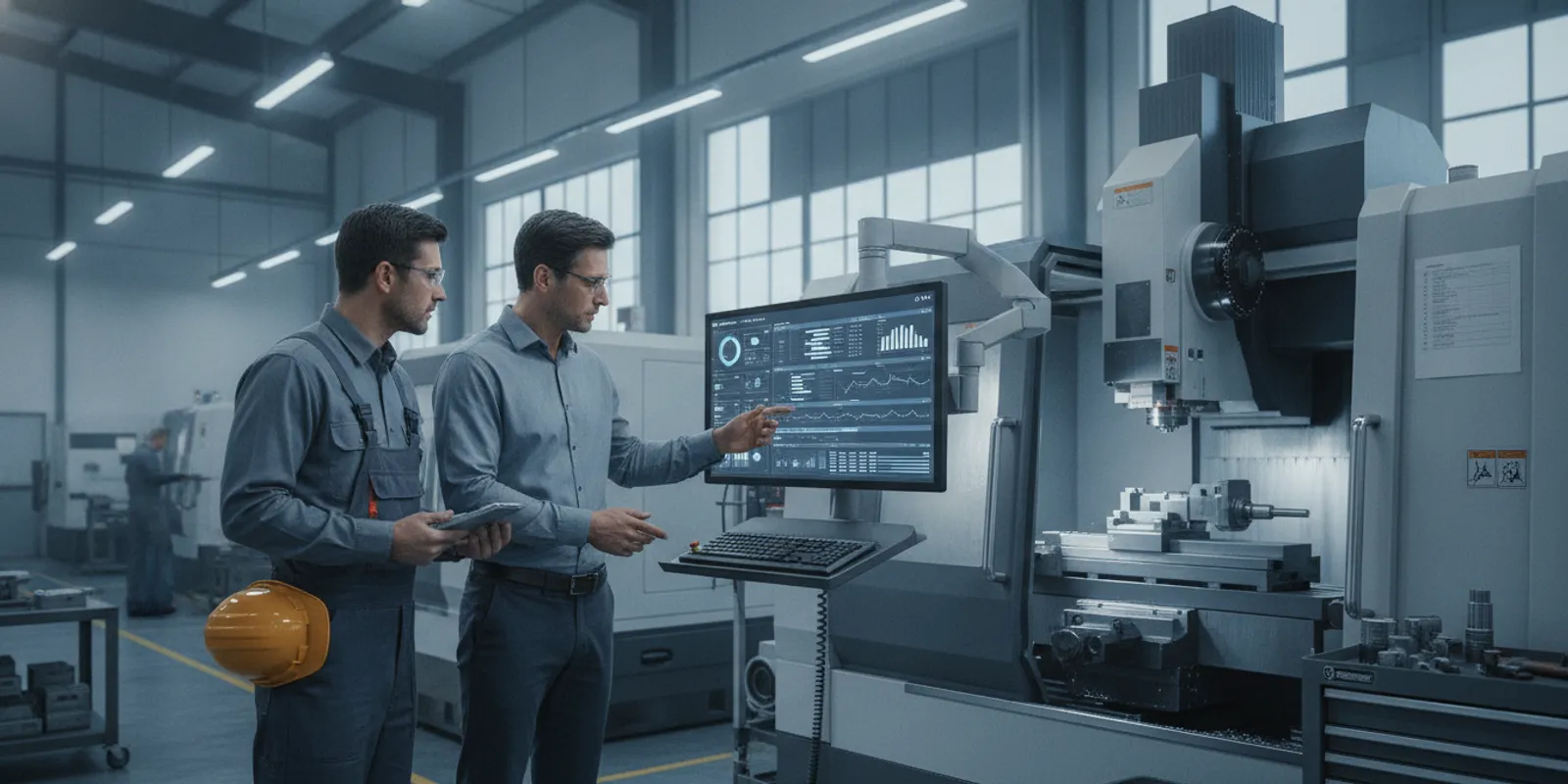
When a regulated manufacturer needs to investigate a defect, a paper traveler or disconnected spreadsheet rarely answers the critical questions quickly. Which material entered the job, which unit was affected, and where did the product go? The cost is measured in delayed releases, broader containment, and avoidable audit risk.
Manufacturing traceability software connects lot and serial number records with real-time shop floor data, including material usage, machine events, and labor. That gives discrete manufacturers a searchable production history for each batch or unit, supporting faster investigations, material genealogy, and more controlled compliance workflows.
The strongest systems do more than store identifiers. They connect the events that shape a production job, replacing fragmented records with an operational view that planners and quality teams can use. Understanding the underlying system helps clarify how these records work together and where an MES fits.
Request a demo to see how connected lot and serial records give your team a searchable production history before the next audit.
What Is Manufacturing Traceability Software?
Manufacturing traceability software is a system that records the materials, work, equipment activity, and people associated with each production job. Instead of treating traceability as a final inspection task, it creates a connected production record while work moves through the shop. That record supports faster investigation, more reliable reporting, and stronger control over production history.
In a modern MES, traceability begins with real-time shop floor data. The system can capture lot numbers and serial numbers as material is issued, consumed, transferred, or attached to a finished unit. This gives planners and quality teams a searchable view of what entered production and where it was used, rather than relying on handwritten notes or disconnected spreadsheets. JobPack’s manufacturing data traceability capabilities include real-time lot and serial number tracking.
The record becomes more useful when it connects material information to the work performed. Traceability software can link machine events, material usage, and labor to a specific production job in real time. For a high-mix manufacturer, that connection helps answer practical questions: which machine processed the order, which operator completed the work, what material lot was consumed, and when each activity occurred.
- Material identity: lot, batch, or serial information tied to a job or finished unit.
- Production activity: machine states, process events, quantities, and labor entries associated with the work.
- Job context: the order, routing, operation, and completion status that give each event meaning.
- Searchable history: records that help teams investigate quality issues, customer questions, and audit requests.
This approach is especially valuable when a manufacturer must trace a component through several operations, shared resources, or changing work centers. A paper traveler may show that an operation was completed, but it often cannot connect every material, machine event, and labor entry without additional reconciliation. A connected system preserves those relationships as production happens.
Traceability software also sits between two common extremes. Spreadsheets may be familiar, but they become difficult to maintain as jobs, materials, revisions, and exceptions multiply. At the other end, complex enterprise systems can demand more implementation effort and infrastructure than a mid-market shop can justify. JobPack positions its production technology in the gap between spreadsheet chaos and overly complex enterprise platforms. A manufacturing execution system can provide the operational layer without forcing the shop to replace its entire business system.
The result is not simply a database of completed jobs. It is an operational record that can connect shop floor facts to quality decisions, customer inquiries, and planning priorities. When traceability data is available in real time, manufacturers can investigate exceptions earlier and make production decisions using current conditions instead of assumptions assembled after the order ships.
Lot Tracking vs. Serial Number Tracking: Which Do You Need?
Lot tracking groups materials or components under a shared batch identifier, while serial number tracking assigns a unique identity to each individual unit. The right choice depends on product risk, customer requirements, and the level of detail your quality team needs during production, audits, or a recall.
In practical terms, traceability means knowing which supplier lots or serial numbers went into each finished product and who received those products. That forward-and-backward view connects incoming material to production records, shipments, and customers. Modern MES software can capture both identifiers with real-time shop floor data, rather than relying on disconnected paper records.
| Criteria | Lot tracking | Serial number tracking |
|---|---|---|
| Granularity | Tracks a group, batch, heat, reel, or container that shares common characteristics. | Tracks one discrete unit, part, assembly, or finished product with a unique identifier. |
| When to use | Useful for commodities, bulk materials, consumables, and products where batch-level control is sufficient. | Best for high-value, safety-critical, repairable, or regulated parts requiring individual history. |
| Data captured | Supplier, batch or lot ID, receipt, quantity, expiration, processing history, and disposition. | Unique unit ID, component relationships, inspections, operators, machine events, rework, and shipment. |
| Recall and audit implications | Can identify affected batches efficiently, but may place more units under review than necessary. | Can isolate specific units and their recipients, supporting precise recalls and detailed audit evidence. |
Choose lot tracking when materials are interchangeable within a controlled batch and the business can accept batch-level containment. Food, chemical, metal, and other commodity-driven operations often need strong supplier and processing history without the cost of assigning a unique number to every unit.
Choose serial tracking when one unit’s identity affects safety, warranty, service, or regulatory accountability. Aerospace, medical device, and other high-value manufacturers may need to prove exactly which component entered an assembly, who inspected it, and where the finished unit was shipped.
Many manufacturers need both methods. A serialized assembly can contain lot-controlled fasteners, raw material, or consumables, creating a connected genealogy rather than an either-or decision. With work-in-progress tracking, production teams can preserve those relationships as material moves through operations, rework, inspection, and final shipment.
The practical test is simple: ask whether your team must isolate a group or identify a specific unit. A capable manufacturing traceability software system should support the appropriate level of control, search both identifiers quickly, and connect the result to production and customer records.
Material Genealogy: Tracing a Product From Raw Material to Shipment
Material genealogy gives manufacturers a connected history of how a product was made. The record begins when raw material arrives and continues through supplier lot receipt, processing operations, machine usage, labor, inspections, and final delivery. NIST describes supply chain traceability as tracing a product’s history from raw materials to final delivery. Read the NIST guidance on supply chain traceability.
In practice, genealogy is more than recording a lot number at receiving. It connects each material transaction to the job and operation that consumed it. A planner or quality manager can then follow material forward into finished goods or backward from a shipped product to the inputs. Equipment, people, and inspection results associated with its production.
What a complete genealogy record contains
A useful record preserves relationships that are often scattered across travelers, spreadsheets, inspection forms, and machine logs. It should identify the supplier lot, quantity issued, work order, operation, work center, operator, and inspection outcome. For serialized products, it should also preserve the unit-level identity and its position within the production history.
- Material identity: supplier, heat, batch, lot, or serial number.
- Production context: work order, operation, machine, tooling, and operator.
- Quality evidence: inspection results, deviations, approvals, and release status.
- Distribution history: finished goods, shipment, customer, and delivery record.
Manufacturing traceability software makes these relationships searchable while production is underway. When real-time shop floor data connects machine events, material usage, and labor to a production job. The genealogy record reflects what happened on the floor rather than what someone later reconstructed from paper documents.
Why genealogy accelerates recalls
Recall response depends on narrowing the scope accurately. If a supplier reports a defective batch, the manufacturer must identify every work order and finished good that consumed the affected lot. Forward tracing answers which products may be affected. Backward tracing shows the source materials and process history behind a specific finished unit.
That two-way view supports a targeted response instead of an unnecessary plant-wide hold. Quality teams can isolate affected inventory, identify shipments, notify the right customers, and preserve evidence for the investigation. The same record helps confirm which products were not exposed, reducing disruption while protecting product safety and customer trust.
Authenticated product data
As product data moves between suppliers, manufacturers, and customers, authentication becomes part of traceability. NIST’s Digital Manufacturing Certificate Toolkit uses digital signatures and certificates to support verification and traceability of manufacturing-related product data.
For manufacturers building a broader manufacturing data traceability strategy, certificates can strengthen confidence that a record came from an authorized source and was not altered in transit. Combined with controlled shop floor capture, genealogy becomes an operational record that supports recalls, audits, supplier collaboration, and informed production decisions.
How Traceability Software Supports AS9100, FDA 21 CFR Part 11, and IATF 16949
Regulated manufacturers need more than a shipment history. They need defensible evidence showing which material entered a job, who performed each operation, which records changed, and how nonconforming material was controlled. Manufacturing traceability software turns those questions into searchable production records instead of an audit-week scramble.
Want to see traceability data support your compliance workflow? Request a demo to review how the system captures and connects the records behind AS9100, FDA, and IATF requirements.
AS9100: Control lots, serials, and first-article records
Aerospace production depends on strict control of material identity and product history. A traceability system can associate supplier lots, serial numbers, inspection results, work instructions, and operator activity with the relevant job. That supports first-article documentation and makes record retention more consistent across high-mix, make-to-order production.
ITAR-controlled work adds another layer of responsibility. Manufacturers must control sensitive material and restrict access to authorized personnel while retaining evidence of those controls. JobPack’s guidance on traceability requirements in regulated manufacturing addresses this need through controlled records and access logging.
FDA 21 CFR Part 11: Make electronic records defensible
For medical device manufacturers, electronic records must be attributable, protected from unauthorized changes, and available for review. A compliant workflow should preserve an audit trail for record creation, edits, approvals, and disposition. It should also connect electronic signatures to the person and action, rather than treating a typed name as sufficient proof.
Real-time shop floor data strengthens that record. Lot and serial numbers, material usage, labor, machine events, and inspection outcomes can be tied to a production job as work occurs. This creates a clearer chain of evidence for investigations, customer inquiries, and audits than manually reassembled spreadsheets or paper travelers.
IATF 16949: Use traceability as risk mitigation
Automotive manufacturers use traceability to contain risk before a quality issue expands across customers or production lines. Unit, lot, process, and supplier data help teams identify the affected scope, isolate nonconforming material, and demonstrate that corrective action reached the right jobs. The result is targeted containment instead of broad, expensive disruption.
Traceability also supports the documentation surrounding production part approval process, or PPAP, by keeping manufacturing and inspection evidence connected to the applicable part and revision. When traceability data feeds scheduling and constraint analysis, planners can evaluate what-if scenarios with better visibility into material and process constraints.
Turn audit preparation into a search task
The operational value appears when an auditor asks a specific question. Instead of collecting records from separate systems, a team can search by lot, serial number, job, operator, supplier, or nonconformance and retrieve the connected history. Real-time traceability can shorten audit preparation from weeks to hours when records are complete, consistently captured, and easy to filter.
That same evidence proves control of nonconforming material. Teams can show when an issue was identified, which units or lots were affected, who approved the disposition, and whether related work was blocked or released. For regulated manufacturers, this is the difference between having data somewhere and demonstrating control with confidence.
How MES Replaces Paper Travelers With Real-Time Digital Tracking
Paper travelers depend on every operator recording the right information, keeping the sheet with the job, and entering it correctly later. Lost pages, manual transcription errors, and delayed updates make it difficult to know what happened until a problem has already reached the next operation.
An MES replaces that lag with a connected record. The process below shows how real-time traceability turns production data into usable control, from the first material transaction through audit or ERP handoff.
-
Capture lot and serial numbers at each operation. Operators use shop floor terminals to record the material, lot, serial number, operation, quantity, and status as work occurs. This creates a reliable point of entry instead of requiring someone to reconstruct activity from paper after the shift. See the shop floor data collection guide for the underlying workflow.
-
Connect machine, material, and labor events to the job. The system automatically associates machine events, material usage, and labor activity with the relevant production job in real time. That connection gives planners and supervisors one operational record rather than separate notes, spreadsheets, and machine logs that must be reconciled manually.
-
Build the electronic genealogy record. Each transaction adds another link between incoming material, work-in-progress, operations, and the finished product. The result is a searchable history of what was used, where it was processed, and which job received it. This supports the broader principle of real-time shop floor data collection.
-
Alert on deviations while they can still be contained. When a material, quantity, process status, or machine event falls outside the expected workflow, real-time alerts give the team an opportunity to investigate before the issue spreads. Live visibility helps transform reactive firefighting into proactive management, rather than waiting for a late order, failed inspection, or incomplete traveler to expose the problem.
-
Hand clean records to audits and ERP processes. Once the job is complete, the electronic record can provide the evidence needed for review, customer questions, and audit preparation without searching through folders of paper. Connecting the manufacturing execution system to business systems also reduces duplicate entry and preserves traceability beyond the shop floor.
This is the practical difference between paper-based reporting and manufacturing traceability software: the record is created during production, not after it. Supervisors gain current information, operators follow a consistent capture process, and the business can respond to exceptions using evidence instead of assumptions.

Choosing the Right Manufacturing Traceability Software for Your Shop
The right manufacturing traceability software should make production history easier to capture, search, and act on. It should not force a small or mid-sized shop into an oversized implementation. Start with the records your team must trust, then evaluate whether the system connects those records to daily scheduling and production decisions.
For a discrete manufacturer, the practical question is not whether the platform has a long feature list. It is whether operators can record events at the point of work, planners can see material constraints. And managers can retrieve a defensible history during an audit, quality investigation, or customer request. The system should support growth without a rip-and-replace project.
Prioritize complete production records
Use the buyer’s guide below to compare systems against the workflow on your floor. A strong platform should capture data once and make it useful across operations, quality, planning, and reporting. It should also support both lot-level and serial-level control when your products, customers, or regulatory obligations require different levels of detail.
- Real-time shop floor data collection: Capture production events, quantities, labor, and machine activity as work occurs instead of reconstructing the record from paper travelers or spreadsheets.
- Lot and serial tracking at every operation: Record material and unit identities through each relevant step, including consumption, movement, inspection, rework, and completion.
- Material genealogy views: Trace relationships between incoming material, work orders, components, processes, and finished products in both directions.
- ERP integration: Send the operational detail needed for business reporting while preserving the shop floor context that an ERP alone may not capture.
- Search, filtering, and audit reporting: Find affected jobs, materials, operators, or dates quickly, then produce a clear history for internal review or customer response.
- Exception alerts: Surface missing scans, late operations, quality holds, or material issues early enough for the team to respond.
Check scalability and planning value
Many shops need a system between spreadsheet-based tracking and overly complex enterprise platforms. The best fit is often scalable and modular, allowing a 10 to 500 employee manufacturer to start with a defined traceability workflow and expand as processes mature. Confirm which modules can be added later and which integrations are standard.
Finally, ask whether traceability data feeds planning or simply sits in a history screen. When production records connect with scheduling, planners can use current material and operation information for what-if scenarios and constraint-aware scheduling. That connection helps the team evaluate changes with the same facts used to execute the work.
Before selecting a vendor, test a realistic order from incoming material through shipment. Include a split lot, a rework event, a quality hold, and a customer lookup. Review how many clicks each role needs, how exceptions are handled, and whether the final report is understandable without technical interpretation. For more background, see this guide to manufacturing data traceability.
Ready to replace paper travelers with real-time traceability? Request a demo and see how the workflow captures lot and serial records on your shop floor.
Frequently Asked Questions
What is manufacturing traceability?
Manufacturing traceability is the ability to follow a material, component, or finished product through its complete production life cycle. A traceability record supports both backward review, such as identifying the source lot, and forward review, such as identifying finished products that used that material.
How does manufacturing traceability software work?
The software captures production events and connects them to work orders, lot IDs, serial numbers, material usage, and batch records. With real-time data collection, teams can search the production history of a part or job instead of reconstructing it from separate paper travelers and spreadsheets.
What is the difference between lot tracking and serial number tracking?
Lot tracking follows a group of items made or received together, such as a material batch. Serial number tracking follows an individual unit. Manufacturers often use both: a serialized assembly can be tied to the lot numbers of its materials, creating a detailed record for quality investigations and customer support.
Why is traceability important for regulated manufacturing?
Traceability gives quality and operations teams a reliable production history when they investigate nonconforming material, prepare for an audit, or assess a potential recall. It also connects shop floor activity with the records needed to demonstrate controlled production in industries such as aerospace and medical devices.
What features should I look for in traceability software?
Prioritize real-time data collection, lot and serial tracking, material genealogy, detailed search and filtering, role-based records, and integration with your existing ERP or MES. The system should make it practical to trace a finished unit back to inputs and review affected products without manual data reconciliation.
Ready to Strengthen Manufacturing Traceability?
When lot, serial, and material genealogy records connect directly to shop floor activity, your team can investigate production history with greater clarity. JobPack helps discrete manufacturers replace fragmented records with a more connected view of work, materials, and results. Request a demo to discuss how a traceability workflow could fit your operation and support more reliable production decisions. Request a demo.