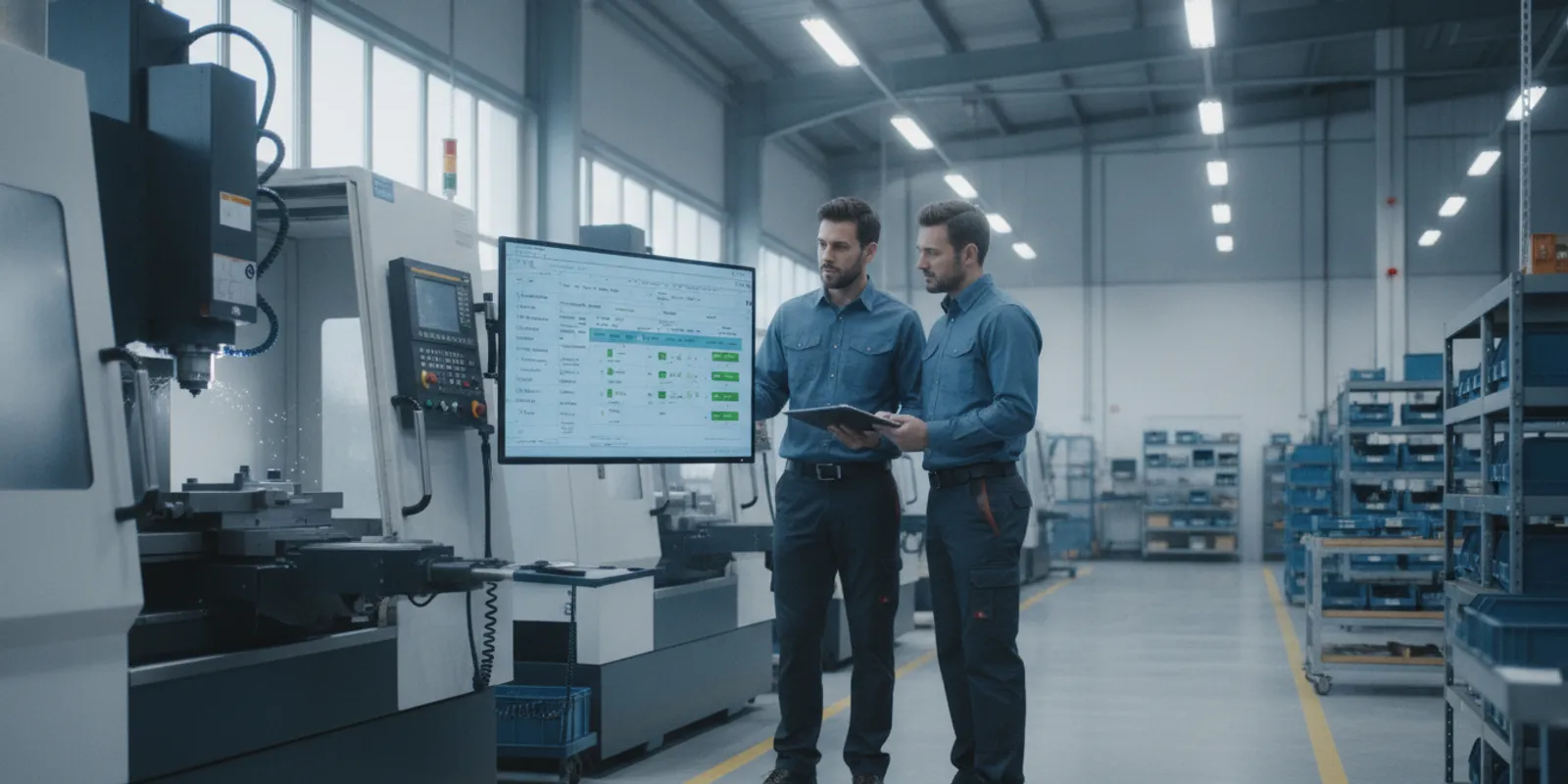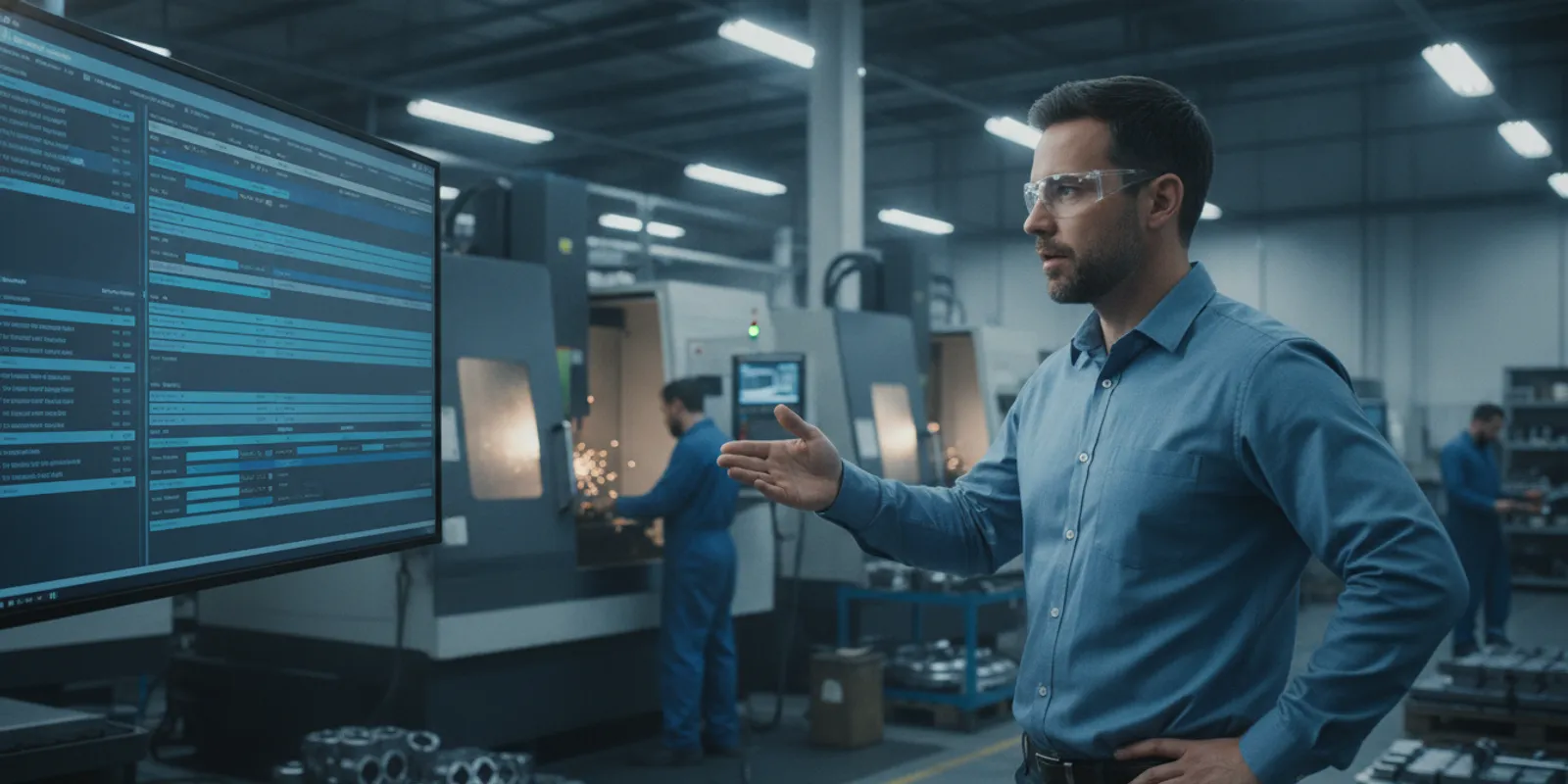
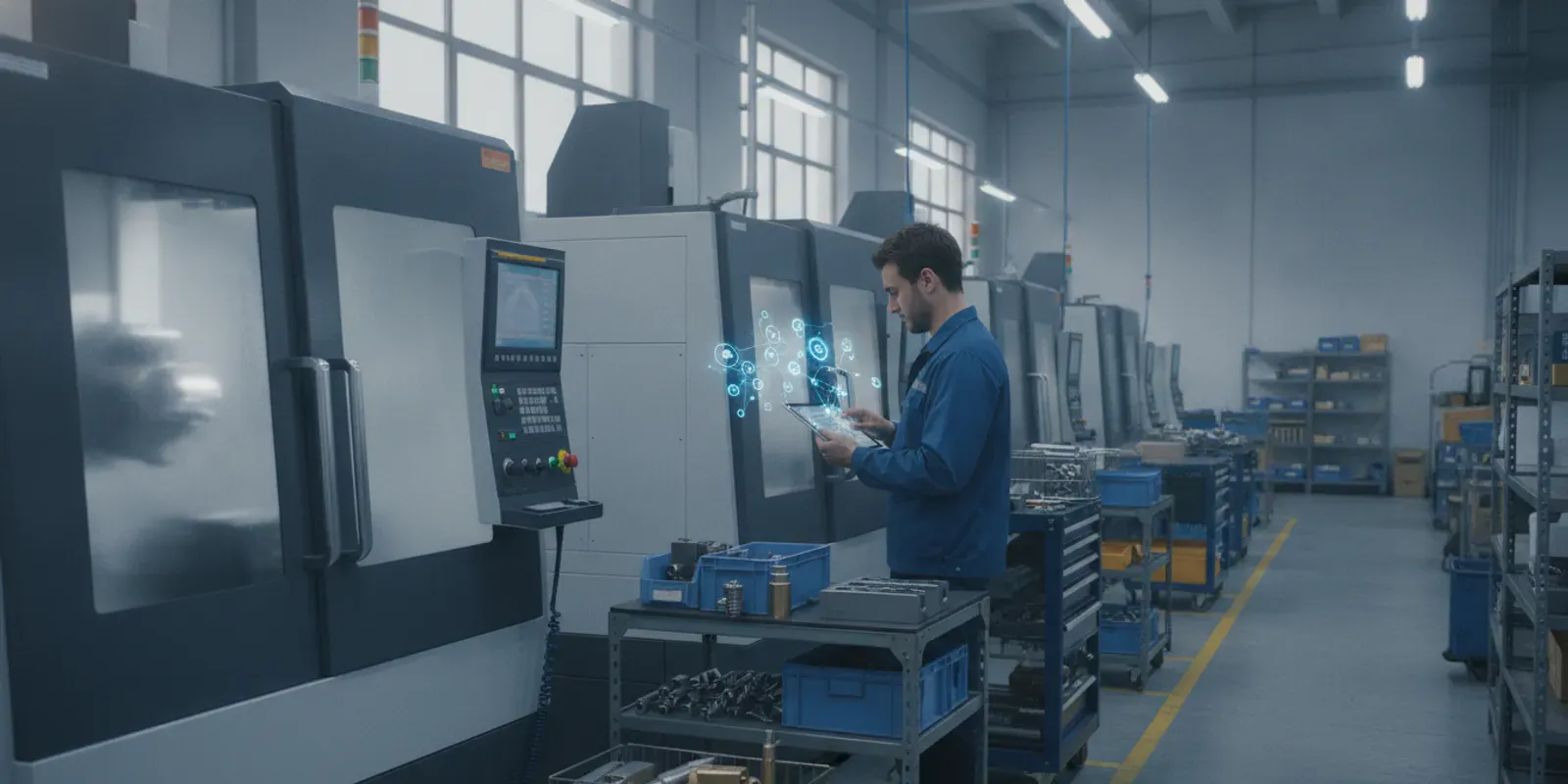
How much of your day is spent putting out fires on the factory floor? A surprise machine breakdown, a missing tool, or a rush order can throw your entire schedule into chaos. This reactive mode is exhausting and inefficient. It’s time to shift from firefighting to proactive management. This transition is made possible by implementing effective shop floor control in manufacturing. By giving you a live, transparent view of your entire operation, it allows you to spot potential issues before they become full-blown crises. You can anticipate bottlenecks, adjust schedules dynamically, and keep production flowing smoothly.
Key Takeaways
- Connect your plan to reality with live data: A shop floor control system bridges the gap between your production plan and actual floor activity. This live visibility lets you spot and solve problems as they happen, not after they have already caused delays.
- Use data to drive continuous improvement: An SFC system captures the essential information you need to understand your true performance. By analyzing this data, you can identify the root causes of bottlenecks and waste, helping you make informed decisions that directly reduce costs.
- Plan your implementation around your people: A new system is only effective if your team uses it well. Ensure a smooth transition by setting clear goals, providing thorough training, and involving your team in the process; their buy-in is the key to turning your software investment into real-world results.
What is Shop Floor Control?
If you’ve ever felt a disconnect between your production plan and what’s actually happening on the shop floor, you’re not alone. A perfect plan means little if it can’t be executed effectively. This is where shop floor control (SFC) comes in. It’s the system that bridges the gap between your strategy and the day-to-day reality of your operations, ensuring your team has the information and direction needed to get the job done right.
Shop floor control isn’t just about watching what happens; it’s about actively managing it. It provides the tools to monitor progress, handle unexpected changes, and keep production moving smoothly. By giving you a clear, real-time view of your factory floor, SFC empowers you to make quick, informed decisions that keep jobs on schedule and on budget. It’s the key to turning your production goals into tangible results.
Connecting Your Plan to Your Production Floor
Think of shop floor control as the command center for your factory. It’s a system of software and tools designed to manage and monitor every aspect of your production process. At its core, SFC tracks production orders from start to finish, showing you exactly how much work is done and what’s next in the queue. It helps you manage all your critical resources, including your team, machines, and materials, so you always know what you have and where it’s needed.
This system translates your high-level production plan into actionable steps on the floor. By providing real-time updates and clear instructions, it ensures everyone is working from the same playbook. Effective shop floor data collection is the foundation of this process, giving you the accurate information you need to plan schedules, estimate costs, and keep everything running like a well-oiled machine.
SFC vs. Manufacturing Execution Systems (MES)
It’s easy to get Shop Floor Control (SFC) and Manufacturing Execution Systems (MES) mixed up, but they have distinct roles. SFC is hyper-focused on the immediate activities happening on the factory floor. Its main job is to monitor work-in-progress, track specific job orders, and ensure daily operations run smoothly. Think of it as the on-field coach, making real-time adjustments during the game.
An MES, on the other hand, is a much broader system. It covers the entire manufacturing lifecycle, including functions like quality management, product genealogy, and detailed production scheduling. To use the same analogy, if SFC is the coach, MES is the general manager responsible for the entire season’s strategy. While they are different, they work together. A strong SFC is often a vital component of a comprehensive MES, feeding it the detailed, real-time data it needs to function.
What Does a Shop Floor Control System Do?
At its core, a shop floor control (SFC) system acts as the command center for your entire production process. It connects your high-level plans, like those in your ERP system, to the real-world action happening on the factory floor. Think of it as the conductor of an orchestra, ensuring every machine, operator, and process works in harmony to deliver jobs on time and within budget. It does this by focusing on four key areas: tracking progress, managing resources, scheduling work, and collecting data. By mastering these functions, an SFC system gives you the visibility and control you need to run a more efficient and predictable operation.
Track Production in Real Time
One of the most powerful functions of a shop floor control system is its ability to give you a live, accurate view of your production floor. It answers the critical question, “What is the status of this job right now?” The system tracks production orders as they move through each stage, showing you which operations are complete, in progress, or waiting. This eliminates the need for manual tracking, outdated spreadsheets, and walking the floor to get answers. With real-time machine monitoring, you can see which machines are running, why they’ve stopped, and how close they are to finishing a job, giving you immediate insight into your shop’s performance.
Manage Your Resources
Effective shop floor control is all about making the most of your available resources, including your people, machines, and materials. An SFC system helps you manage these assets by providing clear visibility into their availability and utilization. It ensures that you have the right materials and tools ready for each job, preventing delays caused by missing components. It also helps you understand your true capacity by showing which machines or work centers are overloaded and which have room for more work. This allows you to balance workloads effectively, avoid bottlenecks, and ensure your team can operate at peak efficiency, which is a key reason why manufacturers choose JobPack.
Schedule and Adjust Production
Creating a production schedule is one thing; keeping it on track is another. A shop floor control system excels at dynamic production scheduling. It uses real-time data from the floor to create realistic and achievable schedules. More importantly, it gives you the agility to respond when things don’t go as planned. If a machine breaks down, a key operator is out, or a rush order comes in, you can quickly adjust the schedule. The system will show you the immediate impact of these changes on other jobs and delivery dates, allowing you to make informed decisions and communicate proactively with your customers.
Collect Shop Floor Data
All of the functions above are powered by one essential activity: data collection. An SFC system is your primary tool for accurate shop floor data collection, capturing vital information about every aspect of your production process. This includes cycle times, setup times, downtime reasons, scrap quantities, and labor hours. This data provides the foundation for continuous improvement. By analyzing this information, you can identify the root causes of inefficiency, pinpoint recurring problems, and uncover opportunities to reduce waste. This transforms raw data into the powerful data analytics you need to make smarter, more strategic decisions for your business.
The Benefits of Shop Floor Control
Implementing a shop floor control system isn’t just about adding new software; it’s about transforming how your facility operates. By connecting your plan to your production floor in real time, you can achieve significant, measurable improvements across the board. These systems move you from reactive problem-solving to proactive management, giving you the tools to refine processes, empower your team, and strengthen your bottom line. From the front office to the shop floor, the right SFC system provides the clarity and control needed to hit your targets for efficiency, delivery, and quality. Let’s look at the specific benefits you can expect.
Improve Productivity and Reduce Downtime
One of the most immediate impacts of a good SFC system is on your overall productivity. By tracking jobs and machine performance in real time, you can see exactly how production is progressing against your schedule. This constant flow of information allows you to spot potential delays before they become major disruptions. For example, an effective machine monitoring system can alert you to a machine running slower than expected, giving you time to intervene. This proactive approach minimizes unplanned downtime, keeps your production lines moving, and ensures your team is always working as efficiently as possible. It replaces guesswork with certainty, helping you get more out of the resources you already have.
Gain Clear Insight into Bottlenecks
Bottlenecks are the silent killers of productivity, and they are often difficult to pinpoint until it’s too late. A shop floor control system gives you the visibility to see exactly where work is slowing down or piling up. With real-time data on every job, machine, and operator, you can identify constraints as they happen. This allows you to make immediate adjustments to your production scheduling, reallocating resources or adjusting priorities to keep work flowing smoothly. Instead of discovering a problem at the end of a shift, you can address it in the moment, preventing a small issue from causing a cascade of delays across your entire operation.
Make Smarter, Data-Driven Decisions
In manufacturing, the best decisions are based on facts, not feelings. A shop floor control system is your engine for collecting accurate, real-time information and turning it into actionable insights. It ensures that the right data reaches the right people at the right time, empowering everyone from the plant manager to the machine operator to make better choices. With clear dashboards and reports, you can analyze performance, track trends, and identify opportunities for improvement. This focus on data analytics helps you move beyond reactive fixes and build a culture of continuous, data-informed improvement that drives long-term growth and efficiency.
Lower Costs and Reduce Waste
Every improvement in efficiency and reduction in downtime translates directly to your bottom line. Shop floor control systems help you lower operational costs in several key ways. By optimizing schedules and processes, you can minimize material waste from setup errors or scrapped parts. Better inventory tracking prevents both shortages that halt production and over-ordering that ties up capital. As you increase throughput and reduce idle time, your cost-per-part naturally decreases. Many manufacturers find that the cost savings in these areas provide a rapid return on investment, as shown in various case studies where shops have transformed their profitability.
How Shop Floor Control Integrates with Your Other Systems
A shop floor control system doesn’t work in isolation. Its true value comes from how it connects and communicates with the other software that runs your business. When your systems are integrated, you create a seamless flow of information from the front office to the production line and back again. This eliminates data silos and ensures everyone is working from the same playbook. This connectivity is what transforms raw data into the clear, actionable insights you need to run your operations efficiently and make informed decisions on the fly.
Connecting SFC with Your ERP
Think of your Enterprise Resource Planning (ERP) system as the central command center for your business. It handles high-level functions like accounting, purchasing, and overall production planning. Your Shop Floor Control (SFC) system acts as the essential bridge between that high-level plan and the reality of your factory floor. It takes the work orders from the ERP and translates them into a detailed, minute-by-minute schedule. As work is completed, the SFC feeds real-time progress, material usage, and labor hours back to the ERP. This constant communication ensures your ERP always has accurate data for job costing, inventory management, and delivery forecasting, giving you a true picture of your company’s performance.
Understanding the SFC and MES Relationship
The terms Shop Floor Control (SFC) and Manufacturing Execution System (MES) are sometimes used interchangeably, which can be confusing. It helps to think of MES as a broad category of software that manages the end-to-end manufacturing process. SFC is a critical, focused function that often exists within an MES. While an MES covers everything from quality control to maintenance management, SFC zeroes in on the immediate tasks of managing work orders and tracking production activities in real time. So, an SFC system is the part of your MES that is laser-focused on what’s happening on the floor right now, ensuring daily operations run smoothly and according to plan.
Linking SFC to Machine Monitoring
To truly control your shop floor, you need to know exactly what your machines are doing at any given moment. This is where the link between SFC and machine monitoring becomes so important. An SFC system integrates directly with your equipment to pull live data on cycle times, uptime, downtime, and part counts. This real-time information stream is what powers the entire system. It allows you to see if a job is running on schedule, identify which machine has been idle for too long, and automatically update production counts without manual entry. This connection gives you the visibility to manage production proactively instead of reacting to problems after they’ve already caused delays.
Using IoT for Smarter Shop Floor Control
The Internet of Things (IoT) is making the connection between your systems even smarter. By embedding sensors in your machinery and throughout your facility, you can gather a much richer set of data than ever before. This goes beyond simple part counts and cycle times. IoT devices can monitor temperature, vibration, and energy consumption, providing deep insights into machine health and performance. When this data is fed into your SFC system, it supports advanced strategies like predictive maintenance. This is a core principle of Industry 4.0, where you can anticipate a machine failure before it happens, schedule maintenance during planned downtime, and keep production moving without interruption.
Common Implementation Challenges to Prepare For
Adopting a shop floor control system is a huge step forward, but like any major upgrade, it comes with a few hurdles. Thinking about these potential challenges ahead of time is the best way to ensure a smooth and successful rollout. Instead of seeing them as roadblocks, think of them as key milestones in your implementation plan. With the right preparation, you can handle each one and get your team on the path to greater efficiency.
Integrating with Legacy Systems
Your shop floor doesn’t operate in a bubble, and neither should your new control system. It needs to communicate with the other software you already rely on, like your ERP. The challenge is that connecting modern software with older, legacy systems can be tricky. You need to ensure data can flow seamlessly between them without errors or compatibility issues. This requires careful planning to map out how information will be shared. A system designed for integration can make this process much simpler, pulling information together to give you a complete picture of your operations through powerful data analytics.
Getting Your Team On Board
New technology can feel disruptive, and it’s natural for your team to be hesitant about changing the way they’ve always worked. The key to overcoming this resistance is to involve them from the very beginning. Show them how the new system will make their jobs easier, not harder, by providing clear instructions and reducing guesswork. Frame it as a tool that empowers them to work more efficiently. Prioritizing training and ongoing support is non-negotiable. When your team feels confident using the system, they become its biggest advocates. You can see how other companies have successfully managed this transition in various case studies.
Ensuring Data Accuracy
A shop floor control system is only as good as the data it receives. If the information going in is inaccurate or incomplete, the schedules and reports coming out will be just as unreliable. This can lead to poor decision-making, incorrect job costing, and missed deadlines. To prevent this, you need to establish clear and consistent processes for shop floor data collection. Make sure everyone understands what information needs to be tracked and how to enter it correctly. Automating data collection directly from machines is one of the best ways to reduce human error and ensure your system is running on real-time, accurate information.
Planning Your Budget and Rollout
Implementing an SFC system is an investment, and it’s important to have a clear financial plan. Beyond the software license itself, your budget should account for implementation, training, and any necessary hardware upgrades. To avoid surprises, it’s wise to plan your rollout strategy carefully. Instead of switching everything over at once, consider a phased approach. You could start with a single department or a few key machines to work out any kinks on a smaller scale. This allows your team to learn the system gradually and helps you manage costs over time. A good first step is to request a demo to get a clear understanding of the scope and potential costs.
A Roadmap for Successful Implementation
Bringing a shop floor control system into your facility is a big move, but it doesn’t have to be a complicated one. With a clear plan, you can make the transition smooth and set your team up for success from day one. Think of it less as flipping a switch and more as following a roadmap. A successful implementation isn’t just about installing new software; it’s about transforming how your shop floor operates for the better.
The key is to approach it methodically. By focusing on your goals, choosing the right tools, empowering your people, and committing to ongoing improvement, you can ensure your investment pays off. This process is about giving your team the tools they need to work smarter and giving you the visibility to lead more effectively. Let’s walk through the four key steps that will guide you from planning to a fully optimized shop floor.
Start with Clear Objectives
Before you even look at a demo, you need to know what you want to achieve. What specific problems are you trying to solve? Are you struggling with production bottlenecks, late deliveries, or a lack of visibility into your operations? Shop floor control is designed for the detailed management of activities, materials, machines, and time on your plant floor. To get the most out of it, you need to define what success looks like for you.
Write down specific, measurable goals. Instead of saying you want to “be more efficient,” aim to “reduce machine downtime by 15%” or “improve on-time delivery rates to 98%.” Having these clear targets will not only help you choose the right system but will also give you a benchmark for measuring your success after implementation.
Choose a Scalable and Flexible System
Not all shop floor control systems are created equal. The right system can significantly improve your factory’s productivity, reduce errors, and lead to smarter decisions. Look for a solution that fits your current needs but is also designed to grow with you. A scalable system will support you as you add more machines, expand your team, or take on more complex jobs, ensuring you don’t outgrow your software in a few years.
Flexibility is just as important. Your system should be able to integrate with your existing ERP and other software. A visually intuitive and adaptable system, like JobPack’s production scheduling software, allows you to tailor it to your unique workflow. The goal is to find a partner that provides a solution that molds to your business, not the other way around.
Prioritize Training and Support for Your Team
A new system is only as powerful as the people who use it every day. Your team’s buy-in and proficiency are critical for a successful rollout. From the start, communicate the “why” behind the change, focusing on how the new system will make their jobs easier and the company more successful. Go beyond a single training session by providing ongoing support and resources.
Give your workers the right instructions, drawings, and problem-solving guides to help them do their jobs correctly within the new system. Appoint a few “champions” on the floor who can act as go-to resources for their colleagues. When your team feels confident and supported, they become the driving force behind the system’s success, as many of our customers have shown in their case studies.
Build in Continuous Feedback and Improvement
Implementation isn’t the finish line; it’s the starting block. The real value of a shop floor control system comes from using its data to make continuous improvements. Your system will use real-time information from the factory floor to track everything from materials to production steps. This data is a goldmine for insights.
Schedule regular meetings to review the data and compare your performance against the objectives you set in the beginning. Are you hitting your targets? Where are the new bottlenecks? Use the system’s data analytics to answer these questions and refine your processes. This creates a powerful feedback loop where your team is constantly learning and optimizing, turning your shop floor into a truly data-driven environment.
What’s Next for Shop Floor Control?
Shop floor control is constantly evolving, driven by new technologies that make it possible to gather more data and use it in smarter ways. The core goal remains the same: making production more efficient and predictable. But the tools are becoming more powerful. Looking ahead, a few key trends are shaping the future of how we manage production, moving us toward a more connected, intelligent, and responsive shop floor. These advancements aren’t just theoretical; they are practical next steps for gaining a competitive edge.
AI and Machine Learning in Production
Artificial intelligence and machine learning are making shop floor control systems more proactive. Instead of just tracking what has happened, these smart systems can predict what will happen next. Imagine your system automatically flagging a machine for maintenance before it breaks down, based on subtle changes in its performance data. This is the power of predictive analytics. AI can also help you create more dynamic production schedules that adjust in real time to unexpected delays or new priority orders, ensuring your operations are always optimized. This move toward Industry 4.0 helps you automate complex decisions and prevent problems before they start.
The Shift to Cloud-Based Solutions
Shop floor control is all about getting the right information to the right people at the right time. Cloud-based systems make this easier than ever. By moving your data to the cloud, your team can access real-time production information from anywhere, whether they are on the shop floor, in the office, or on the go. This eliminates the need for expensive on-site servers and makes your system more scalable. As your business grows, a cloud solution can grow with you. It also simplifies access to powerful data analytics, allowing you to easily visualize performance, identify trends, and make informed decisions without being tied to a specific workstation.
Cybersecurity on the Connected Shop Floor
As shop floor systems become more connected to your ERP, machines, and the cloud, they also become a bigger target for cyber threats. A security breach could lead to costly downtime, compromised intellectual property, or manipulated production data. That’s why cybersecurity is no longer just an IT issue; it’s a critical component of modern manufacturing operations. Protecting your network and ensuring the integrity of your data is essential. This means implementing strong security protocols and partnering with software providers who prioritize security in their system design. Choosing a trusted partner is fundamental to keeping your connected shop floor safe and productive.
Gain Total Shop Floor Control with JobPack
Putting the principles of shop floor control into practice can feel like a huge undertaking, but the right system makes all the difference. To get a complete, real-time view of your operations, you need a solution that connects your plans, your people, and your machines. This is where JobPack provides a clear path forward, helping you manage every aspect of your production floor from a single, intuitive platform.
It all starts with turning your planned orders into an actionable schedule. JobPack’s production scheduling tools help you organize tasks, allocate resources, and set realistic timelines, ensuring your team knows exactly what to work on and when. This clarity eliminates confusion and keeps production moving smoothly toward on-time delivery.
True control, however, comes from knowing what’s happening on the floor right now. With JobPack’s real-time machine monitoring, you get instant visibility into every machine’s status. You can immediately spot bottlenecks, address downtime, and make on-the-fly adjustments to keep your operations running at peak efficiency. This live feedback loop is essential for proactive management instead of reactive problem-solving.
Ultimately, this wealth of information empowers you to make smarter choices. JobPack’s data analytics translate raw shop floor data into clear, actionable insights. You can track performance, identify trends, and pinpoint opportunities for improvement, leading to reduced waste and lower costs. If you’re ready to see how an integrated system can bring this level of control and clarity to your manufacturing floor, we encourage you to request a demo and see it in action.
Related Articles
- MES System for Manufacturing: The Ultimate Guide
- What Is Machine Monitoring Software? A Complete Guide
- What is a Manufacturing Execution System (MES)?
Frequently Asked Questions
What’s the most important first step when considering a shop floor control system? Before you start looking at software, the most critical step is to define what you want to accomplish. Get specific about the problems you need to solve. Are you trying to reduce machine downtime, improve on-time delivery, or get a better handle on job costs? Writing down clear, measurable goals will guide your entire process and help you choose a system that addresses your shop’s unique challenges.
How does shop floor control actually reduce my production costs? A shop floor control system lowers costs by tackling inefficiency at its source. By optimizing your production schedule and providing a real-time view of your machines, you can significantly reduce idle time. This increased throughput means your cost-per-part goes down. The system also helps minimize expensive mistakes and material waste by ensuring operators have the correct information, which directly protects your bottom line.
My team is used to our current process. How can I get them on board with a new system? The key is to involve your team from the beginning and frame the new system as a tool that makes their jobs easier, not more complicated. Focus on how it eliminates guesswork and provides clear direction. Prioritize thorough training and create an environment where they feel supported as they learn. When your team understands the benefits and feels confident using the software, they will become its strongest supporters.
Can a shop floor control system work with the ERP I already have? Yes, absolutely. A modern shop floor control system is designed to integrate with other business software, including your existing ERP. The SFC system acts as a vital link, taking high-level work orders from the ERP and feeding back real-time progress, labor hours, and material usage. This creates a seamless flow of accurate information between your front office and your production floor.
Is shop floor control the same thing as a Manufacturing Execution System (MES)? It’s easy to mix them up, but they have different scopes. Think of an MES as a broad system that manages the entire manufacturing process, including things like quality and maintenance. Shop floor control is a more focused function, often a key part of an MES, that zeroes in on the immediate tasks of tracking job orders and managing activities on the factory floor in real time.