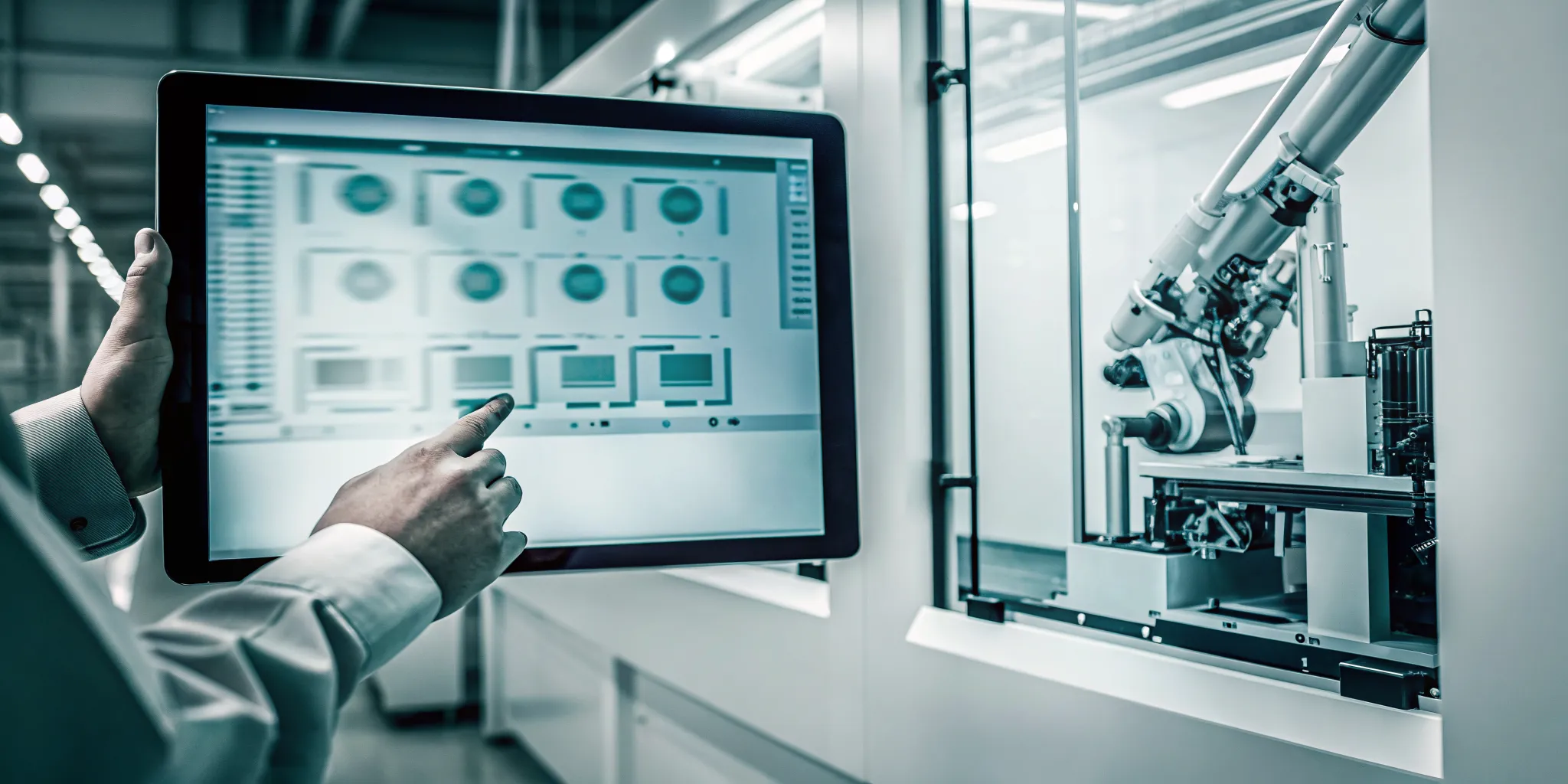

Every unfinished product sitting on your shop floor represents capital that isn’t working for you. Without a clear view of this inventory, it’s easy for costs to spiral out of control through overproduction, excess material orders, and inefficient labor allocation. This is the hidden financial drain that many manufacturers face. Effective work in process tracking is about more than just locating a job; it’s about understanding the flow, value, and timing of your entire production cycle. By implementing a system that gives you real-time financial clarity, you can control costs, reduce waste, and improve your cash flow. It turns your shop floor data into actionable financial insights, making it one of the most powerful investments for a healthier bottom line.
Key Takeaways
- Gain complete operational control with real-time visibility: WIP tracking eliminates blind spots on your shop floor, allowing you to identify and resolve bottlenecks instantly, shorten lead times, and keep production moving smoothly.
- Connect shop floor data to financial performance: By accurately tracking every job, you can better manage inventory costs, improve the accuracy of job costing, and strengthen quality control, all of which directly impact your bottom line.
- Prioritize people and process for a successful rollout: The best technology is only effective when your team uses it correctly. A successful WIP system implementation hinges on thorough employee training, seamless integration with existing software, and a commitment to using the data for continuous improvement.
What is Work in Process (WIP) Tracking?
If you’ve ever walked your shop floor and wondered about the exact status of a specific job, you already understand the need for Work in Process (WIP) tracking. Think of WIP as everything that exists between raw materials and finished goods. It’s the inventory that’s currently being worked on but isn’t yet ready for sale. WIP tracking, then, is the system you use to monitor every single item as it moves through production. It’s about creating a clear line of sight from the moment a job starts until it’s complete, giving you the control needed to ensure efficiency, accuracy, and traceability.
What WIP Tracking Involves
At its core, WIP tracking involves following each component and assembly throughout the entire manufacturing process. This isn’t just about knowing a job’s physical location; it’s about understanding its complete story. A solid tracking system captures data on which operator is working on the job, what machine is being used, and how much time has been spent at each stage. This detailed oversight helps you accurately calculate the true cost of production by accounting for labor, materials, and overhead as they are consumed. By monitoring these details, you can ensure every step aligns with your production scheduling goals and maintain a smooth, predictable workflow from start to finish.
How WIP Tracking Works on the Shop Floor
On the shop floor, WIP tracking transforms ambiguity into clear, actionable information. Instead of relying on manual logs or guesswork, modern systems use technology to automate this process. Operators can use barcode scanners or touch screens at their workstations to log the start and end of each task. This method of shop floor data collection is simple, fast, and drastically reduces human error. As data is collected from each station, a digital picture of your entire production line comes into focus. You can see which jobs are on schedule, which are stalled, and where bottlenecks are forming before they cause major delays.
Why Real-Time Data Is Crucial
In today’s fast-moving manufacturing environment, yesterday’s data isn’t good enough. Real-time data is the key to making proactive, informed decisions. When you have constant visibility into your operations, you can react instantly to unexpected events, like a machine going down or a quality issue emerging. This immediate insight allows you to reroute jobs, adjust schedules, and inform customers of potential delays without missing a beat. Real-time machine monitoring provides a live feed of your shop floor’s health and performance, giving you the agility to solve problems as they happen, not after they’ve already impacted your bottom line.
Why Your Manufacturing Business Needs WIP Tracking
If you’ve ever felt like you’re managing your shop floor with a blindfold on, you’re not alone. Without a clear view of where jobs are, what’s causing delays, and how much capital is tied up in unfinished goods, it’s nearly impossible to run an efficient operation. This is where work in process (WIP) tracking changes the game. It’s not just about knowing where a part is; it’s about understanding the flow, value, and timing of your entire production cycle.
Implementing a robust WIP tracking system gives you the visibility needed to move from reactive problem-solving to proactive management. You can spot bottlenecks before they halt production, manage inventory with precision, and make strategic decisions based on hard data, not just gut feelings. By transforming your shop floor data into actionable insights, you can shorten lead times, control costs, and deliver on your promises to customers with confidence. It’s the foundation for a more predictable, profitable, and competitive manufacturing business.
Increase Production Efficiency and Reduce Lead Times
Manual tracking methods are slow, prone to human error, and create information gaps that lead to production delays. Effective WIP tracking replaces guesswork with certainty. Automated WIP tracking saves time, reduces errors, and lets you see exactly where materials are in real-time. This constant visibility means you can identify and resolve bottlenecks as they happen, not after they’ve already derailed your schedule.
When your team knows the precise status of every job, you can optimize workflows and allocate resources more effectively. This streamlined process directly shortens your lead times, allowing you to respond faster to customer orders and market changes. A solid production scheduling system powered by real-time WIP data gives you the agility to keep operations running smoothly and efficiently.
Improve Inventory Management and Control Costs
Work in process inventory represents a significant amount of capital tied up on your shop floor. Without accurate tracking, it’s easy for this value to become bloated, leading to cash flow problems and unnecessary holding costs. WIP tracking helps you see how efficient your production is by showing you the value of items being made, which is crucial for your company’s financial reports.
By monitoring WIP levels, you can prevent overproduction and ensure you aren’t ordering raw materials too early. This level of control helps you maintain leaner inventory levels and reduce waste. Accurate shop floor data collection provides the financial clarity needed to manage costs effectively, turning your production process into a well-oiled, cost-efficient machine.
Make Smarter Decisions with Real-Time Data
In a fast-paced manufacturing environment, decisions based on outdated information can be costly. Real-time WIP tracking provides a live, accurate picture of your entire operation, empowering your team to make informed choices on the fly. When your factory teams always know exactly where every job is, what stage it’s in, and if it’s moving as planned, they can act decisively.
This immediate access to information allows you to adjust schedules, reallocate labor, or prioritize jobs with confidence. Instead of guessing, you can use powerful data analytics to guide your strategy. This data-driven approach not only improves daily operations but also helps you provide customers with accurate status updates and reliable delivery estimates, building trust and strengthening relationships.
Strengthen Quality Control and Trace Defects
Maintaining high quality standards is essential for your reputation and bottom line. WIP tracking creates a detailed digital record of a product’s journey through the production line, which is invaluable for quality control. If a problem arises with a finished product, you can quickly trace it back through each production step to the original materials and machine used.
This traceability allows you to pinpoint the root cause of defects, isolate affected batches, and take corrective action before the issue escalates. By integrating WIP data with machine monitoring, you can even identify potential quality issues based on equipment performance. This proactive approach to quality control minimizes rework, reduces scrap, and ensures you consistently deliver products that meet customer expectations.
The Technology Behind Modern WIP Tracking
Gone are the days of tracking jobs with paper tickets and manual spreadsheets. Today’s most effective work in process systems rely on technology to capture accurate, real-time information directly from the shop floor. These tools eliminate guesswork and provide a clear picture of your entire production cycle. By automating data capture, you can trust that the information you’re seeing is a true reflection of what’s happening at any given moment, which is essential for accurate scheduling and on-time delivery.
The right technology for your shop depends on your specific products, processes, and goals. Some methods are simple and straightforward, while others offer more detailed, automated data. The key is to find a solution that gathers the information you need without disrupting your workflow. The technologies we’ll cover range from simple scanning solutions to fully automated tracking systems. Each one serves a purpose, and understanding them will help you choose the best fit for your operations. Let’s walk through the most common technologies that power modern WIP tracking and how they bring visibility to the factory floor.
RFID for Automated, Hands-Free Tracking
Imagine tracking every part and assembly as it moves through your facility, without anyone needing to stop and scan a thing. That’s the power of RFID (Radio-Frequency Identification). This technology uses small tags or labels that you can attach to parts, pallets, or job bins. As these items pass by RFID readers placed at key points in your production line, their location and status are automatically updated in your system. This hands-free approach is perfect for fast-moving, high-volume environments where manual scanning would create bottlenecks. It reduces the chance of human error and frees up your team to focus on their work, not on data entry.
Barcodes for Simple, Accurate Data Entry
Barcodes are a classic for a reason: they are simple, reliable, and incredibly effective. This familiar technology is one of the most common ways to digitize WIP tracking. By placing a unique barcode on each job traveler or component, operators can quickly scan it at each workstation to log progress. This simple action creates a digital footprint, marking the job’s journey from one stage to the next. Using barcodes for shop floor data collection ensures that information is entered quickly and accurately. It eliminates the errors that come with manual typing and provides a clean, consistent data stream for your tracking system.
IoT Sensors for Pinpoint Location Tracking
For operations that require even more granular detail, Internet of Things (IoT) sensors offer pinpoint location tracking. These small, connected devices can be attached to tools, equipment, or high-value assets to provide precise, real-time location data. Instead of just knowing a job passed through a certain station, you can see exactly where it is on the shop floor at any given moment. This level of detail is a core component of Industry 4.0 and smart manufacturing. IoT sensors help you monitor the movement of materials, identify inefficiencies in your layout, and ensure critical assets are always where they need to be.
Integrated Software for a Single Source of Truth
All these technologies, from barcodes to IoT sensors, are designed to collect data. But that data is only powerful when it’s brought together in a central system that makes it easy to understand. Integrated software, like a production scheduling or MES platform, acts as the brain of your WIP tracking operation. It consolidates information from every source to create a single, reliable source of truth for your entire team. This software provides a comprehensive view of all jobs, their statuses, and their locations. With powerful data analytics, it turns raw data into actionable insights, helping you spot bottlenecks, predict completion times, and make informed decisions.
How to Choose the Right WIP Tracking Solution
Picking the right WIP tracking solution is a big decision that will impact your entire shop floor. The goal is to find a system that fits your unique processes, not a one-size-fits-all solution that forces you to change how you work. To find the best fit, you need to look at your specific needs, your existing technology, and your goals for the future. Breaking the decision down into a few key areas will help you choose a system that delivers real value from day one.
Define Your Must-Have Features
Before you even look at different software options, sit down with your team and make a list of your non-negotiables. What problems are you trying to solve? Automated WIP tracking saves time, reduces errors, and gives you a clear, real-time view of where every job is on the floor. Your list might include features like automated shop floor data collection, barcode or RFID scanning, and customizable dashboards. By defining your must-haves first, you can quickly filter out solutions that won’t meet your core needs and stay focused on the ones that will.
Ensure It Integrates with Your Current Systems
A new WIP tracking system should feel like a natural extension of your existing technology, not another isolated program. The last thing you want is a data silo that creates more manual work for your team. The right solution will integrate smoothly with the systems you already rely on, like your ERP or MES. This seamless connection ensures that data flows freely between departments, creating a single source of truth. This integration is the foundation for powerful data analytics, allowing you to make smarter, more informed decisions based on a complete picture of your operations.
Plan for Future Growth and Customization
The WIP tracking system you choose today should be able to support your business tomorrow. Think about your long-term goals. Are you planning to add new machines, expand your product lines, or open another facility? Your software needs to be scalable enough to grow with you. A system that provides constant visibility is crucial for modern factories with complex production lines. Look for a solution that is not only powerful but also flexible. The ability to customize reports and workflows will ensure the system remains a valuable asset as your processes evolve. This is why finding a true partner, not just a provider, is so important.
Analyze the Budget and Potential ROI
While the initial cost is always a consideration, it’s more important to look at the long-term value and potential return on investment (ROI). A good WIP tracking system isn’t an expense; it’s an investment in efficiency. It helps you work more efficiently, reduce waste, and quickly identify bottlenecks, all of which directly impact your bottom line. Before making a decision, calculate the potential savings from reduced lead times and lower inventory carrying costs. Looking at case studies from similar companies can give you a clear idea of the financial benefits you can expect.
Common Implementation Pitfalls (And How to Avoid Them)
Putting a new WIP tracking system in place is a big step, but even the best technology can fall short if the rollout isn’t handled carefully. It’s easy to get excited about the potential benefits and overlook some common hurdles that can trip you up. By anticipating these challenges, you can create a smoother transition for your team and start seeing results faster. Let’s walk through some of the most frequent missteps and, more importantly, how you can steer clear of them.
Setting Unrealistic WIP Limits
One of the main goals of WIP tracking is to limit the amount of work in progress to improve flow. However, there’s a delicate balance to strike. If you set your WIP limits too tight, you risk creating idle time. As one expert notes, “If you limit WIP too much, workers might run out of things to do, slowing down the whole line.” This can be just as damaging as having too much WIP. The key is to find the sweet spot where work moves smoothly without overwhelming your team or leaving them waiting. Start with your current process data to set a realistic baseline, and be prepared to adjust as you gather more information from your new system. A flexible production scheduling tool can help you model different scenarios to find the right limits.
Ignoring the Root Cause of Bottlenecks
It’s tempting to see a pile of work accumulating at a specific station and think the problem is the pile itself. But as one manufacturing guide points out, “People often try to fix the visible pile of WIP instead of the real reason it’s piling up (the bottleneck).” The pile-up is just a symptom; the real issue is the constraint causing it. Your WIP tracking system is fantastic at flagging these problem areas, but its job is to provide data, not solutions. You and your team need to use that data to investigate why the bottleneck exists. Is it a machine that needs maintenance? A process that needs refining? Or an operator who needs more training? Use data analytics to dig into the root cause instead of just shuffling the work around.
Overlooking Employee Training and Buy-In
You can invest in the most advanced WIP tracking system in the world, but it won’t do you any good if your team doesn’t use it correctly or, worse, doesn’t want to use it at all. Change can be difficult, and introducing new technology without proper support is a recipe for failure. It’s crucial to get your team on board from the beginning. Explain the “why” behind the change: how it will make their jobs easier, reduce frustration, and help the company succeed. Provide thorough training so everyone feels confident. The goal is to get everyone “up to speed quickly, safely, and confidently” with the new process. When your team understands the benefits and feels supported, they become active participants in making the system a success.
Underestimating Data and Integration Challenges
If you’re moving away from manual tracking methods, you’re already on the right path. As one industry resource highlights, “Many factories still track WIP by hand using spreadsheets, which can be slow and lead to mistakes.” However, implementing a digital solution comes with its own set of technical hurdles. The biggest is often integration. Your new WIP system needs to communicate seamlessly with your existing ERP and other shop floor software to create a single source of truth. Before you commit to a solution, map out your entire tech stack and confirm the system can integrate smoothly. This prevents data silos and ensures the information you’re collecting is accurate, timely, and accessible across your entire operation. This is a key reason to explore Why JobPack and its integration capabilities.
How to Get the Most from Your WIP System
Putting a work in process tracking system in place is a great first step, but the real magic happens when you actively use the data it provides. A WIP system isn’t just a passive tracking tool; it’s a powerful engine for continuous improvement that can transform your shop floor. When you move beyond simply knowing where a job is and start analyzing why it’s there, you begin to see the bigger picture. By focusing on the right metrics, visualizing your data, and making regular adjustments, you can turn real-time information into tangible results like shorter lead times, lower costs, and happier customers. Think of your WIP system as a live map of your production process. It shows you where you are, where you’re going, and the best route to get there. The key is to keep your eyes on the map and be ready to adjust your course when you spot a traffic jam or a shortcut. This shift from reacting to fires to proactively managing your workflow is what sets leading manufacturers apart. It’s about creating a feedback loop where data informs decisions, and those decisions create a more efficient, predictable, and profitable operation. Let’s walk through four practical ways to make sure you’re getting the maximum value from your investment.
Monitor the Right Performance Metrics
You can’t improve what you don’t measure, but it’s easy to get lost in a sea of data. Instead of tracking everything, focus on the key performance indicators (KPIs) that directly impact your bottom line. The most important metrics for WIP are typically lead time, throughput, and the amount of work in process itself. To deliver products faster, you have two main levers: you can either increase your throughput (make more products per hour) or reduce your WIP (have fewer unfinished products on the floor at once). A good WIP system provides the data analytics you need to see how these metrics are connected and identify which lever to pull for the biggest impact.
Leverage Visual Dashboards and Analytics
Raw data in a spreadsheet can be hard to interpret. That’s why visual dashboards are a game-changer for shop floor management. When you can see your production flow on a screen, with color-coded statuses and real-time updates, spotting a bottleneck becomes almost effortless. A visual dashboard instantly shows you where jobs are piling up or which machines are sitting idle. This allows you to move from reacting to problems to proactively solving them. With clear, live visualizations, your team can make faster, more informed decisions without having to dig through reports. This kind of real-time machine monitoring turns complex data into simple, actionable insights.
Review and Adjust Your System Regularly
Your production environment is always changing, so your processes should, too. A WIP system gives you the data you need to adapt intelligently. Make it a habit to regularly review your production steps to find delays or opportunities to use your resources more effectively. Schedule weekly or monthly check-ins with your team to look at the data together. Are WIP limits for a specific workstation consistently too high or too low? Is a particular process always taking longer than planned? Use these insights to fine-tune your production scheduling and make small, incremental changes that add up to significant improvements over time.
Commit to Continuous Improvement
Ultimately, a WIP system is a tool that supports a culture of continuous improvement. When your team has access to clear, reliable data, they are empowered to identify inefficiencies and suggest solutions. Smart systems can even help you predict where bottlenecks might occur, allowing you to address them before they slow down production. Encourage your team to use the WIP data to ask “why” and experiment with better ways of working. This proactive approach, supported by powerful tracking and analytics, is what separates good manufacturing operations from great ones. It’s how you build a more resilient, efficient, and profitable business for the long haul.
Related Articles
- Shop Floor Tracking Software: Boost Manufacturing Efficiency | JobPack
- How Going Paperless Creates a Complete Audit Trail – Shop Floor Management Software – JobPack
- Production Scheduling Software for Manufacturers | JobPack
- How JobPack Empowers You to Scale Your Manufacturing Business – Shop Floor Management Software – JobPack
Frequently Asked Questions
We’re a smaller shop. Is a WIP tracking system still worth it for us? Absolutely. WIP tracking isn’t just for large-scale operations. In fact, smaller shops can see a significant impact from it because every minute and every piece of material counts. A good system is scalable, meaning you can start with the core features you need right now, like simple job tracking, and add more capabilities as you grow. The goal is to gain clarity and control, which helps any size business reduce waste and deliver on time.
How does WIP tracking help with job costing? WIP tracking gives you the exact data you need for accurate job costing. Instead of relying on estimates, the system captures the real amount of time, labor, and materials used at every single step of the production process. This detailed record allows you to see the true cost of a job as it’s being built. With this information, you can create more competitive quotes, understand which jobs are most profitable, and make smarter financial decisions.
Will my team on the shop floor be able to adapt to a new system? This is a common and important concern. Modern WIP tracking systems are designed with the user in mind, often using simple tools like barcode scanners or intuitive touch screens that require minimal training. The key to a smooth transition is communication. When your team understands how the system will reduce manual data entry and help them work more efficiently, they are more likely to embrace it. Proper training and support are crucial to building confidence and ensuring everyone is on board.
What’s the difference between WIP tracking and machine monitoring? It’s helpful to think of them as two sides of the same coin. WIP tracking follows the job itself: what part is being made, where it is in the process, and who is working on it. Machine monitoring, on the other hand, focuses on the equipment: is a machine running, is it down for maintenance, and how efficiently is it performing? When you combine both, you get a complete, 360-degree view of your shop floor’s health and productivity.
We’re still using spreadsheets. What’s the first practical step to moving toward a digital system? The best first step is to identify your biggest pain point. Before looking at any software, walk your shop floor and talk to your team. Are you spending too much time searching for lost jobs? Are constant delays hurting your delivery dates? Is inaccurate data causing problems with inventory? Once you pinpoint the most critical issue you need to solve, you’ll have a clear goal in mind. This will help you evaluate different solutions and choose one that directly addresses your most pressing needs.