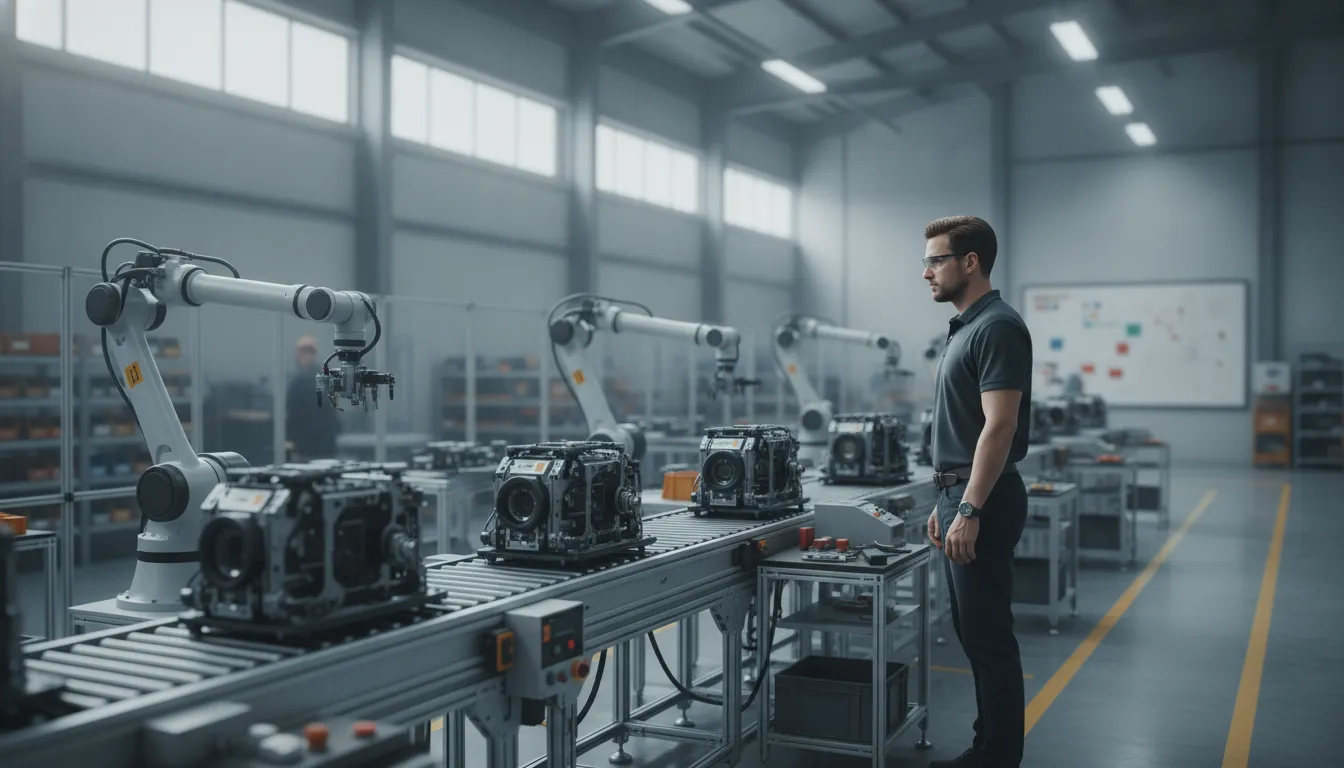

Schedule a live demo today to see how AS9100-certified machine shops eliminate bottlenecks with real-time capacity planning. Missing a delivery date usually starts with a failure to see future bottlenecks. When managers use old tools, they cannot react fast enough to broken machines or new job dates.
Aerospace capacity planning is how a machine shop matches its work hours, tools, and materials to the tough needs of flight and defense orders. This work is a key part of staying in line with AS9100 Rev D rules, which require shops to control work and manage risk.
When you move from old paper lists to live schedules, you can find bottlenecks before they cause late parts or shop floor errors. Good planning helps shops that handle many small jobs stay on track with both military and commercial work.
It turns raw shop data into a clear map for hitting delivery dates and getting the most out of every machine on the floor. This clear view lets teams work with certainty instead of guessing at their limits.
Learning how to handle these changing parts is the first step to a better shop floor. You need to know the basics of aerospace capacity planning to see how it helps your shop stay on track. The transition to a smarter shop starts with knowing what the term really means for an AS9100 shop.
What Is Aerospace Capacity Planning?
Aerospace capacity planning is the process of matching shop resources to the needs of flight production. For AS9100 shops, this means more than just checking if a machine is free. You must align labor, materials, and machine hours to meet strict defense standards. Good aerospace capacity planning makes sure every machine hour and staff shift helps with on-time delivery. This keeps quality high and prevents missed dates.
How it works in AS9100 shops
In a high-stakes shop, planning must be exact. The AS9100 Rev D standard says shops must manage production and risk at every step. This starts by finding your true capacity. You need to know how many hours your machines run each week. You must also subtract time for tool changes and repair. If your shop runs three shifts, your plan must show the real help you have for each slot. This includes the skill sets needed for aerospace parts.
Material lead times also matter a lot. Aerospace parts often need special metals that take a long time to get. A late shipment can stop a machine if you do not track it. Planning software helps you manage these parts by linking resources to the main schedule. This keeps your shop compliant and fast. By finding resource gaps early, you can balance your work. This helps you avoid the big delays seen at busy flight hubs, as shown in NASA research on air traffic demand.
Resource and labor alignment
Labor is often the hardest thing to manage in aerospace shops. You cannot just move any worker to any machine. Planning needs a close look at staff skills. In many cases, these staff levels and skill checks are legal requirements. They keep the parts you make safe for flight. Your plan must show who can run specific jobs and which shifts they can work.
Machine hours are the second half of the task. A shop might have 50 machines, but only five might be right for a complex turbine part. Your capacity is set by those specific tools. Aerospace capacity planning tracks what each machine can do. It lets you plan for a 40-hour week or a full run with data you can trust. This moves your shop from fix-it mode to a smooth, steady flow.
Why Does Dynamic Capacity Planning Matter for AS9100 Compliance?
AS9100 Rev D is the global rule for quality in the aerospace and defense world. To stay certified, a shop must show it can plan and control its work with great care. This is why aerospace capacity planning is a key part of any compliance plan. It helps you prove that you have the tools and people to meet tough customer needs. Without a clear plan, your shop risks failing an audit or missing a critical due date.
Operational Planning and Control
Clause 8.1 of the AS9100 Rev D standard focuses on operational planning. It requires you to build a system that manages the full life of every part. You must show that your machine capacity and labor hours match your schedule. Dynamic planning gives you the data to prove this to auditors. It moves your shop away from reactive work and toward a steady flow. This level of order is exactly what major aerospace firms look for in a partner. A dynamic system tracks how machines and people work together. It accounts for setup times, run times, and maintenance breaks. This helps you avoid filling your shop too full. When you can see your true capacity, you can give your clients a better word on delivery dates. This data-led approach meets the spirit of Clause 8.1 by keeping production under firm control at all times.
Managing Operational Risk
Risk management is a big part of Clause 8.1.1. In the world of AS9100 Rev D, any threat to a delivery date is a quality risk. A lack of machine time or a missing staff member can stall a big order. Dynamic capacity planning lets you find these risks weeks before they cause a crisis. It shows auditors that you are looking ahead to stop problems before they start. Research from NASA shows that rising air traffic demand puts more stress on shop capacity. This makes it harder to stay flexible when things go wrong. A dynamic plan allows you to run “what-if” tests. You can see how a machine breakdown might affect your whole floor. Having these answers ready helps you manage risk and keep your quality rating high.
Building Audit Readiness
When auditors visit your shop, they want to see written production plans. They need to know that how you set your tools and time is based on facts, not guesses. Spreadsheets often fail here because they go out of date too fast. A dynamic capacity plan stays current as work moves through the shop. This gives you a live record of how you use your machines and labor to meet demand. Audit readiness also depends on how you handle changes. If a client moves up a due date, you must show how that shift impacts other jobs. A dynamic tool tracks these shifts on its own. It provides a paper trail that shows you checked your capacity before saying yes. This level of proof is vital for keeping your certification and growing your aerospace business.
Key Components of a Dynamic Capacity Strategy
Manual vs. dynamic capacity planning at a glance
| Factor | Manual planning | Dynamic capacity planning |
|---|---|---|
| Data freshness | Updated once per shift or day | Real-time from every machine |
| Bottleneck visibility | Found after jobs are late | Detected days or weeks in advance |
| What-if testing | Requires manual recalc | Run scenarios without risk |
| Schedule changes | Spreadsheet rebuild | Drag-and-drop adjustment |
| Audit trail | Paper logs | Digital, searchable record |
| On-time delivery | Hard to predict | Calculated from true capacity |
Success in a high-stakes shop starts with a plan that moves as fast as your floor. Active capacity planning lets you shift your schedule the moment a problem pops up. Instead of guessing how much work you can take on, you use live data to make hard choices. This path moves away from old, static tools that fail when a machine breaks or a part is late. A moving plan gives you the speed to handle tight deadlines and high-mix work without losing control of your shop.
Real-Time Data and Machine Monitoring
A live plan rests on a base of real data. You cannot plan for tomorrow if you do not know what is happening right now. Top shops use machine monitoring to track every tool and part in real-time. This link to the shop floor gives you the truth about your work. For example, if a milling center goes down at 10:00 AM, a smart system sees the stop. It can then move other jobs to different machines or tell you how the delay will hit your ship date.
Industry reports show that collecting data is the base for models that predict how much labor you will need. In aerospace, where parts cost a lot and lead times are long, this live view stops small issues from becoming big losses.
Without this, your shop stays in a reactive state. You only find out a job is late when it does not ship. With live monitoring, you catch the drift early. You can then tell the customer about the change or fix the shop flow to catch up. This level of detail is a must for any shop that wants to grow.
Finite Capacity Scheduling
One of the most vital parts of this strategy is how you view your shop’s limits. Many shops use infinite capacity models, which assume you have all the time and tools you need. This often leads to overbooked floors and late parts. In contrast, finite capacity scheduling looks at the real hours you have. It counts every machine, person, and tool as a limited resource. This prevents the “firefighting” that kills productivity in busy shops.
Choosing between different ways to plan capacity changes how you hit your goals. For aerospace capacity planning, finite models are much better. They ensure you never promise a job that your shop cannot finish on time. This is key for keeping your AS9100 status and keeping your best customers happy. It also helps you manage your team. When you know your real limits, you do not burn out your staff with sudden overtime. You can plan for maintenance and training without hurting your output.
What-If Scenarios and Clear Views
A strong strategy also looks ahead to find future blocks. You must see where your shop might run out of space or time before it happens. NASA research on flight systems found that finding future resource blocks is key for balancing complex work. When you see a jam three weeks out, you can add a shift or move work early. This foresight prevents the sudden stops that derail aerospace production lines.
What-if tools let you test changes before you make them. You can ask the system: “What if we buy a new lathe?” or “What if this material is two days late?” The system then shows how those changes ripple through your whole schedule. This clear view turns your plan from a guess into a tool for growth. It helps you stay fast when defense orders change or new projects start. By testing scenarios in a digital twin, you reduce the risk of costly floor errors.
Common Capacity Planning Challenges in Aerospace Machine Shops
Many shops struggle to keep up with the fast pace of the aerospace world. Real-world aerospace capacity planning is hard because the floor changes every day. You might have a plan on Monday, but a rush order or a broken tool can ruin it by Tuesday.
These shifts make it hard to know if you can take on new work or if you will miss a due date. Without a live view, most shop owners end up reactive instead of proactive. This leads to high stress and low profit for the whole team.
Managing bottlenecks and schedule shifts
The biggest hurdle for most shops is finding where work gets stuck. Bottlenecks often move from one machine to another as the mix of jobs changes. If one spindle goes down, it can stall three other jobs that need that part. Most shop owners try to solve this with more overtime, but that costs too much.
Sudden shifts in the schedule also create stress. In aerospace, a hot defense order might jump to the front of the line. This forces you to push back other high-value jobs. Good machine shop planning helps you see these ripples before they cause a late ship.
High-mix low-volume complexity
Aerospace work is often high-mix and low-volume. You may run twenty different parts in one week, each with its own setup needs. This detail makes it hard to guess how much time a job will really take. If your data is old, your capacity plan will be wrong from the start.
Changeovers take up a lot of time that could be spent cutting chips. When you have many small batches, your machines spend more time sitting still. You need to know exactly when a machine will be free to start the next setup. Balancing this mix needs a system that can track every minute of the day.
Compliance and MRO unpredictability
Rules for ITAR and AS9100 add another layer of work. You must track every material and process to keep your seals of approval. This tracking pressure takes time away from actual production planning. If your team is busy with paperwork, they cannot focus on the schedule.
Aircraft upkeep and repair (MRO) is also hard to plan. Unlike new parts, repair work has a lot of unknown factors. You might not know what a part needs until you take it apart. This makes for a shaky schedule that can change by the hour.
National research shows that finding future resource constraints is a key part of balancing these programs. Legal rules also play a big role in how you staff your shop. For example, EASA 145 rules state that proper capacity planning is a legal need for aircraft maintenance. If you cannot show this during an audit, you could lose your license to work.
Technology That Enables Dynamic Capacity Planning
Why shop floors need real-time tools
Modern aerospace machine shops face a tough task. They must balance strict rules with the need to ship parts on time. Old tools like paper logs and basic charts often lead to late jobs and idle machines. As air traffic demand grows, NASA reports that current capacity is often not enough to stop long delays. This makes aerospace capacity planning a vital part of your daily shop life. You need tools that show you what is going on on the floor right now.
To stay ahead, you must move away from fixing fires. You need software that tracks your labor, machines, and stock in one view. Good tools help you spot a logjam before it stops your work line. It gives you the clear data needed to make smart choices. This shift to live data helps you meet the tight rules of the defense and aerospace fields without adding more staff.
Five steps to set up dynamic planning
Moving to a new system does not have to be hard. A clear path helps you get your shop ready for more growth. By doing these steps, you can turn your shop into a lean, fast engine. You will be able to see just where every job sits and how to fix delays fast. Here is how you can use tools to improve your production capacity optimization efforts.
- Connect your machines for live tracking. The first step is to get data straight from your CNC machines. This gives you a true look at run time and idle gaps. You no longer have to guess how long a job really takes.
- Use a clear Gantt chart. A new board lets you see the whole shop at a glance. You can move jobs with a simple drag and drop to fix gaps in the plan. This makes it easy to see the impact of a new rush order.
- Run what-if tests. Before you change the plan, test it in a safe space. See how a broken machine or a late part will change your ship dates. This helps you find the best path forward without any risk to live jobs.
- Link your ERP to your shop floor. Your office and shop floor should talk as one. By pulling job data from your ERP, you stop entry errors. This keeps your dates right and your team on the same page.
- Set up alerts for delays. You cannot watch every machine all the time. Use software to send you a text when a job falls behind. This lets you step in and fix the issue before the client ever knows there was a problem.
The power of live data flow
When your tools work as one, you gain a big edge in the market. You can give your clients dates you know you can hit. You also save money by cutting down on extra hours and idle time. Most shops can see these gains within a six-week setup. This path keeps your shop floor running at its best, even when the mix of jobs changes every day. You get more than just a plan; you get a clear map for your future growth.
What Are the Best Practices for Aerospace Capacity Planning?
Aerospace machine shops face high pressure to ship parts on time every day. Success in aerospace capacity planning starts with strong habits across your entire shop floor. You need a mix of clear rules, trained staff, and good data to keep your shop running well. These steps help you meet tough defense standards while keeping your machines busy.
When you have a solid plan, you can avoid the chaos of last-minute schedule changes. An active approach lowers stress and helps you manage complex jobs with ease. It gives your team the room to focus on the work instead of fixing problems.
Set up written planning rules
You must record how you plan work to meet AS9100 Rev D standards for high quality. Audits often fail when a shop cannot show how they manage their workload and their risks. Create a clear guide for your team that shows how you give jobs to specific machines and workers. This helps you stay ready for an audit at any time.
Just as NASA finds and manages resource limits to keep complex programs on track, your shop must map out its own limits. Clear records prove to your customers that you have total control over your work flow. It shows that you can handle high-mix work without losing track of your goals.
Train staff on finite capacity
Many shops still use old ways that assume they have endless time, labor, and tools. This often leads to late parts and stressed workers when the shop floor gets busy. You should train your team to use finite capacity methods to manage their tasks. This means only booking work that a machine can actually finish in a single day.
By learning about different capacity planning methodologies, your team can spot likely delays days before they happen. This shift helps you stop reactive “firefighting” and start hitting your ship dates with less stress. It also builds trust between your sales team and the shop floor workers.
Use real data to track goals
Good choices come from real facts on the floor, not just guesses from the office. You need to see what is happening on every machine in real time to make smart moves. Share these schedules with every shift so all workers know exactly what to do next. This keeps the whole team on the same page.
Review your on-time shipping numbers every week to see where your process can improve. This weekly check keeps the entire shop focused on your most important goals. When you use live data, you can move work around fast if a machine breaks down or a part is late. This makes your shop agile and ready for any sudden change in demand.
Frequently Asked Questions
How does capacity planning impact AS9100 compliance?
Machine shops must align their planning with AS9100 clauses to manage work and risk. User Solutions says this work is vital for aerospace and defense shops to meet high standards. Good planning helps you track how you use tools and staff. This makes it easier to pass tests and stay safe. It also helps you find and fix risks before they cause late parts.
What role does data collection play in aerospace man-hour forecasting?
You need good data to predict how many hours a job will take. Research from Aviathrust shows that data is the base for exact shop floor models. When you track time well, you can see if your team is on pace. This helps you plan for future bids with more skill. Trust in your data means you can spot gaps and add more help when it is truly needed.
Why is capacity planning important for aircraft maintenance?
Planning is not just a best practice in the hangar. It is a legal rule for keeping flight safety high. Aviathrust notes that shops must show they have enough skilled staff to do the work. If you take on too much work, you risk making errors or missing deadlines. Good planning keeps your team fresh and your shop in line with the law.
What are the common tools for aerospace capacity planning?
Most shops use software to track jobs, workers, and machines. These tools help you see if you can meet defense and aerospace rules. Epicflow says this software is key for managing your main shop assets. It replaces old paper sheets with live views of your floor. This helps you shift work when a machine breaks or a rush job comes in from a client.
Ready to Take Control of Your Shop’s Capacity?
If you keep using old paper and tools that do not talk to each other, you will miss your dates and lose money every day. Contact JobPack today to stop late jobs in six weeks with our aerospace capacity planning tools that give you a plan that works.
Our tools show you how to use your team and gear in the best way so you can ship more parts and grow fast. Starting today puts you ahead of others and keeps your customers happy with parts that ship on time and hit every high goal. It is time to move past the stress of guessing and get the tools you need to run your shop with more speed.
Ready to take control of your shop capacity? Call (847) 741-1861 to schedule a live demo and see how our tools help AS9100 shops prevent bottlenecks, manage rush orders, and improve on-time delivery today.