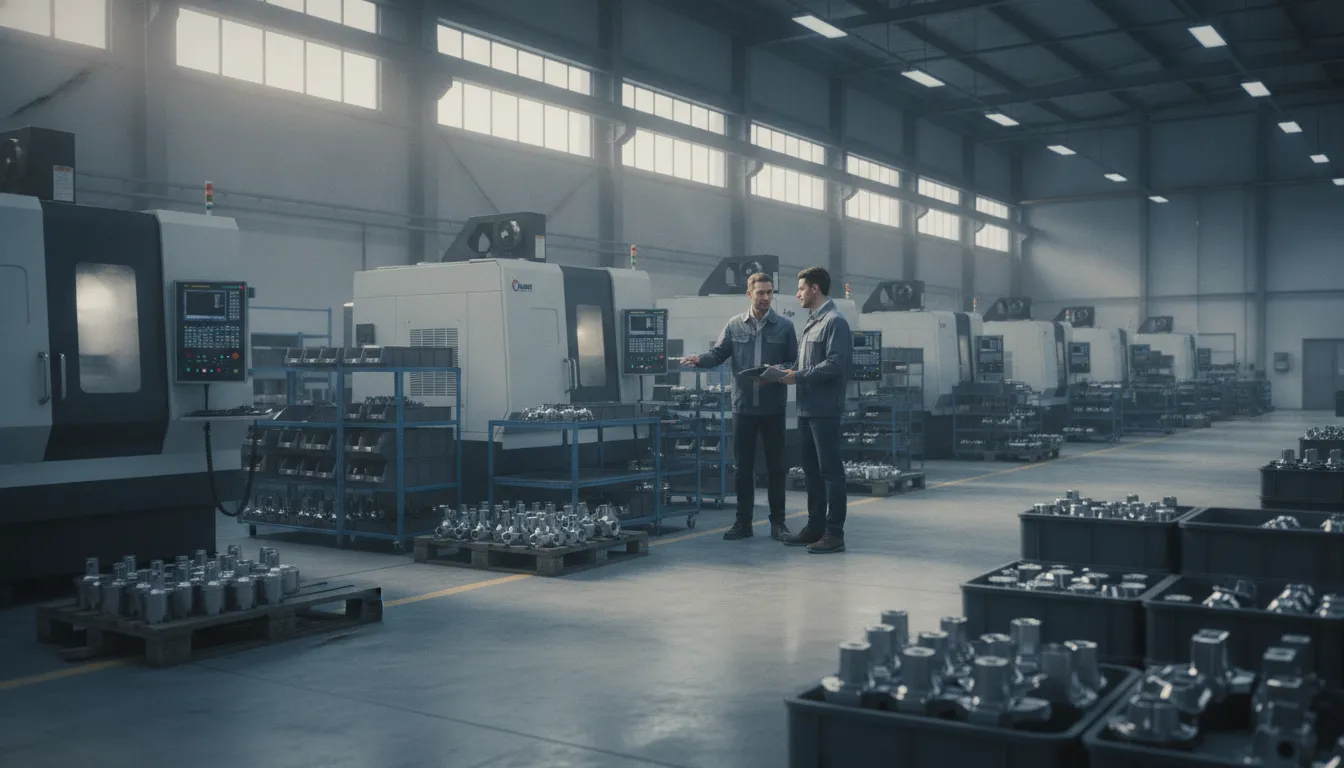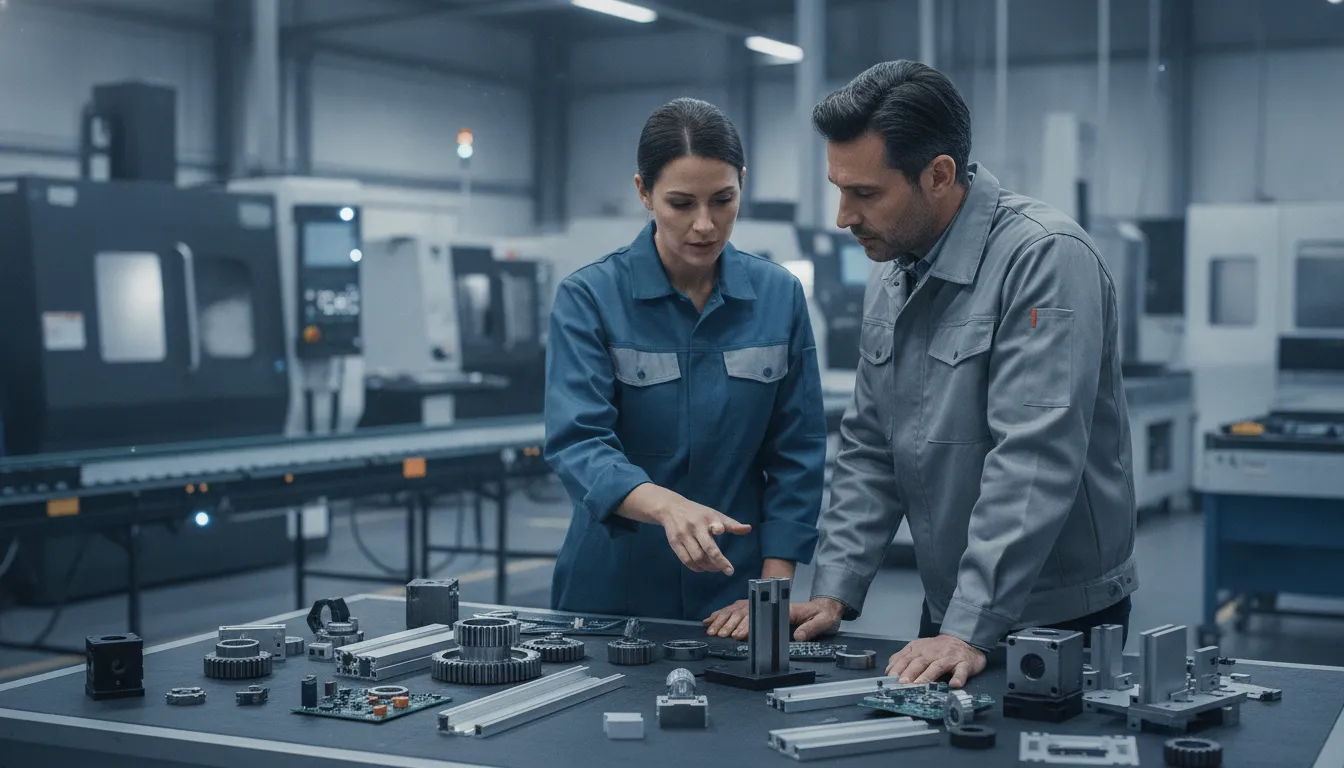
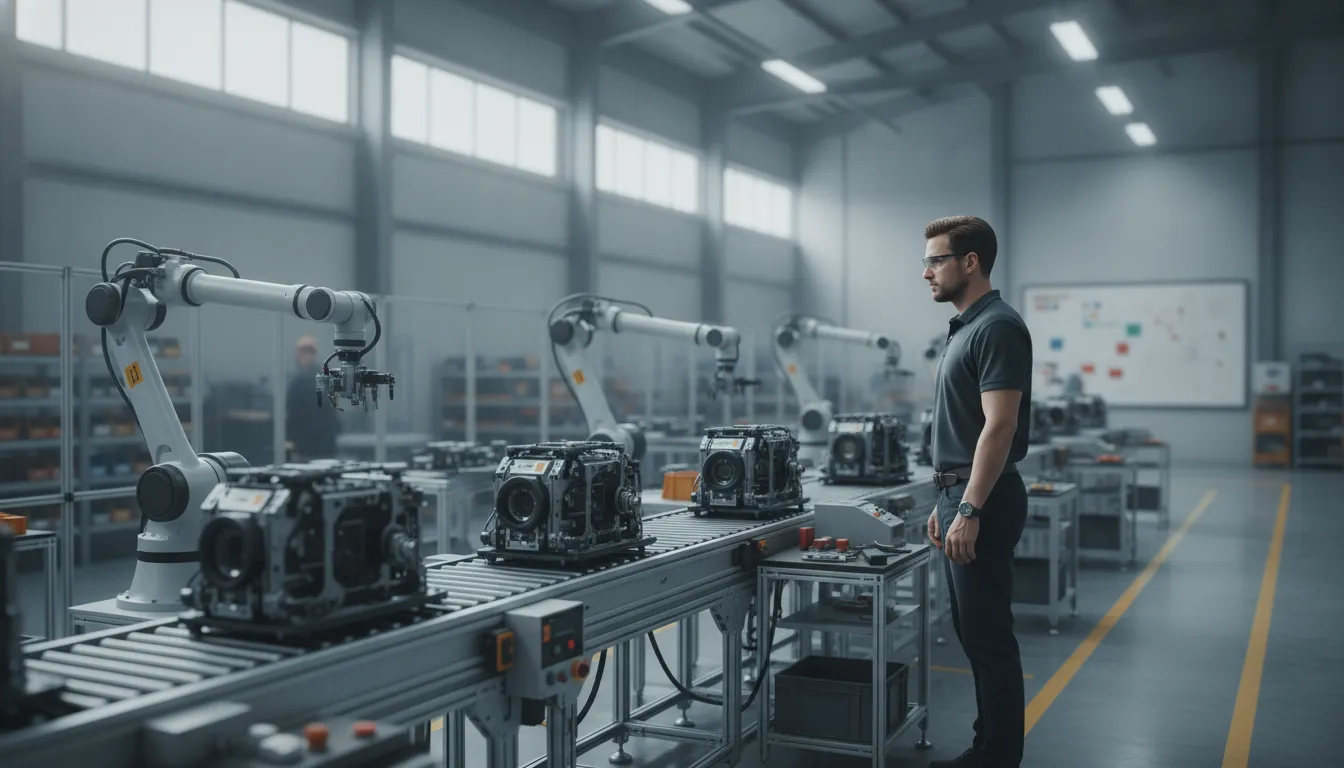
Think of a gourmet restaurant kitchen during a busy dinner service. The chef isn’t making one dish a thousand times; they are expertly preparing dozens of different, unique orders simultaneously. Each dish has its own ingredients, process, and timing. This is the perfect analogy for job shop manufacturing. Your shop floor is that kitchen, and each custom order is a unique dish requiring skilled craftsmanship and precise coordination. Unlike a cafeteria line built for volume, your operation is built for flexibility. This guide explores the world of job shop manufacturing, from its core strengths to its biggest challenges, and shows how to bring order to the creative chaos.
Key Takeaways
- Your Strength Is Customization: A job shop thrives by producing small, high-variety batches for specific customer needs. Success depends on mastering project-based workflows, as each job follows its own unique path through your facility.
- Build a More Resilient Operation: Overcome common challenges like scheduling chaos and bottlenecks by focusing on your fundamentals. Optimizing your shop floor layout, standardizing repeatable tasks, and cross-training your team create the stability needed to handle constant change.
- Connect Your Shop Floor to Your Strategy: Replace guesswork and manual tracking with real-time data. Integrated software for scheduling, machine monitoring, and data collection gives you the accurate information needed to quote confidently, solve problems proactively, and make decisions based on facts, not assumptions.
What Is Job Shop Manufacturing?
If you run a business that creates small batches of custom products, you’re likely operating a job shop. Think of job shop manufacturing as the bespoke tailor of the production world. Instead of churning out thousands of identical items, your shop focuses on high-variety, low-volume work, where each order is tailored to a specific customer’s request.
This model is defined by its flexibility. A single order might require a unique setup, specialized processes, and its own distinct route through your facility. While this allows you to meet a wide range of customer needs, it also introduces a layer of complexity that you won’t find in mass production environments. Managing these moving parts effectively is the key to a successful job shop.
How It Differs from Other Manufacturing Methods
The core difference between job shop manufacturing and other methods comes down to variety versus volume. While mass production is built for efficiency at scale, creating huge quantities of the same product, a job shop is built for adaptability. Each project is treated as a unique entity, often requiring different materials, machinery, and operator skills.
This means that unlike a flow manufacturing setup where products follow a fixed, continuous path (like an assembly line), the workflow in a job shop is dynamic. A product’s journey changes from one order to the next. This customization capability is a major strength, but it can also lead to higher per-item costs and more intricate production scheduling puzzles compared to more standardized production models.
Job Shop vs. Flow Shop vs. Batch Manufacturing
It helps to see where job shops fit on the manufacturing spectrum. At one end, you have flow shops, which are all about continuous production of a single product. On the other end are job shops, handling highly customized, one-off orders. In the middle, you’ll find batch manufacturing. Batch shops produce goods in specific quantities or groups; for example, a bakery making a batch of 100 croissants before switching to make 50 loaves of bread.
Job shops often lack the consistent volume to dedicate specific work areas to product families, which is common in batch and flow shops. This operational reality can lead to challenges with long lead times and on-time delivery reliability. Because every job is different, you need a system that can handle constant change and provide clear visibility across the entire shop floor.
What Defines Job Shop Manufacturing?
If you’ve ever wondered what makes a job shop tick, it comes down to a few core characteristics. Unlike mass production facilities that churn out thousands of identical items, job shops operate on a completely different model. This approach is defined by its flexibility, the nature of its work, the expertise of its team, and its relationship with customers. Understanding these four pillars is the first step to mastering the unique challenges and opportunities that come with job shop manufacturing.
Small Batches, High Variety
At its heart, job shop manufacturing is all about creating small batches of custom or unique items. Think “high-mix, low-volume.” Instead of a continuous production line, each order is different and requires its own specific setup, materials, and process. One day your team might be machining a single prototype part for an aerospace client, and the next they could be running a batch of 50 custom brackets for a local construction firm. This constant variation means that effective production scheduling is essential to manage the complex flow of different jobs moving through the shop floor at the same time.
Project-Based Workflows
Because each order is unique, it’s best to think of every job as its own mini-project. A single job can take anywhere from a few days to several weeks to complete, moving through different workstations and processes according to its specific requirements. This project-based workflow is a major departure from the linear path of flow shops. It introduces complexity in tracking progress, managing deadlines, and ensuring every step is completed correctly and on time. Having a clear system for shop floor data collection becomes critical to maintaining visibility and control over each individual project as it progresses.
A Highly Skilled Workforce
Job shops thrive on the talent of their people. This manufacturing style requires a team of highly skilled and adaptable machinists, welders, and operators who are expert problem-solvers. They can read complex blueprints, program machinery for custom specifications, and make critical adjustments on the fly. Your team’s expertise is one of your greatest assets, allowing you to take on challenging and profitable custom work. Empowering them with the right tools and information helps you leverage their skills to the fullest, as many successful case studies show.
Close Collaboration with Customers
The relationship between a job shop and its customers is typically a close partnership, not just a simple transaction. Since the work is custom, you’ll often collaborate with clients from the initial design and quoting stage all the way through to final delivery. This process builds a deep sense of trust and makes you an integral part of their supply chain. To maintain these strong relationships, clear and honest communication is key. Being able to provide accurate status updates and reliable delivery estimates, backed by real-time data analytics, shows your customers that you are a dependable and transparent partner.
Which Industries Use Job Shop Manufacturing?
You’ll find job shops in a surprisingly wide range of industries, from high-tech labs to local workshops. The common thread isn’t what they make, but how they make it: with a focus on custom work, high skill, and flexibility. Because this model is so adaptable, it’s the backbone of sectors that depend on unique, low-volume production runs.
Many job shops operate in fields where precision is non-negotiable. Think of the aerospace, defense, and medical device industries. These sectors require custom components machined to incredibly tight tolerances, where a single error can have serious consequences. Job shops in these fields produce everything from one-of-a-kind prototypes for new aircraft to specialized surgical tools and custom medical implants. The project-based nature of this work demands meticulous tracking and a robust production scheduling system to manage complex, often-changing requirements.
Job shops are also hubs of innovation. They are essential for tool and die manufacturing, creating the custom molds, jigs, and fixtures that other manufacturers use to produce goods at scale. You’ll also find them building specialty machinery for unique factory floor challenges or fabricating prototypes for new consumer electronics. In these cases, the job shop is where an idea becomes a tangible product for the first time. This work requires close collaboration with clients and the ability to solve problems on the fly.
Finally, the job shop model extends to skilled trades that create custom goods for businesses and consumers. This includes architectural metal fabrication for unique building designs, custom woodworking for high-end furniture and cabinetry, and even the creation of luxury goods like bespoke jewelry. In each case, the value lies in the craftsmanship and the ability to deliver a product tailored exactly to a customer’s vision.
The Pros of Job Shop Manufacturing
If you’re running a job shop, you know it’s a different world from mass production. While it comes with its own set of complexities, the job shop model offers some powerful advantages that allow businesses to thrive by being agile and customer-focused. Let’s look at the key benefits that make this approach so valuable for so many industries. These strengths are what allow smaller, specialized shops to compete and win against larger operations.
Flexibility for Custom Demands
The biggest superpower of a job shop is its flexibility. You’re not locked into producing thousands of identical items. Instead, your entire operation is designed to handle small batches of custom products tailored to specific customer needs. Each order might require a unique setup, a different sequence of operations, and specialized skills to get it done right. This adaptability means you can take on a wide variety of projects and pivot quickly between them. While this constant change presents a production scheduling challenge, it’s also what allows you to meet unique market demands that larger, more rigid manufacturers simply can’t.
The Ability to Serve Niche Markets
This inherent flexibility opens the door to serving specialized, niche markets. Many industries depend on job shops for their expertise in custom work, from aerospace and defense to medical device prototyping and custom architectural fabrication. By focusing on a specific niche, you can become the go-to expert for complex, low-volume parts that require a high degree of skill and precision. This specialization not only builds a strong reputation but also allows you to build deeper relationships with your customers. You’re not just a supplier; you’re a critical partner in their success, providing essential components they can’t get anywhere else.
Opportunities for Innovation and Problem-Solving
Working in a job shop means you’re constantly solving new puzzles. Each custom order brings its own set of challenges, pushing your team to think creatively and find innovative solutions. This environment is a natural incubator for skill development and process improvement. Your team doesn’t just follow a repetitive script; they learn, adapt, and grow with every project. Over time, this collective experience becomes one of your most valuable assets. By capturing insights from each job, you can refine your processes and build a deep well of institutional knowledge. This is where strong data analytics can turn experience into a measurable advantage.
What Challenges Do Job Shops Face?
The high-mix, low-volume nature of job shop manufacturing offers incredible flexibility, but it also introduces a unique set of operational hurdles. Unlike mass production environments where processes are standardized and repeatable, job shops thrive on variability. This means every new order can feel like starting from scratch, bringing with it challenges that can impact everything from your schedule to your bottom line. While being able to say “yes” to almost any custom request is a huge competitive advantage, it puts immense pressure on your people, processes, and equipment. The very thing that makes your shop valuable is also what makes it so difficult to manage efficiently. From the front office to the shop floor, these challenges are a daily reality. Let’s walk through some of the most common obstacles job shops encounter and why they can be so tricky to manage without the right systems in place.
Complex Scheduling
One of the biggest headaches in any job shop is scheduling. You’re not just managing one production line; you’re juggling dozens of different jobs, each with its own unique requirements, routing, and deadlines. A single rush order or an unexpected machine breakdown can throw the entire schedule into chaos, creating a domino effect that delays every other job in the queue. Trying to manage this with spreadsheets or a whiteboard is nearly impossible, leading to constant firefighting and stressful last-minute changes. To stay on track and keep customers happy, you need a dynamic approach to production scheduling that can adapt to changes in real time and give you a clear view of your capacity.
Accurate Job Costing and Quoting
Quoting a custom job is a high-stakes balancing act. If you price it too high, you risk losing the business to a competitor. If you price it too low, you might win the job but lose money on it. The challenge lies in accurately estimating the true cost of a job you’ve never made before. You have to account for materials, labor, machine setup, and potential overhead, all without a historical baseline. This is where shop floor data collection becomes critical. Without precise data from past projects, you’re essentially guessing, which can hurt both your profitability and your customer relationships when quotes are slow or inaccurate.
Maintaining Quality Consistency
When every product you make is different, ensuring consistent quality is a major challenge. You can’t rely on the same standardized quality control checks that work in a repetitive manufacturing setting. Instead, quality depends heavily on the skill of your team and the clarity of the job specifications. Even with a highly experienced workforce, maintaining the same standard of excellence across a wide variety of unique parts, materials, and processes is difficult. A small misinterpretation of a drawing or a slight variation in machine setup can lead to a rejected part, wasted materials, and a delayed order, damaging both your budget and your reputation.
Higher Per-Unit Costs
Job shops don’t benefit from the economies of scale seen in mass production, which often leads to higher per-unit costs. Every job requires a unique setup, which means more machine downtime between projects. Material purchasing is done in smaller quantities, so you don’t get the same bulk discounts. These factors, combined with the potential for scheduling inefficiencies and quality issues, can quickly inflate the cost of each part you produce. Using data analytics to pinpoint where time and resources are being spent is the first step toward identifying opportunities to reduce waste, improve efficiency, and protect your margins on every single job.
How Does Job Shop Scheduling Work?
If you’ve ever felt like you’re playing a high-stakes game of Tetris with your production schedule, you’re not alone. Job shop scheduling is notoriously complex. Unlike mass production, you’re juggling multiple unique projects, each with its own routing and deadline. The goal is to sequence these jobs across various workstations to meet delivery dates, minimize downtime, and keep costs in check. A great schedule means jobs flow smoothly, but a poor one can cause bottlenecks, missed deadlines, and frustrated team members, especially when rush orders or machine breakdowns happen.
Where Traditional Scheduling Falls Short
For years, job shops have relied on spreadsheets, whiteboards, or even just gut instinct to manage their schedules. While these methods might work for a very small operation, they quickly fall apart as you grow. Trying to manually track dozens of custom orders with different deadlines and routings is a recipe for chaos. It’s nearly impossible to see the ripple effect of one delayed job or to know which task to prioritize when a new rush order comes in. This lack of visibility often leads to longer lead times, inconsistent quality, and trouble providing accurate quotes because you can’t precisely track costs. When your schedule is a static document, you’re always reacting to problems instead of preventing them. Effective production scheduling requires a dynamic approach that traditional, manual methods simply can’t provide.
The Power of Real-Time Data
This is where modern technology completely changes the game. Instead of guessing, you can make decisions based on what’s actually happening on your shop floor right now. By connecting your schedule to live data from your machines and operators, you gain a clear, up-to-the-minute view of your entire operation. This is the core of smart manufacturing and Industry 4.0. Imagine seeing a potential bottleneck forming before it grinds production to a halt. With real-time machine monitoring, you can track job progress, monitor cycle times, and get alerts for downtime instantly. This allows you to adjust the schedule on the fly, reroute jobs, and communicate accurate timelines to your customers. It transforms scheduling from a reactive, stressful task into a proactive, strategic advantage for your business.
Technology to Optimize Your Job Shop
The high-mix, low-volume nature of a job shop creates unique operational hurdles, but you don’t have to face them with outdated tools. The right technology can transform these challenges into strengths, giving you the visibility and control needed to thrive. Instead of relying on spreadsheets and guesswork, modern job shops use specialized software to connect their plans to the reality of the shop floor. These tools help you manage everything from initial quotes to final delivery with greater precision and less stress. Let’s look at the key technologies that make a real difference.
Production Scheduling Software
If you’re still using a whiteboard or a complex spreadsheet to manage your schedule, you know how quickly it can fall apart. A single rush order or unexpected machine downtime can throw the entire plan into chaos. This is where dedicated production scheduling software comes in. It’s designed specifically for the dynamic environment of a job shop. This software helps you visualize your entire workflow, see potential bottlenecks before they happen, and easily adjust priorities on the fly. It moves you from a reactive state to a proactive one, ensuring you can make promises to customers with confidence and consistently deliver on time.
Machine Monitoring
To make smart scheduling decisions, you need to know what’s actually happening with your machines. Are they running, are they idle, or are they down for maintenance? Guesswork leads to inaccurate timelines and missed deadlines. Real-time machine monitoring gives you a live view of your operations by connecting directly to your equipment. This provides instant, unbiased data on machine status and performance. It’s not about watching over your team’s shoulder; it’s about gaining the clarity needed to identify hidden capacity, understand the true causes of downtime, and improve your overall equipment effectiveness (OEE). This data is crucial for accurate job costing and realistic capacity planning.
Shop Floor Data Collection
The gap between your production plan and what happens on the floor is where inefficiency often hides. Manual data entry on paper travelers is slow, prone to errors, and makes it impossible to get timely information. This is where modern shop floor data collection systems make a huge difference. By giving operators easy-to-use terminals or tablets, you can capture crucial information like job start and stop times, part counts, and scrap reasons directly from the source. This closes the loop between planning and execution, providing the accurate, real-time data you need to track job progress, manage labor costs, and ensure quality standards are met consistently.
ERP Integration and Data Analytics
Your Enterprise Resource Planning (ERP) system is the central hub for your business, managing everything from accounting to inventory. However, it’s often disconnected from the live activity on your shop floor. By integrating your shop floor data directly with your ERP, you create a single, unified source of truth for the entire organization. This integration feeds powerful data analytics tools that turn raw numbers into clear, actionable insights. You can finally get accurate job costing, analyze profitability by customer or part, and track key performance indicators (KPIs) with confidence. This empowers everyone, from the front office to the shop floor, to make better decisions based on facts, not assumptions.
The Role of Industry 4.0
You might hear the term “Industry 4.0” and think it sounds like something for massive corporations, but its principles are incredibly relevant for job shops. At its heart, it’s about creating a “smart factory” where your systems, machines, and people are all connected and communicating. The technologies we’ve just discussed, like machine monitoring and data collection, are the building blocks of this concept. This connected approach is the core of what people call Industry 4.0. It enables you to move toward more advanced strategies like predictive maintenance and automated workflows, ultimately creating a more resilient, efficient, and competitive operation.
Strategies for Overcoming Job Shop Challenges
The high-mix, low-volume nature of job shops creates a dynamic environment, but it also brings a unique set of hurdles. The good news is that these challenges are not insurmountable. With a few smart strategies, you can streamline your operations, reduce stress on your team, and improve your bottom line. It all comes down to being intentional about how you manage your space, processes, and people.
Optimize Your Layout and Workflow
Take a walk through your shop floor. How much time do your operators spend moving between workstations, searching for tools, or waiting for materials? Every extra step is a form of waste that eats into your productivity and profit margins. Arranging your workstations logically to reflect a typical job’s path can dramatically reduce this wasted motion. A well-designed layout ensures that materials, tools, and information flow smoothly from one process to the next. This not only speeds up individual jobs but also makes your entire production scheduling more predictable and reliable.
Standardize Processes Where Possible
Standardization in a custom environment might sound contradictory, but it’s one of the most effective ways to create stability. You don’t have to standardize the final product, just the steps you take to get there. Identify common tasks, setups, or components that appear across different jobs and create a standard operating procedure for them. This reduces variability, makes training new employees easier, and ensures a consistent level of quality no matter who is doing the work. Standardizing how information is recorded also provides clean, reliable inputs for your data analytics, giving you a clearer picture of your shop’s performance.
Cross-Train Your Team for Greater Flexibility
Your team’s skill is your greatest asset, but it can also become a bottleneck if knowledge is siloed. What happens when your only expert on a critical machine calls in sick? Cross-training is the solution. By equipping your employees with the skills to handle multiple jobs or operate different machines, you build a more flexible and resilient workforce. This allows you to adapt quickly to shifting priorities and cover unexpected absences without grinding production to a halt. An agile team is better prepared to handle the constant variety of job shop work, reducing downtime and keeping morale high.
Use Lean Principles to Reduce Waste
Lean manufacturing isn’t just for high-volume production lines. Its core principle, the elimination of waste, is incredibly valuable in a job shop setting. Waste isn’t just about material scrap; it also includes excess inventory, unnecessary process steps, waiting time, and rework. Implementing lean principles means focusing only on activities that add value for the customer. Using tools for shop floor data collection can help you pinpoint exactly where these forms of waste occur. Once you can see the waste, you can take targeted action to remove it, leading to lower costs and faster delivery times.
Is Job Shop Manufacturing Right for Your Business?
Deciding to operate as a job shop is a significant move. It’s a model that offers incredible flexibility but also comes with its own set of operational hurdles. So, how do you know if this approach fits your business goals? It comes down to evaluating your products, your customers, and your team’s readiness to handle a dynamic environment. Answering a few key questions can bring a lot of clarity.
First, think about what you make. Is your business centered on creating small batches of unique or customized items? If you’re in the business of high-mix, low-volume production, the job shop model is likely a natural fit. This approach allows you to cater to specific customer needs, which often leads to higher-quality products and happier clients who feel involved in the creation process. If your customers value tailored solutions over mass-produced goods, you’re on the right track.
Next, consider your industry. Job shops are the backbone of sectors like custom metal fabrication, tool and die manufacturing, prototyping, and specialty machinery. If your work falls into one of these categories, you’re already in good company. However, it’s also crucial to be realistic about the management challenges. Job shops juggle complex scheduling, intricate job costing, and the need for consistent quality across diverse projects. Your success depends on your ability to manage this complexity. The right tools for production scheduling are not just helpful; they’re essential for keeping everything on track and on budget.
Finally, assess your readiness for the technology that makes a modern job shop successful. To stay competitive, you need real-time visibility into your operations. This means investing in systems that can handle project-based workflows and provide instant insights. If you’re looking to grow, solve operational bottlenecks, or simply get a better handle on your data, adopting the job shop model alongside the right software can be a powerful strategy. Having automated processes and clear data analytics helps you make informed decisions, quote jobs accurately, and deliver on time, every time. If you’re prepared to invest in technology that supports this level of agility, a job shop structure could be exactly what your business needs to thrive.
Related Articles
- job shop Archives – JobPack
- How JobPack Empowers You to Scale Your Manufacturing Business – Shop Floor Management Software – JobPack
- Landing Page – Job Shop Production Scheduling Software – Production Scheduling Software – JobPack
- The Ultimate Guide to Job Shop Manufacturing Software
- No ERP Required: 3 Benefits of a Standalone MES for Job Shops – Shop Floor Management Software – JobPack
Frequently Asked Questions
My shop does some custom work but also some repeat orders. Are we still considered a job shop? Yes, most likely. Many job shops have a mix of work. The defining factor isn’t that every single job is brand new, but that your overall operation is built for high variety and low volume. If your facility uses general-purpose machinery and your team has to be flexible enough to switch between different types of projects, you’re operating within the job shop model. Having some repeat orders can actually be a great advantage, as it gives you a baseline for quoting and scheduling similar custom jobs in the future.
What’s the most important first step to fix our chaotic scheduling? The best first step is to get a clear, honest picture of what’s actually happening on your shop floor. Before you can create a better schedule, you need to know how long jobs truly take, where your bottlenecks are, and why delays happen. This means moving away from guesswork and starting to collect real data. Implementing a simple shop floor data collection system can provide the foundational information you need to build a realistic and reliable schedule that reflects your shop’s true capacity.
How can technology help with job costing if every project is unique? This is a great question because it gets to the heart of a major job shop challenge. Technology helps by creating a reliable feedback loop. When you track the actual time and resources spent on each unique job through machine monitoring and data collection, you build a historical database. This data allows you to see patterns you might otherwise miss. You can then use these insights to quote new, similar jobs with much greater accuracy, ensuring you protect your profit margins without pricing yourself out of the running.
Is it possible to standardize processes without losing the flexibility that makes us a job shop? Absolutely. The key is to standardize your methods, not your products. Think about standardizing common tasks like machine setup, quality checks, or how job information is communicated. Creating a consistent procedure for these recurring activities reduces errors, makes training easier, and creates a stable foundation for your team. This doesn’t limit your ability to take on custom work; instead, it frees up your team’s mental energy to focus on the unique, problem-solving aspects of each new project.
We’re a small shop. Isn’t ‘Industry 4.0’ technology too expensive and complex for us? That’s a common misconception. You don’t need a massive budget or a dedicated IT department to start benefiting from these principles. Industry 4.0 is really about connecting your operations with data, and you can start small. Implementing a single tool, like real-time machine monitoring, can provide immediate, valuable insights into downtime and productivity. Think of it as a scalable approach; you can begin with one area that causes the most pain and build from there as you see the return on your investment.