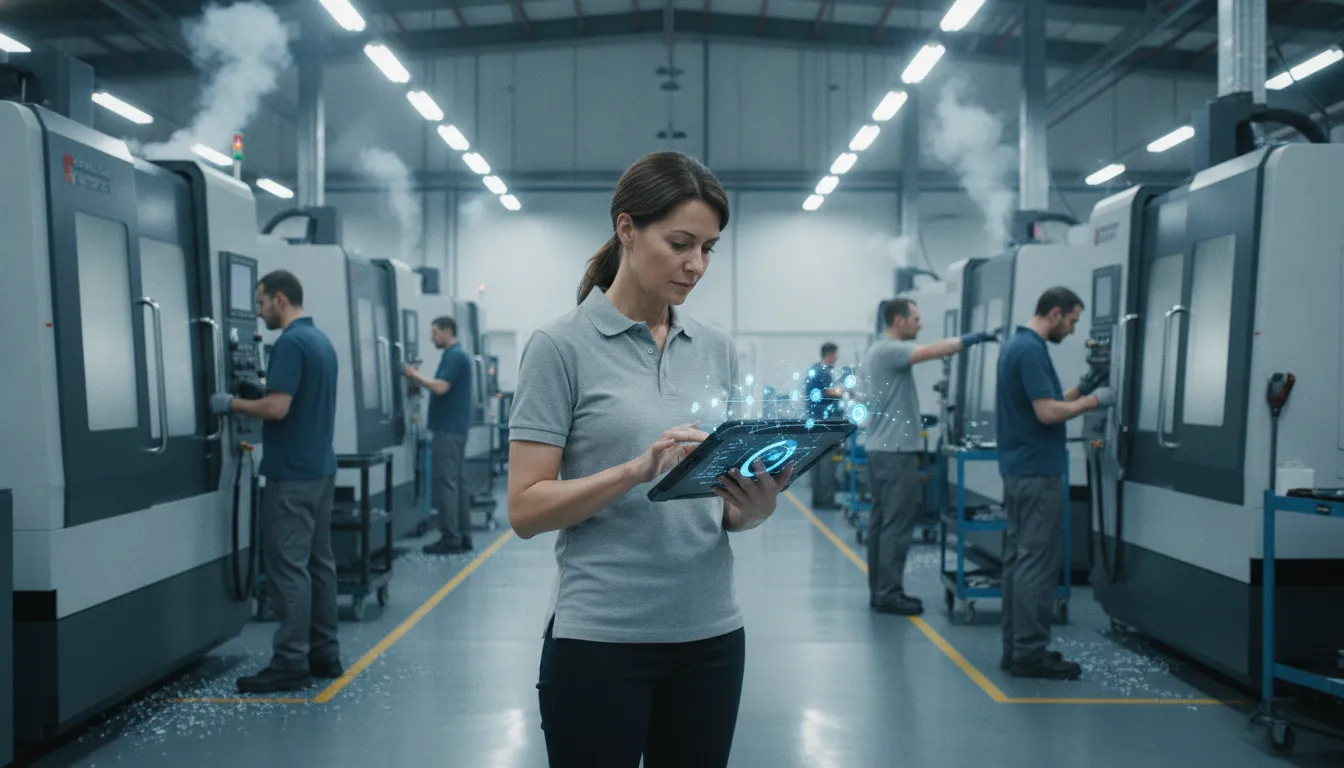
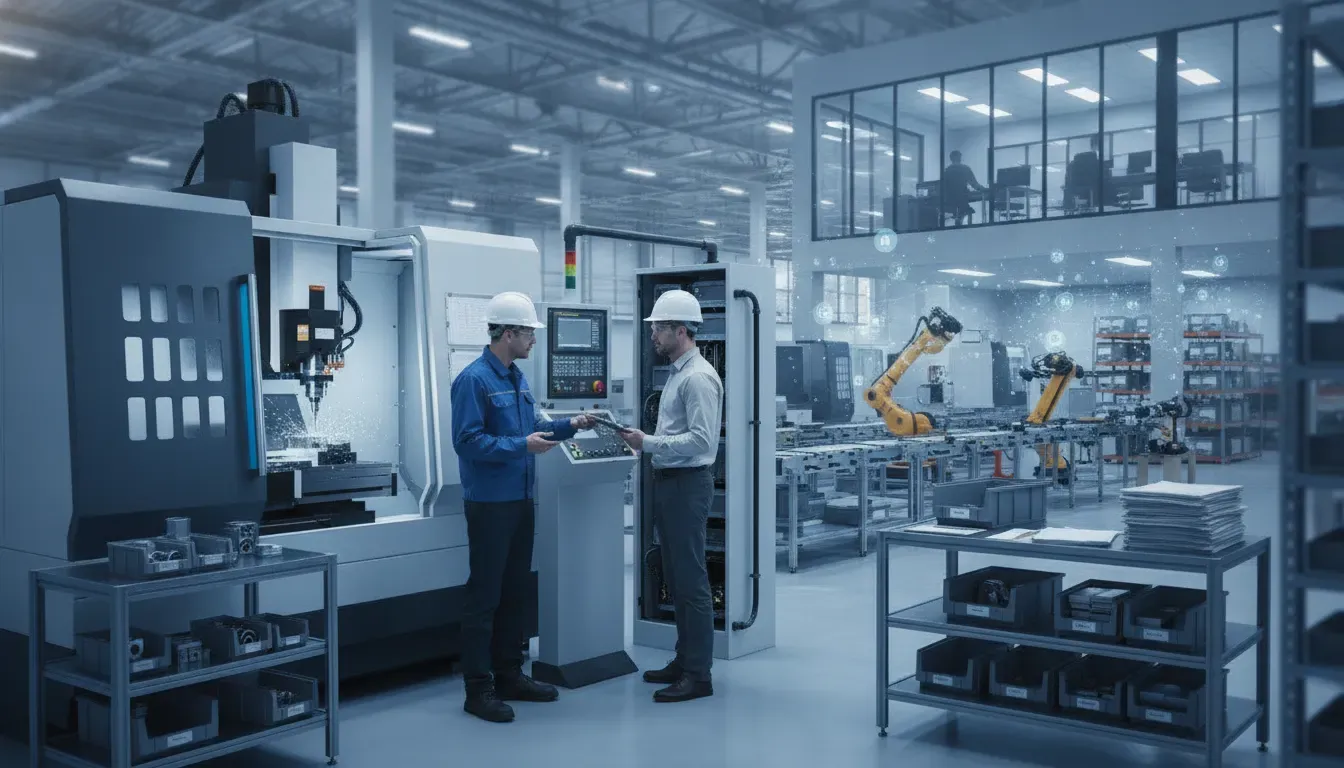
Your shop floor generates a massive amount of data every single day, but is any of it actually helping you make better decisions? For many manufacturers, that data stays locked inside individual machines or spreadsheets, offering little real value. Industry 4.0 provides the framework to collect, analyze, and act on that information. By connecting your equipment and using smart software, you can transform that stream of data into clear, actionable insights. This guide will show you how various industry 4.0 applications use this data to optimize production schedules, improve quality control, and reduce operational costs, turning your factory’s data into a powerful strategic advantage.
Key Takeaways
- Treat Industry 4.0 as a business strategy: It’s about using connected technology to turn shop floor data into practical insights that solve your most pressing challenges, from production delays to equipment failures.
- Start with a phased implementation: You don’t need to overhaul your factory all at once. Begin with a single, high-impact project, like improving production scheduling, to demonstrate clear results and build a strong case for future investment.
- Measure success with clear business metrics: Connect your technology initiatives to tangible outcomes by tracking key performance indicators like Overall Equipment Effectiveness (OEE), scrap rates, and on-time delivery to prove the value of your investment.
What is Industry 4.0 (and Why Should Manufacturers Care?)
You’ve likely heard the term “Industry 4.0” used in conversations about the future of manufacturing. It might sound like a buzzword, but the concept is straightforward: it’s about making your factory smarter. Think of it as the fourth industrial revolution, where we connect the physical equipment on your shop floor with powerful digital technology. This creates a “smart factory” where machines, systems, and people communicate seamlessly to get work done more efficiently and with greater precision.
At its core, Industry 4.0 is about using technology to turn raw data into actionable insights. This is done by integrating tools like the Internet of Things (IoT) to connect your machines to a network and artificial intelligence (AI) to analyze the information they generate. Instead of just collecting data, you can use it to make faster, more informed decisions. For example, real-time machine monitoring can show you exactly how a job is progressing and alert you to potential issues before they cause delays.
So, why should you care? Because these advancements solve real-world manufacturing challenges. When your systems can predict maintenance needs, you drastically reduce unplanned downtime. When you have clear visibility into every stage of production, you can identify bottlenecks, improve quality control, and minimize waste. It’s not about adopting technology for its own sake; it’s about leveraging it as a strategic asset to grow your business. By embracing these principles, you build a more resilient, competitive, and profitable operation that consistently delivers for your customers.
The Core Technologies Driving Industry 4.0
Industry 4.0 isn’t a single piece of technology you can just buy and install. Instead, it’s a fusion of several powerful digital technologies that work together to create a smarter, more connected manufacturing environment. Think of them as the building blocks for your smart factory. When these technologies are integrated, they give you a complete, real-time view of your operations, from the shop floor to the supply chain. This visibility allows you to make faster, more informed decisions that directly impact your bottom line. Understanding these core components is the first step to seeing how they can transform your production scheduling and overall processes.
Internet of Things (IoT) and Connected Devices
At its heart, the Industrial Internet of Things (IIoT) is about connecting your machines, sensors, and tools to the internet. This connection allows them to communicate with each other and with your central systems, creating a network of smart devices across your shop floor. These devices constantly collect and share data on everything from machine performance and temperature to energy consumption. This stream of information is the foundation for real-time machine monitoring, giving you an accurate, up-to-the-minute picture of what’s happening in your facility. It’s how you move from guessing to knowing.
Artificial Intelligence and Machine Learning
Once your IoT devices are collecting data, Artificial Intelligence (AI) and Machine Learning (ML) step in to make sense of it all. These technologies are the “brains” of the operation. They analyze the vast amounts of data from your machines to identify patterns, predict outcomes, and even automate decisions. For example, AI can predict potential equipment failures before they happen, allowing you to schedule maintenance proactively and avoid costly downtime. Instead of just reacting to problems, you can start preventing them, which keeps production running smoothly and efficiently.
Big Data Analytics and Cloud Computing
All the data generated by your connected devices needs a place to be stored, processed, and analyzed. That’s where Big Data analytics and cloud computing come in. Cloud platforms provide the scalable infrastructure needed to handle massive datasets without requiring a huge investment in on-site servers. This setup makes it possible to integrate different business functions, like your supply chain and production schedules, in one place. With powerful data analytics tools, you can turn raw data into actionable insights, helping you optimize everything from resource allocation to production workflows.
Robotics and Automation Systems
When you think of manufacturing, you probably picture robots. Industry 4.0 takes automation to the next level with advanced robotics that are more collaborative, flexible, and intelligent. These aren’t just the caged-off robots of the past; modern systems can work safely alongside human employees on complex tasks. Innovations like flexible materials even allow robots to handle delicate items without causing damage. This technology helps automate repetitive or physically demanding jobs, freeing up your skilled workers to focus on tasks that require critical thinking and problem-solving.
Digital Twins and Augmented Reality
Imagine having a complete virtual replica of your production line or even your entire factory. That’s a digital twin. These virtual representations of physical assets use real-time data from IoT sensors to mirror the exact state of their physical counterparts. With a digital twin, you can run simulations, test process changes, and train employees in a risk-free environment without disrupting actual production. Augmented Reality (AR) takes this a step further by overlaying digital information onto the real world, providing workers with interactive instructions or maintenance guides right in their line of sight.
Key Industry 4.0 Applications on the Shop Floor
Industry 4.0 isn’t just a buzzword; it’s a collection of practical tools that are actively transforming shop floors. By connecting machines, people, and data, these technologies create a more responsive, efficient, and transparent manufacturing environment. Instead of reacting to problems after they happen, you can anticipate challenges and make smarter decisions in the moment. These applications turn abstract data into tangible improvements, from preventing machine breakdowns to streamlining your entire supply chain. Let’s look at five key applications that are making a real-world impact in manufacturing today.
Predictive Maintenance Systems
Waiting for a critical machine to break down is a recipe for costly downtime and schedule disruptions. Predictive maintenance flips the script by using data to forecast equipment failures before they occur. Smart sensors and software monitor machine performance, looking for subtle signs of wear and tear. This proactive approach allows your team to schedule repairs during planned downtime, rather than scrambling to fix a machine in the middle of a critical production run. By addressing potential issues early, you can significantly reduce maintenance costs and keep operations running smoothly.
Real-Time Production and Machine Monitoring
Do you know exactly what’s happening on your shop floor right now? With real-time monitoring, you can. By equipping machines with advanced sensors and connecting them to a central system, you get an immediate, accurate view of your entire production process. This constant stream of information helps you spot bottlenecks, track job progress, and measure OEE without manual data entry. Having access to live machine monitoring allows managers to make quick, informed decisions that optimize workflows and improve overall efficiency. It’s about replacing guesswork with data-driven certainty.
Automated Quality Control and Defect Detection
Catching a defect after a product is finished is expensive. It leads to rework, scrap, and potentially unhappy customers. Industry 4.0 introduces automated quality control systems that use AI and machine vision to spot defects right on the production line. These systems can identify tiny imperfections that the human eye might miss, ensuring every part meets exact specifications. This immediate feedback loop means you can correct issues instantly, saving time and materials. Implementing automated quality control not only improves product consistency but also reduces the high costs associated with post-production fixes.
Intelligent Supply Chain Management
Your shop floor’s efficiency depends heavily on what happens outside its walls. Intelligent supply chain management uses digital tools to create a more connected and transparent supply chain. By integrating real-time data on inventory levels, shipments, and supplier performance, you can anticipate material shortages and adjust your production scheduling accordingly. This visibility helps you manage resources more effectively, reduce lead times, and respond faster to changes in demand. It transforms the supply chain from a series of separate steps into a single, cohesive system.
Smart Factory Operations and Flexible Manufacturing
A smart factory uses technology to automate tasks and provide a clear, comprehensive view of all shop floor activities. This level of transparency and automation creates a highly flexible manufacturing environment. When your systems are connected, you can adapt production lines quickly to handle custom orders or sudden changes in demand without missing a beat. This agility is a major competitive advantage, allowing you to meet customer needs with greater speed and precision. Ultimately, these smart factory operations empower you to build a more resilient and adaptable business.
How Industry 4.0 Makes Manufacturing More Efficient
Industry 4.0 isn’t just about adding new gadgets to your shop floor. It’s about creating a fully connected ecosystem where every machine, process, and person works together more intelligently. By integrating technologies like IoT, AI, and big data, manufacturers can move from being reactive to proactive, anticipating problems before they happen and optimizing operations on the fly. Think of it as giving your factory a central nervous system. Instead of isolated machines and siloed departments, you have a single, cohesive operation where data flows freely. This connectivity allows you to see the bigger picture, identify bottlenecks you never knew existed, and understand the true cost of production delays. The goal isn’t just automation for automation’s sake; it’s about using technology to make your entire operation smarter, faster, and more flexible. When you can adapt quickly to changing demands and resolve issues instantly, you gain a powerful competitive edge. This is the core promise of Industry 4.0: transforming your manufacturing environment into a highly efficient, data-driven powerhouse.
Increase Production Yield and Reduce Downtime
One of the most immediate impacts of Industry 4.0 is the ability to get more out of your existing equipment. By embedding sensors and leveraging real-time machine monitoring, you can predict when a machine needs maintenance before it breaks down. This predictive approach minimizes unplanned downtime and keeps production lines running smoothly. For instance, some companies using AI-powered inspections have seen production yield increase by 10% and overall output grow by 20%. When you have a clear, constant view of machine performance, you can address small issues before they become major, costly problems.
Enhance Quality Control and Prevent Defects
Catching errors early is always cheaper than fixing them later. Industry 4.0 brings quality control directly into the production line with automated systems that are far more precise than the human eye. AI-powered cameras and sensors can inspect parts as they are made, identifying tiny defects or deviations from the standard instantly. These AI-powered checks spot errors right away, saving significant time and money compared to finding them later in the process. This relies on accurate shop floor data collection to ensure the system has the right information to make these critical quality judgments in real time.
Achieve Mass Customization with Flexible Production Lines
Today’s customers want products tailored to their specific needs, and Industry 4.0 makes that possible without sacrificing efficiency. Smart factories are built for agility, allowing you to produce highly customized products, even in small batches, at a low cost. With automated systems and robotics, production lines can be quickly reconfigured to handle different product variations. This capability, often called “mass customization,” is managed with flexible and dynamic production scheduling. It’s the key to handling complex workflows and ensuring that even custom orders are completed on time and within budget.
Make Data-Driven Decisions and Optimize Resources
Perhaps the greatest advantage of Industry 4.0 is that it empowers your team to stop guessing and start making decisions based on hard data. Advanced sensors, software, and robotics collect vast amounts of information from every corner of the factory, helping you make smarter choices. This data provides clear insights into everything from machine uptime and material usage to labor efficiency. With powerful data analytics, managers can see exactly what’s working and what isn’t, allowing them to optimize resource allocation, streamline workflows, and make strategic choices that drive real growth.
Industry 4.0: It’s Not Just for Manufacturing
While the term “Industry 4.0” was born from manufacturing, its core principles of connectivity, automation, and data-driven decision-making are proving to be incredibly versatile. The same technologies that streamline a shop floor are now reshaping sectors far beyond traditional factory walls. From creating personalized medical implants to ensuring the lights stay on, these smart technologies are solving complex problems across the board.
Seeing how other industries apply these tools can offer fresh perspectives for your own operations. The challenges might be different, but the solutions often share a common foundation: using real-time data to work smarter, not just harder. These examples show that the movement toward digital transformation is universal, highlighting the power of a connected and intelligent operational ecosystem. By looking at these applications, you can find inspiration for your own journey toward a more efficient and resilient future.
Healthcare and Medical Device Production
The healthcare industry is using Industry 4.0 to move toward hyper-personalized patient care. One of the most significant applications is the “mass customization” of medical devices. Instead of one-size-fits-all solutions, manufacturers can now create implants, prosthetics, and surgical guides tailored to an individual patient’s unique anatomy. This is made possible by combining 3D scanning, digital twin simulations, and precise automated manufacturing. The result is a better fit, improved patient outcomes, and more efficient surgical procedures. This level of precision and customization is a powerful example of how smart factory principles can have a life-changing impact.
Automotive Industry Innovations
The automotive sector has always been at the forefront of automation, and Industry 4.0 is taking it to the next level. Companies like Great Wall Motor are deploying fleets of robots for complex welding and assembly tasks, all coordinated by sophisticated planning software. Others are integrating 5G for lightning-fast communication on the factory floor, using AI for visual quality inspections that catch defects humans might miss, and leveraging digital twins to simulate production changes before they happen. These real-world examples show a commitment to building highly efficient, flexible, and intelligent production lines capable of meeting ever-changing consumer demands.
Food and Beverage Processing
In the food and beverage industry, consistency, safety, and efficiency are paramount. Companies are turning to Industry 4.0 technologies to meet these demands. For instance, major dairies are using IoT sensors and big data to monitor production conditions in real time, ensuring every product meets strict quality standards. Automated systems, including robots for packing and Laser Guided Vehicles (LGVs) for moving products, are reducing manual labor and minimizing errors. This allows businesses to trace every ingredient from farm to shelf, respond quickly to supply chain disruptions, and maintain a high level of operational control in a fast-paced environment.
Energy and Utilities Management
For the energy sector, uptime is everything. An unexpected shutdown at a power plant can have widespread consequences. This is where Industry 4.0 makes a critical difference. Energy companies are implementing predictive maintenance systems that use sensors and AI to anticipate equipment failures before they occur. By continuously monitoring the health of turbines, transformers, and other critical assets, they can schedule repairs proactively and avoid costly, unplanned downtime. This approach creates a connected ecosystem of machines and networks, ensuring a more reliable and efficient energy grid for everyone. The same principles can be applied to your own machine monitoring to prevent disruptions.
Common Roadblocks to Implementing Industry 4.0
While the benefits of Industry 4.0 are compelling, the path to implementation has its challenges. Many manufacturers encounter similar hurdles when connecting their operations. Knowing these roadblocks ahead of time helps you build a smarter, more effective plan. Here are four of the most common ones to watch for.
Integration Complexity and Legacy System Compatibility
Your shop floor likely has a mix of equipment, from brand new to decades old. A major challenge is getting these legacy machines to communicate with modern digital systems. Retrofitting older equipment can be complex and costly. Many companies also have isolated digital tools that don’t share information, preventing a full operational view. The goal is to unify all your shop floor data collection into one system, regardless of machine age, so you can see the complete picture and make informed decisions.
Data Security and Cybersecurity Concerns
Connecting your factory to the internet creates incredible opportunities, but it also introduces security risks. Every connected device, from a sensor to a CNC machine, is a potential entry point for a cyberattack, which makes some manufacturers understandably hesitant. Protecting your operational data is critical. A strong cybersecurity strategy is a foundational step, not an afterthought. You need robust security measures to safeguard your connected systems from potential cyber threats and protect your business.
Skills Gaps and Workforce Training Needs
Technology is only half the battle; your people are the other. Industry 4.0 requires new digital skills, and there’s often a gap between your team’s current abilities and what’s needed for smart factory tools. You might also face cultural resistance to new processes from employees who are used to doing things a certain way. Success depends on getting your team on board with clear communication and training. Showing them how new tools make their jobs easier is key for a smooth transition, as highlighted in these case studies.
High Initial Investment Costs and ROI Planning
Industry 4.0 technology requires a significant upfront investment. The cost of new hardware, software, and infrastructure can be a major barrier for many businesses. Justifying this expense is tough when the return on investment (ROI) isn’t immediately clear, making it hard to get budget approval from leadership. It’s important to start with a plan that outlines expected gains, from reduced downtime to improved quality. Using powerful data analytics to track progress helps prove the value of your investment from day one.
How to Overcome Common Implementation Challenges
The roadblocks to Industry 4.0 are significant, but they aren’t insurmountable. With a thoughtful strategy, you can clear the path for a successful transition. It’s less about having a perfect, all-encompassing plan from day one and more about being deliberate and methodical. By focusing on strategy, security, your team, and a manageable pace, you can turn these potential challenges into stepping stones for growth. Let’s break down how to tackle each one.
Build a Strategic Digital Transformation Plan
Jumping into Industry 4.0 without a clear map is a recipe for disappointment. Many companies find that new technology doesn’t deliver results because it isn’t tied to specific business goals. A well-structured digital transformation plan is your essential first step. This plan should outline exactly what you want to achieve. Are you trying to reduce machine downtime, improve on-time delivery rates, or cut down on waste? Aligning your technology investments with these objectives ensures that every new sensor and software license serves a purpose. It also gets your entire team, from leadership to the shop floor, on the same page and working toward the same outcomes.
Address Data Management and Security Requirements
Connecting more machines to your network inevitably expands your digital footprint, creating new vulnerabilities. It’s crucial to protect them from cyberattacks from the very beginning. This means securing not just your computer systems but the factory equipment itself. Your security strategy should cover everything from who has access to the data to how that data is stored and transmitted. Implementing robust cybersecurity measures isn’t just an IT task; it’s a core business function that protects your operations, your intellectual property, and your customers’ trust. Think of it as installing new locks on newly opened doors.
Develop Workforce Skills and Manage Change
The most advanced technology is only as good as the people who use it. Employees may be resistant to new workflows, especially if they lack the digital skills required. That’s why investing in training and change management is vital. Instead of just introducing a new system, explain the “why” behind it. Show your team how real-time data from machine monitoring can make their jobs easier and more effective. Providing ongoing training and support helps build confidence and encourages adoption. When your team understands the benefits and feels equipped to handle the new tools, they become active participants in the transformation rather than obstacles to it.
Create a Phased Implementation Approach
You don’t need to overhaul your entire factory overnight. In fact, you shouldn’t. A phased approach allows you to start small, learn quickly, and build momentum. Begin by identifying one or two areas where Industry 4.0 technologies can have the highest impact. Maybe it’s implementing a new production scheduling system or focusing on data collection for a single critical machine line. This allows you to test your strategy, work out any kinks, and demonstrate value with an early win. This methodical process ensures you are collecting the right data and, more importantly, using it to make smarter decisions before scaling up across the entire facility.
How to Measure the Success of Your Industry 4.0 Initiative
Adopting new technology is a big step, but the real test is whether it delivers results. Without clear metrics, your Industry 4.0 investment is just a shot in the dark. Measuring success isn’t just about justifying the cost; it’s about understanding what’s working, what isn’t, and how to fine-tune your strategy for better performance.
Tracking the right key performance indicators (KPIs) gives you a clear picture of your return on investment. It helps you demonstrate value to stakeholders and empowers your team to make smarter, data-driven decisions. By focusing on specific areas like production efficiency, quality control, and overall costs, you can connect your digital transformation directly to your bottom-line business goals. Let’s look at the core metrics you should be tracking.
Production Efficiency Metrics
One of the primary goals of Industry 4.0 is to make your shop floor run more smoothly. You can measure this by tracking Overall Equipment Effectiveness (OEE), which looks at asset availability, performance, and quality. Connected systems can help you predict when machines might break down, avoiding unexpected and costly stops. An effective machine monitoring solution provides the real-time data needed to see these gains. According to an IBM study, smart manufacturing can improve defect detection by up to 50% and increase production yields by 20%. These are tangible improvements that directly impact your output and profitability.
Quality Improvement Measurements
Better data leads to better quality. With Industry 4.0 tools, you can move from reactive to proactive quality control. Instead of catching defects at the end of the line, AI-powered checks can spot errors right away, saving significant time and rework costs. Key metrics to watch here include scrap rate, first pass yield, and customer return rates. As you implement new technologies, you should see a steady decrease in defects and waste. This not only saves money but also improves productivity. As one ABI Research report notes, reducing defects means you can make more products faster and reduce the time machines are down for repairs.
Cost Reduction and ROI Analysis
Calculating the return on your investment is critical, but it can also be tricky. The initial setup for new technology can be expensive, and it’s not always easy to see how much money you’re saving right away. To get a clear picture, you need to track metrics beyond direct production costs. Look at inventory carrying costs, energy consumption, and labor expenses. As one RT Insights article points out, companies must be strategic about what data they collect and what they do with it to see real value. A comprehensive data analytics platform helps you connect the dots between your shop floor data and your financial performance, proving the long-term value of your initiative.
Getting Started with Industry 4.0: Your First Steps
Taking the first step toward Industry 4.0 doesn’t have to be overwhelming. You don’t need to overhaul your entire operation overnight. Instead, a successful transition starts with a clear understanding of where you are now and a focused plan for where you want to go. By breaking the process down into manageable steps, you can build momentum and demonstrate value quickly. The goal is to make strategic, incremental changes that solve real problems on your shop floor. This approach allows you to learn as you go, adapt your strategy, and build a solid foundation for a smarter, more connected manufacturing environment. Many manufacturers get stuck thinking they need a massive budget and a complex, multi-year plan. But the most successful implementations often start small, with a single project designed to fix a persistent bottleneck or inefficiency. This focused approach not only makes the initiative more manageable but also helps secure buy-in from your team and leadership as they see tangible results. It’s about building a business case one success at a time.
Assess Your Current Manufacturing Infrastructure
Before you can plan your future, you need a solid grasp of your present. Take a detailed inventory of your current assets, including your machinery, software systems like your ERP, and existing network capabilities. How do you currently gather information from the shop floor? Many manufacturers find that a digital transformation helps automate tasks and provides a much clearer view of their operations. Understanding your starting point will reveal both your strengths and the gaps you need to address. This assessment isn’t just about technology; it’s also about identifying the potential challenges of incorporating new processes and preparing your team for the changes ahead.
Prioritize High-Impact Applications
Once you know what you have, you can decide where to focus your efforts. Instead of trying to do everything at once, identify the one or two areas where new technology could make the biggest difference. Are you struggling with unplanned machine downtime? Or are scheduling conflicts causing late deliveries? Using Industry 4.0 technologies can make your factory more productive and reduce the time machines are offline. By targeting a specific pain point, you can direct your resources toward a solution with a clear, measurable outcome. For many shops, implementing real-time machine monitoring or optimizing production scheduling offers the quickest and most significant returns.
Create a Realistic Timeline and Budget
With a high-impact project in mind, the next step is to map out a practical plan. New technology can be expensive, and it’s often difficult to see the financial return right away. That’s why starting with a smaller pilot project is a smart move. A pilot allows you to test a solution on a limited scale, prove its value, and build a strong business case for further investment. Your plan should include a clear budget and a realistic timeline for implementation and results. It’s also crucial to decide what data you will collect and, more importantly, what you will do with that data. A well-defined strategy ensures you get real value from your Industry 4.0 investment and sets you up for long-term success.
Related Articles
- Industry 4.0 Meaning Explained: A Simple Guide
- Industry 4.0 in Manufacturing: A Complete Guide
- Industry 4.0 Production Scheduling Software for Smart Factories | JobPack
- MES System for Manufacturing: The Ultimate Guide
Frequently Asked Questions
Do I need to replace all my old equipment to get started with Industry 4.0? Not at all. This is a common misconception that stops many manufacturers from starting. You can begin by retrofitting your existing legacy machines with modern sensors and data collection tools. This allows you to gather valuable performance data without the massive capital expense of a complete overhaul. The goal is to connect what you already have, not to start from scratch.
This sounds expensive. How can a smaller shop afford to implement these technologies? The key is to start small and focus on a single, high-impact problem. You don’t need to build a fully automated smart factory overnight. A great starting point is a pilot project, like implementing a real-time machine monitoring system on your most critical equipment. This allows you to prove the return on investment with a manageable initial cost before scaling up across your facility.
What’s the most common starting point for manufacturers new to Industry 4.0? Most manufacturers begin by focusing on visibility. You can’t improve what you can’t see, so the first step is often implementing systems for real-time machine monitoring and shop floor data collection. This gives you an accurate, immediate picture of what’s happening in your operations, helping you identify bottlenecks and inefficiencies that were previously invisible.
How do I get my team on board with these changes? Success depends on your people. Instead of just introducing new software, focus on explaining how these tools will make their jobs easier and more effective. Provide thorough training and show them how real-time data can help them solve problems faster and reduce frustration. When your team understands the benefits and feels supported, they become your biggest advocates for the new system.
Is Industry 4.0 just another name for automation? While automation is a key component, Industry 4.0 is much more than that. Traditional automation is about making a machine perform a repetitive task. Industry 4.0 is about creating a connected network where machines, systems, and people communicate and share data. This connectivity is what allows you to make smarter, data-driven decisions and create a truly intelligent factory.