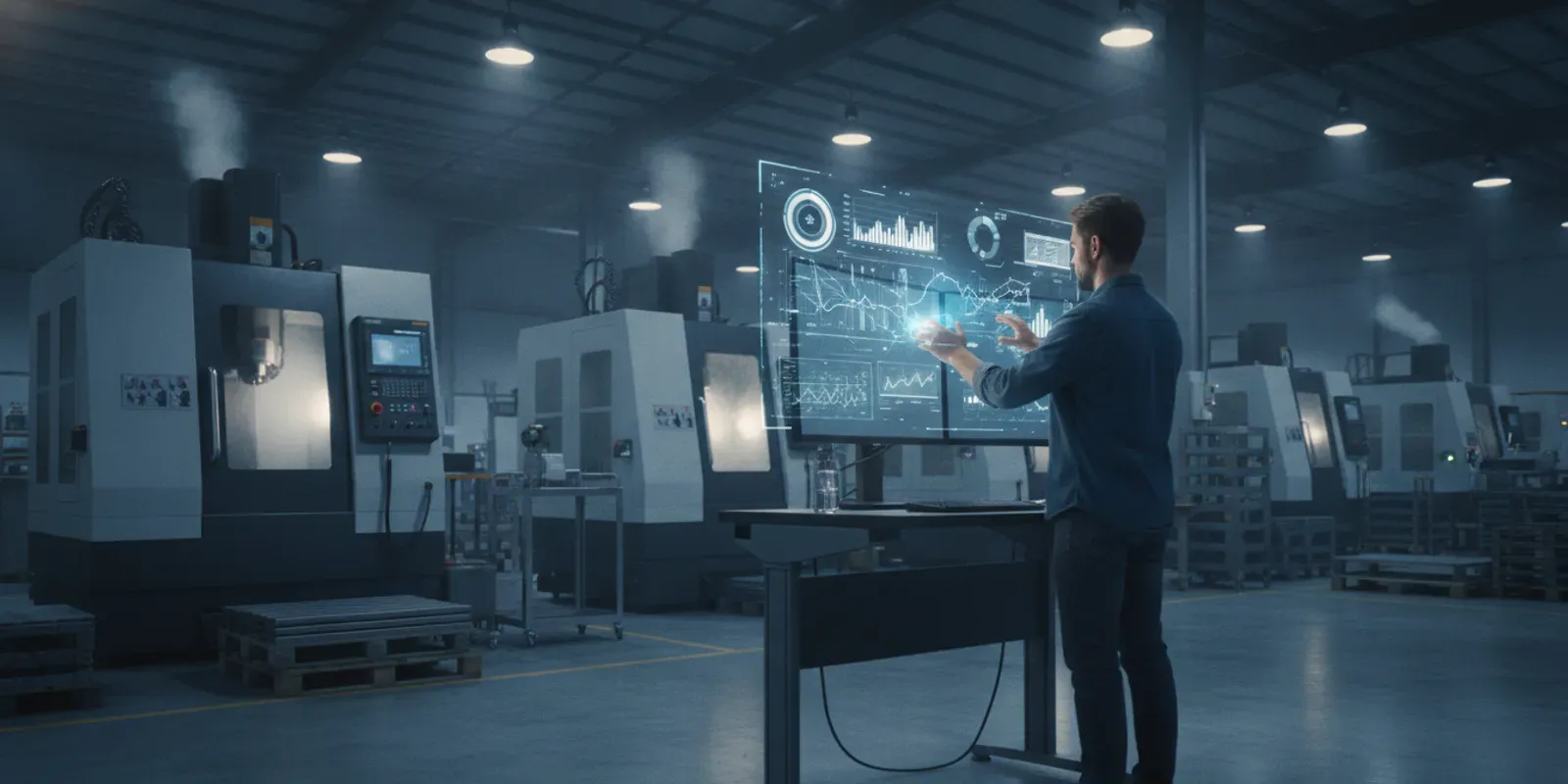
Your shop floor is a goldmine of data, but are you actually using it? Every machine cycle, tool change, and operator action generates valuable information. Too often, this data sits untapped in isolated systems or manual logs. The goal of Industry 4.0 in manufacturing is to unlock that potential by connecting your equipment and processes. It creates a constant flow of real-time information, turning raw numbers into clear, actionable insights. This allows you to move beyond guesswork and make decisions based on what’s actually happening on the floor, helping you optimize workflows, improve quality, and drive profitability.
Key Takeaways
- Connect your factory for smarter decisions: Industry 4.0 is about linking your machines, processes, and people with technology. This connection provides the real-time data you need to make faster, more informed choices that directly improve your shop floor’s performance.
- Use predictive insights to solve problems: Move beyond reacting to issues by using connected technologies. This allows you to implement predictive maintenance to prevent downtime, optimize production schedules to clear bottlenecks, and monitor quality continuously.
- Start with a practical, step-by-step plan: A successful transition doesn’t require a massive overhaul. The best strategy is to begin with a focused pilot project, select a technology partner who understands your goals, and invest in training your team to use the new tools effectively.
What is Industry 4.0 in Manufacturing?
You’ve probably heard the term “Industry 4.0” a lot lately. It sounds complex, but at its core, it’s about making manufacturing smarter by connecting the physical and digital worlds. Think of it as the fourth major shift in how we make things. The first was mechanization (steam power), the second was mass production (assembly lines), and the third was the computer and automation age. Now, Industry 4.0 takes that automation and connects everything, creating what we call a “smart factory.”
This digital transformation isn’t just about adding new machines; it’s about creating a fully integrated ecosystem where machines, people, and systems communicate with each other in real time. The goal is to use the massive amounts of data generated on your shop floor to make better, faster decisions. This leads to more efficient production, greater flexibility to meet customer demands, and a significant reduction in waste. By embracing Industry 4.0, you can move from simply reacting to problems to proactively anticipating them, keeping your operations running smoothly and profitably.
From Industry 3.0 to 4.0
The jump from Industry 3.0 to 4.0 is a significant one. Industry 3.0, which started in the late 20th century, brought us computers, automation, and robotics. It was revolutionary because it automated repetitive tasks and introduced digital controls to the factory floor. However, these systems often worked in isolation. An automated CNC machine, for example, did its job efficiently but didn’t necessarily communicate its status, performance, or maintenance needs to other systems or managers.
Industry 4.0 builds on that foundation by connecting those isolated systems. It’s the difference between having a single automated machine and having an entire network of smart machines that share data constantly. This shift enables real-time decision-making and a level of agility that wasn’t possible before. Instead of just automating a process, you’re creating an intelligent, self-optimizing production environment.
Smart Factories and Connected Systems
At the heart of Industry 4.0 is the concept of the smart factory. This is a facility where every piece of equipment, from the largest press to the smallest sensor, is connected through the Internet of Things (IoT). This network allows for a constant flow of information. Your machines can report their own health, track production counts, and flag potential issues before they cause downtime. This is where effective machine monitoring becomes essential.
This connectivity, powered by technologies like AI and cloud computing, makes your entire operation more efficient. Data from the shop floor can be analyzed instantly to optimize workflows, adjust schedules, and maintain quality control. The results are impressive, with some smart manufacturing initiatives reducing production defects by up to 50% and improving production yields by 20%.
Core Principles of This Digital Shift
The digital shift of Industry 4.0 is driven by a few core principles and technologies working together. It’s not about adopting a single piece of tech, but about creating an integrated system. Key technologies include the Internet of Things (IoT) for connecting machines, cloud computing for storing and accessing data, and Artificial Intelligence (AI) for analyzing that data to find patterns and make predictions.
These tools connect the physical world of your shop floor with the digital world of software and analytics. The ultimate goal is to use this connection to make tangible improvements. By implementing strong data analytics, you can refine processes, complete jobs faster, improve product quality, and reduce machine downtime. It’s about turning raw data from your equipment into actionable insights that guide your business forward.
The Key Technologies Driving Industry 4.0
Industry 4.0 isn’t a single piece of technology you can just plug in. It’s a suite of interconnected technologies that work together to create a smarter, more responsive manufacturing environment. Think of them as the building blocks of your smart factory. By understanding how each one works, you can see how they combine to transform your shop floor from a collection of isolated machines into a single, cohesive system. These tools are what make real-time data collection, analysis, and automated decision-making possible, laying the groundwork for a more efficient and competitive operation.
Internet of Things (IoT) and Machine Connectivity
At its core, the Internet of Things (IoT) is about connecting your physical equipment to the digital world. This is done by embedding sensors and software into your machines, allowing them to collect and share data over the internet. This constant flow of information is the foundation of a smart factory, enabling the real-time monitoring of everything from machine performance to production status. Instead of guessing or waiting for manual reports, you get an immediate, accurate picture of what’s happening on your shop floor at any given moment. This connectivity turns your machines into active participants in your production process.
Artificial Intelligence and Machine Learning
Once your IoT devices start collecting data, you need a way to make sense of it all. That’s where Artificial Intelligence (AI) and Machine Learning (ML) come in. These technologies analyze the vast amounts of data from your machines to identify patterns, predict outcomes, and even automate decisions. For example, AI can power predictive maintenance by forecasting when a machine is likely to fail, so you can schedule repairs before a costly breakdown occurs. It can also optimize complex production schedules, ensuring you’re always running as efficiently as possible.
Big Data Analytics and Cloud Computing
The sheer volume of data generated by a connected factory is enormous. Storing and processing it on-site can be expensive and impractical. Cloud computing provides a scalable and secure solution for housing all this information. Paired with big data analytics, it allows you to process and interpret your operational data to uncover deep insights. This combination is what facilitates truly informed decision-making, helping you refine production strategies, identify bottlenecks, and find new opportunities for improvement. It’s the brain that processes all the sensory input from your shop floor.
Advanced Robotics and Automation
Robotics in Industry 4.0 goes far beyond the simple, repetitive assembly line bots of the past. Today’s advanced robots are more autonomous, flexible, and often collaborative, working safely alongside human employees. These machines can handle complex tasks with incredible precision and consistency, which enhances production quality and reduces human error. By automating physically demanding or hazardous jobs, advanced robotics not only improves efficiency but also creates a safer work environment, freeing up your skilled team members to focus on higher-value responsibilities.
Cyber-Physical Systems
Cyber-Physical Systems (CPS) are the glue that holds Industry 4.0 together. These systems integrate your physical machinery with your digital control networks, creating a seamless link between the shop floor and your software. A CPS can monitor a physical process, create a virtual copy of it, and use that data to make decentralized, intelligent decisions. This deep integration is what allows for the incredible flexibility and responsiveness of a smart factory. It’s how your Industry 4.0 strategy comes to life, enabling machines to self-optimize and adapt to new demands in real time.
How Industry 4.0 Transforms Your Operations
Adopting Industry 4.0 isn’t just about installing new technology; it’s about fundamentally changing how your shop floor operates. By connecting your machines, processes, and people, you create a smarter, more responsive manufacturing environment. This digital shift moves you from reacting to problems to proactively solving them, giving you a powerful advantage. Instead of guessing what’s happening on the floor, you have clear, actionable insights at your fingertips. This transformation touches every part of your business, from how you manage equipment to how you serve your customers. It allows you to make decisions faster, produce goods more efficiently, and adapt quickly to market changes. Ultimately, it’s about building a more resilient and profitable operation that’s ready for the future.
Make Decisions with Real-Time Data
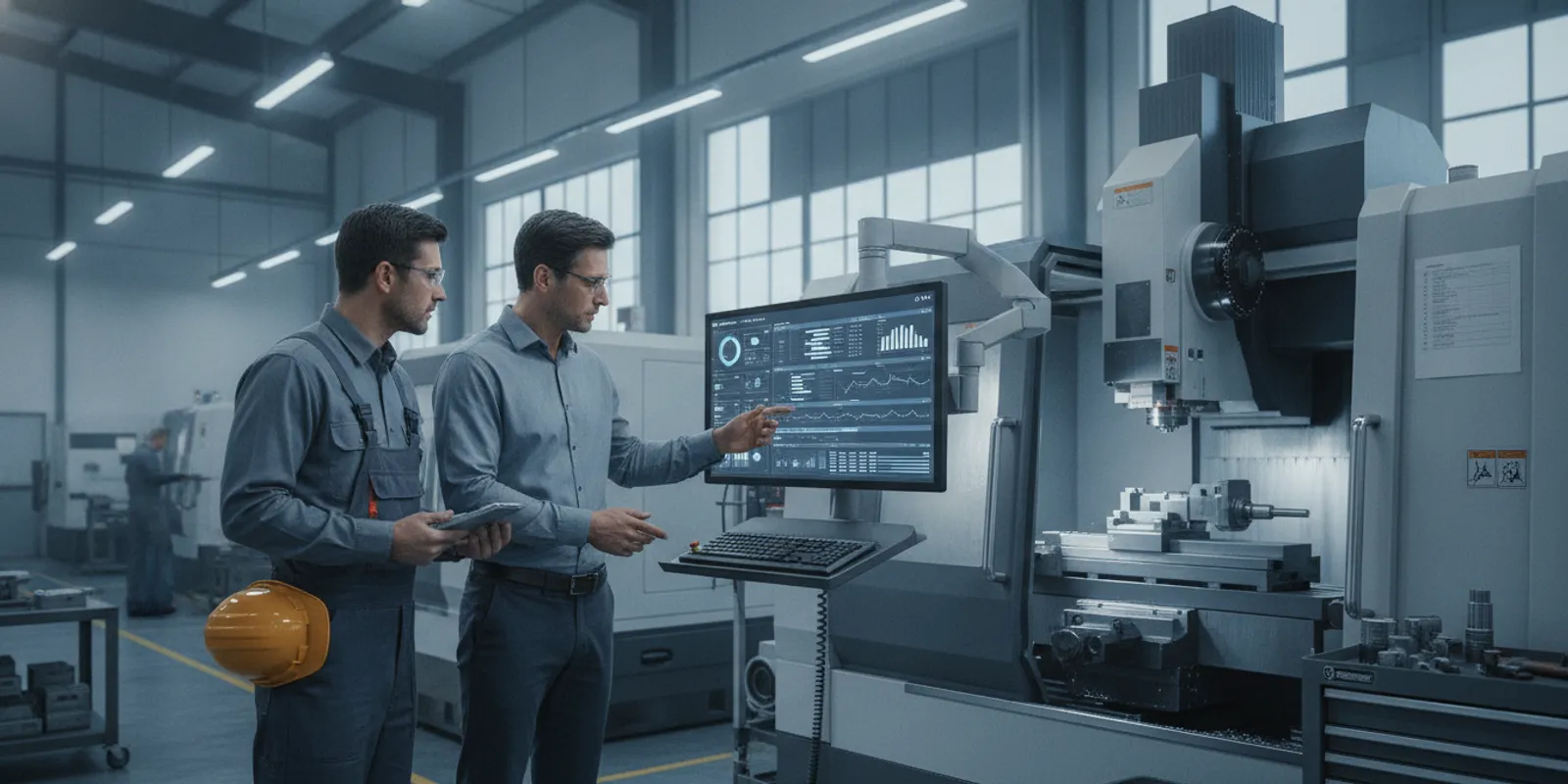
In a traditional factory, decisions are often based on yesterday’s reports. With Industry 4.0, you can make choices based on what’s happening right now. Smart sensors and connected systems collect data from every corner of your shop floor and deliver it instantly. This means you can spot a production bottleneck the moment it forms, not hours later. You can see if a machine is running slower than expected and adjust immediately. This constant flow of information gives you the power to make smarter, faster decisions that keep production on track and on budget. It’s like having a live dashboard for your entire operation, supported by powerful data analytics that turn raw numbers into clear insights.
Adopt Predictive Maintenance
Unplanned downtime is one of the biggest drains on productivity and profit. Industry 4.0 helps you move from a reactive maintenance schedule (fixing things after they break) to a predictive one. By using AI-driven analytics and continuous machine monitoring, you can predict when a piece of equipment is likely to fail before it happens. The system can analyze performance data, like temperature or vibration, to flag anomalies that signal a future problem. This allows you to schedule maintenance during planned downtime, reducing unexpected interruptions, cutting repair costs, and extending the life of your valuable equipment. It’s a smarter way to keep your machines running reliably.
Gain Clearer Supply Chain Visibility
Your operations don’t exist in a vacuum. They’re part of a larger supply chain that can be complex and unpredictable. Industry 4.0 provides real-time visibility across the entire chain, from the moment you order raw materials to when the final product reaches the customer. By integrating your systems with those of your suppliers and logistics partners, you can track materials, anticipate delays, and manage inventory more effectively. This clarity helps you avoid stockouts, reduce carrying costs, and provide customers with more accurate delivery estimates. It replaces uncertainty with confidence, allowing you to run a leaner, more efficient supply chain.
Offer Mass Customization
Today’s customers often want products tailored to their specific needs, but traditional manufacturing makes customization expensive and slow. Industry 4.0 changes that. Technologies like advanced robotics and flexible automation allow you to produce personalized products at a high volume without sacrificing efficiency. A smart production scheduling system can quickly adjust workflows to handle unique orders, while connected machines can be reconfigured with minimal downtime. This capability lets you meet growing customer demands for customization, opening up new markets and giving you a significant edge over competitors who are still stuck in a one-size-fits-all production model.
Key Benefits of Industry 4.0 for Manufacturers
Adopting Industry 4.0 isn’t just about upgrading your technology; it’s about transforming your business from the ground up. When you integrate smart tech into your operations, you gain the ability to solve some of the most persistent challenges in manufacturing, like production delays, budget overruns, and unnecessary waste. The real value lies in how these technologies empower your team to work smarter, not harder. By connecting your machines, processes, and people, you create a transparent, data-driven environment where decisions are based on real-time information, not guesswork.
This shift allows you to see exactly what’s happening on your shop floor at any given moment, anticipate problems before they happen, and adapt quickly to changing customer demands. The result is a more resilient, competitive, and profitable manufacturing business. The benefits are interconnected, creating a powerful cycle of continuous improvement. Better efficiency leads to lower costs, which frees up resources to invest in quality, while greater flexibility allows you to capture new market opportunities. It’s a holistic approach that addresses why JobPack focuses on integrated solutions to drive these tangible outcomes.
Improve Productivity and Efficiency
One of the most immediate impacts of Industry 4.0 is a significant jump in productivity. By connecting your machines and systems, you create a “smart” factory that makes faster, better-informed decisions. Think of it as giving your team superpowers. AI and intelligent systems help your workers produce more without adding to their workload. This digital approach streamlines everything from resource allocation to workflow management, allowing you to get more done in less time. With a clear view of your entire operation, you can fine-tune your production scheduling to eliminate bottlenecks and keep work flowing smoothly, turning your facility into a highly efficient, productive powerhouse.
Reduce Costs and Minimize Waste
Smart manufacturing directly translates to a healthier bottom line. Industry 4.0 technologies help you pinpoint and eliminate inefficiencies that drive up expenses. For example, real-time machine monitoring can predict when equipment needs maintenance, drastically reducing costly unplanned downtime. It also helps optimize energy consumption by identifying which machines are running unnecessarily. Furthermore, smarter processes lead to fewer production errors and less material scrap, which means you’re not just saving money on raw materials but also reducing waste. These incremental savings add up quickly, making your operations more financially sound and sustainable.
Deliver Higher-Quality Products
Consistency is key to customer satisfaction, and Industry 4.0 provides the tools to achieve it. By implementing smart sensors and AI-powered visual inspections, you can catch defects and quality issues the moment they occur, not after a full batch has been ruined. This real-time quality control saves time and money. Collecting and analyzing shop floor data gives you deep insights into your production processes, allowing you to identify the root causes of quality problems and implement lasting fixes. The result is a higher standard of product quality, stronger brand reputation, and more loyal customers who trust you to deliver excellence every time.
Strengthen Sustainability Efforts
Modern manufacturing isn’t just about profit; it’s also about responsibility. Industry 4.0 technologies are powerful allies in your efforts to build a more sustainable business. By optimizing your processes, you can significantly reduce your consumption of energy, water, and raw materials. Advanced data analytics can reveal opportunities to minimize your environmental footprint, from reducing emissions to cutting down on waste. This focus on sustainability is not only good for the planet but also resonates with a growing number of customers and partners who prioritize working with environmentally conscious companies. It’s a win-win that enhances both your brand and your operational efficiency.
Become More Flexible and Responsive
The modern market demands agility. Industry 4.0 gives you the flexibility to meet changing customer needs without sacrificing efficiency. Technologies like advanced robotics and automation make it possible to switch between different products or configurations quickly, enabling “mass customization” where you can produce personalized items at scale. This responsiveness allows you to adapt to supply chain disruptions, shifting market trends, and unique customer requests with ease. By embracing the core principles of Industry 4.0, you can build a manufacturing operation that is not just efficient but also incredibly resilient and ready for whatever comes next.
Overcoming Common Industry 4.0 Challenges
Adopting Industry 4.0 principles is an exciting step, but let’s be real, it comes with its own set of hurdles. It’s not as simple as flipping a switch and suddenly having a smart factory. You might be looking at older equipment that doesn’t talk to new software, a team that needs new skills, or a budget that feels tight. These are common and completely normal challenges that nearly every manufacturer faces when they start this process.
The key is to see these obstacles not as stop signs, but as part of the path forward. With a clear strategy and the right approach, you can work through each one. Instead of getting overwhelmed by a massive overhaul, you can focus on making smart, incremental changes that deliver real value. Let’s walk through some of the most frequent challenges and discuss practical ways to handle them.
Integrating with Legacy Systems
One of the biggest worries for manufacturers is the fleet of older, reliable machines on the shop floor. You’ve invested a lot in them, and they still work great, but they weren’t designed to connect to a network. The good news is you don’t need to replace everything. The goal is to bridge the gap between your existing equipment and new digital systems. You can do this by retrofitting older machines with sensors and gateways. This approach allows you to start collecting data directly from your machines without a massive capital investment. By connecting your most critical assets first, you can begin gathering valuable insights and prove the concept before scaling up across the entire facility.
Managing Skills Gaps and Team Change
Introducing new technology often brings up concerns about the team’s skills and job security. It’s important to frame this transition as an opportunity for growth, not a threat of replacement. The goal of automation and data analytics is to empower your employees, not make them obsolete. These tools can take over repetitive, manual tasks, freeing up your team to focus on problem-solving, quality control, and process improvement. Invest in training to help your staff get comfortable with the new systems. When you provide them with intuitive tools that make their jobs easier and more impactful, you’ll find that your team becomes one of your biggest assets in the digital shift.
Addressing Cybersecurity and Data Risks
As you connect more devices and systems, you naturally create more potential entry points for cyber threats. Protecting your operational and customer data is non-negotiable. Cybersecurity can’t be an afterthought; it needs to be a core part of your Industry 4.0 strategy from the very beginning. This means securing your network, implementing strict access controls, and regularly training your team on security best practices. When you evaluate technology partners, make sure to ask about their security protocols. A trustworthy partner will prioritize protecting your data and have robust measures in place to keep your operations safe and secure as you become more connected.
Handling Initial Costs and ROI
The price tag for new software, hardware, and training can seem daunting, and it can be tough to calculate a precise return on investment right away. Instead of attempting a massive, factory-wide implementation all at once, start small. Launch a pilot project focused on a single production line or a specific, persistent problem, like reducing downtime on a bottleneck machine. This allows you to test the technology, measure the results, and demonstrate value on a manageable scale. Seeing the real-world results from a successful pilot makes it much easier to get buy-in for a broader rollout. The long-term savings from improved efficiency and reduced waste will often far exceed the initial outlay.
How to Measure Your Industry 4.0 Success
Adopting new technology is just the first step. To truly know if your Industry 4.0 initiatives are paying off, you need to measure their impact. Without clear metrics, you’re just guessing. Tracking the right key performance indicators (KPIs) shows you exactly where you’re getting a return on your investment and where you can make further improvements. It transforms abstract goals like “being more efficient” into concrete, data-backed results.
The good news is that the same connected systems that power your smart factory also make it easier than ever to gather and analyze performance data. By focusing on a few critical areas, you can get a clear picture of how your operations are changing for the better. With the right data analytics, you can move beyond assumptions and make decisions based on what’s actually happening on your shop floor. Let’s look at four key metrics you should be tracking.
Track Overall Equipment Effectiveness (OEE)
Overall Equipment Effectiveness (OEE) is the gold standard for measuring manufacturing productivity. It tells you how close you are to perfect production by looking at three factors: availability (is the machine running when it should be?), performance (is it running as fast as it can?), and quality (is it making good parts?). Industry 4.0 technologies, like real-time machine monitoring, give you an accurate, up-to-the-minute OEE score. Instead of relying on manual tracking and guesswork, you get a constant stream of data that reveals where you’re losing time and capacity. This insight is powerful, helping you make targeted improvements that directly impact your bottom line.
Monitor Production Yield and Defect Rates
How many good parts are you making versus how many you started? Answering this question is key to understanding your profitability. Industry 4.0 tools help you monitor yield and track defects in real time. By using sensors and AI-powered analytics, you can catch errors the moment they happen, not at the end of a shift or when a customer complains. This immediate feedback loop allows you to fix problems before they lead to significant waste or costly rework. Effective shop floor data collection gives you the visibility to consistently produce higher-quality products, which keeps customers happy and protects your margins.
Measure Energy Use and Sustainability
A modern manufacturing plant is not only productive but also responsible. Industry 4.0 gives you the tools to measure and manage your energy consumption with incredible precision. By analyzing data from your equipment, you can identify opportunities to reduce waste, such as shutting down idle machines or optimizing cycle times for lower power usage. This focus on sustainability isn’t just good for the planet; it’s good for your budget. Lower energy bills mean lower operational costs. As outlined by the National Institute of Standards and Technology, these advanced manufacturing technologies are key to building a more efficient and sustainable future for the industry.
Analyze Downtime and Maintenance KPIs
Unplanned downtime is a massive drain on productivity and profits. Industry 4.0 helps you shift from a reactive maintenance model (“fix it when it breaks”) to a predictive one. By analyzing data from your machines, you can forecast when a component is likely to fail and schedule maintenance before it causes a shutdown. This proactive approach minimizes disruptions, extends the life of your equipment, and reduces repair costs. Tracking KPIs like Mean Time Between Failures (MTBF) and Mean Time To Repair (MTTR) becomes much more effective when your production scheduling system is fed with real-time data, allowing you to keep your operations running smoothly.
Creating Your Industry 4.0 Strategy
Jumping into Industry 4.0 can feel like a massive undertaking, but it doesn’t have to be. A successful transition isn’t about overhauling your entire operation overnight. Instead, it’s about building a clear, step-by-step plan that aligns with your specific business goals. Think of it as a strategic journey, not a sprint. By focusing on incremental changes, you can start seeing real results without disrupting your workflow or breaking the bank. This approach allows you to build on small wins, creating momentum and demonstrating value at every stage.
The key is to approach it methodically. Start by identifying your biggest operational challenges. Are you dealing with constant production bottlenecks, unexpected downtime, or a lack of visibility into your supply chain? Once you pinpoint the pain points, you can map out how specific technologies can solve those problems. A thoughtful strategy will help you manage costs, get your team on board, and ensure you’re investing in solutions that deliver a tangible return. The following steps will guide you in creating a practical roadmap for your factory’s digital transformation, turning a big idea into a series of achievable actions.
Plan a Phased Rollout
You don’t need an all-or-nothing approach to implement Industry 4.0 technologies. A phased rollout allows you to introduce changes gradually, minimizing disruption and risk. Start by identifying small, manageable projects that can deliver significant improvements in productivity and efficiency. For example, you could begin by focusing on optimizing your production scheduling to reduce bottlenecks on the shop floor. This approach lets you learn and adapt as you go, building momentum with each successful step. By breaking down your strategy into smaller phases, you make the entire process more approachable and easier to manage for your team.
Choose the Right Technology Partner
Selecting a partner who understands the complexities of modern manufacturing is one of the most critical decisions you’ll make. You need more than just a software vendor; you need a partner who can help you integrate new solutions with your existing systems and processes. Look for a company that offers flexible, scalable technology that can grow with your business. A great technology partner will work with you to understand your unique challenges and help you build a connected ecosystem, ensuring that data flows seamlessly from your machines directly to your ERP system for clear, actionable insights.
Start with a Pilot Project
Before you commit to a full-scale implementation, it’s wise to run a pilot project. This allows you to test a new solution in a controlled environment and evaluate its effectiveness without a massive upfront investment. A pilot project helps you assess your current digital capabilities and see firsthand how a new technology performs. For instance, you could implement a machine monitoring system on a few key assets to track performance and gather real-time data. This controlled test provides valuable proof of concept, helps you calculate potential ROI, and builds confidence within your team before a wider rollout.
Build Your Team’s Expertise
Technology is only one part of the equation. To truly succeed with Industry 4.0, you must invest in your people. Your team needs the right skills to leverage these new tools effectively. This often means providing training in areas like data analysis, system operation, and even cybersecurity. Empowering your employees to understand and use the data from your new systems is essential for making informed decisions on the shop floor. When your team feels confident with the technology, they become active participants in driving efficiency and innovation, turning your data analytics into a powerful competitive advantage.
Related Articles
- Industry 4.0 Archives – JobPack
- Industry 4.0 Production Scheduling Software for Smart Factories | JobPack
- Industry 4.0 Technologies: Key Trends & Tools for Digital Success | JobPack
- 6 Top Digital Manufacturing Companies to Watch
Frequently Asked Questions
Do I need to replace all my current equipment to adopt Industry 4.0? Not at all. This is a common misconception that holds many manufacturers back. You can start by retrofitting your existing, reliable machines with modern sensors and connectivity tools. This approach allows your legacy equipment to start communicating and sharing data, bridging the gap between your current assets and a smarter, more connected system without requiring a massive initial investment.
Is Industry 4.0 only for large manufacturing companies? Absolutely not. While large corporations often make headlines, the principles of Industry 4.0 are completely scalable. A smaller shop can see huge benefits by starting with a focused project, like implementing real-time monitoring on a single bottleneck machine or using scheduling software to optimize one production line. The key is to start with a solution that solves your most pressing problem, regardless of your company’s size.
What’s the most practical first step to get started? The best way to begin is by identifying a specific, persistent problem you want to solve. Instead of thinking about a massive digital overhaul, focus on a clear pain point. Maybe it’s frequent, unplanned downtime on a critical machine or a constant struggle with production bottlenecks. Once you have a target, you can explore a pilot project with a specific technology, like machine monitoring, to address that single issue and prove its value.
How is this different from the automation we’ve been using for years? The key difference is connection. Traditional automation, or Industry 3.0, focused on making individual machines or processes run automatically but in isolation. Industry 4.0 connects all those isolated machines and systems into a single, cohesive network. This allows them to share data with each other and with your team in real time, enabling smarter decisions, self-optimization, and a complete view of your entire operation.
How do I get my team on board with these changes? It’s important to frame this shift as a way to empower your team, not replace them. The goal is to use technology to handle repetitive or tedious tasks, which frees up your skilled employees to focus on more valuable work like problem-solving and process improvement. Involve them in the process early, provide thorough training, and choose intuitive tools that genuinely make their jobs easier and more impactful.