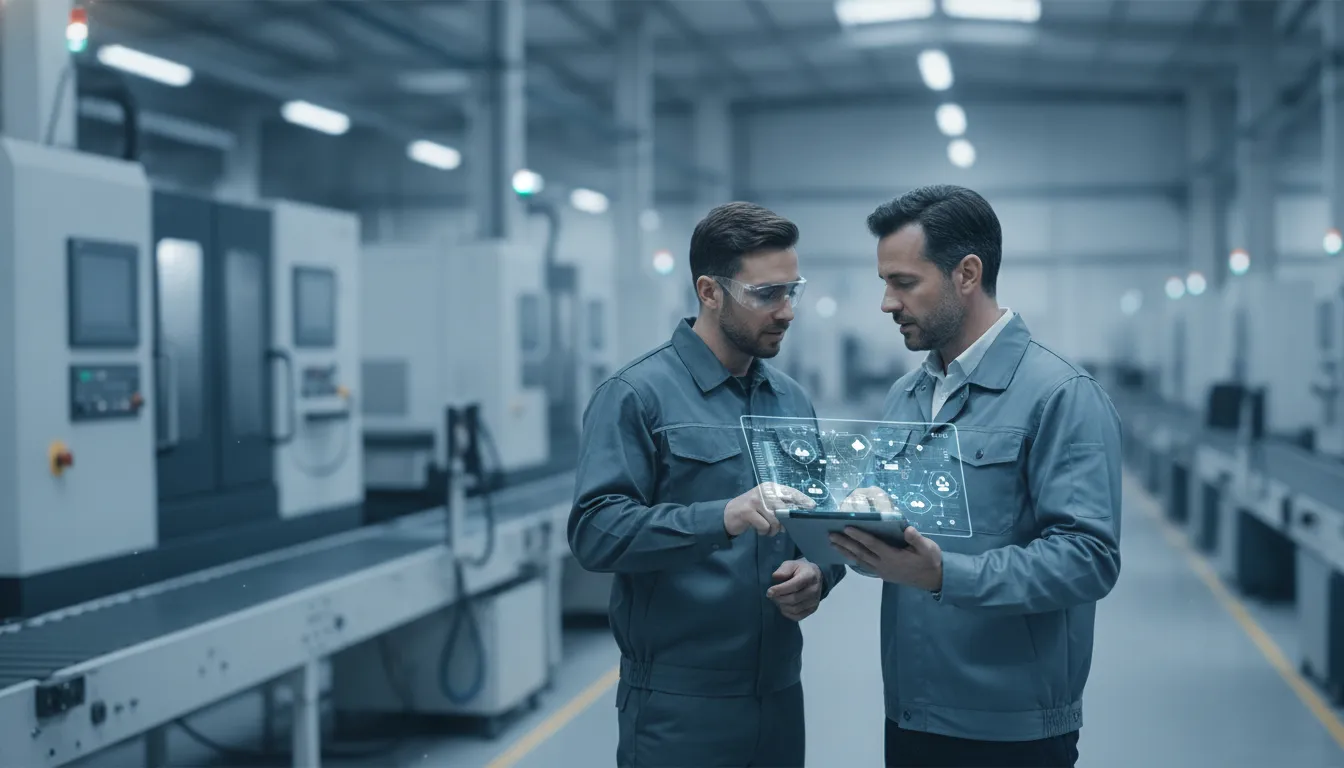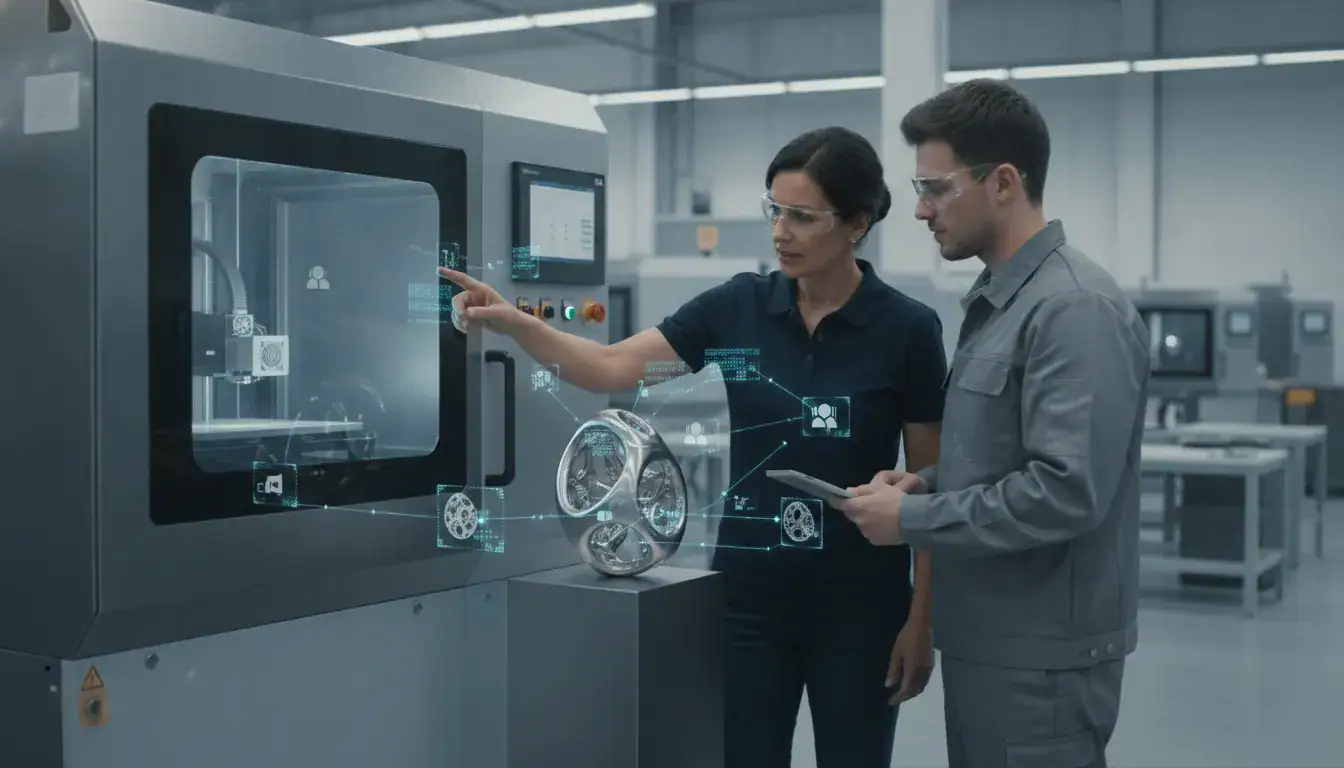

Unexpected downtime, missed deadlines, and tight margins are constant pressures in manufacturing. You do your best to plan, but one machine failure can throw the entire week’s schedule into chaos. This reactive cycle can feel impossible to break. This is precisely the challenge that Industry 4.0 was designed to solve. It provides the tools to move from firefighting to strategic planning. By integrating industry 4.0 technologies in manufacturing, you gain real-time visibility into your operations. This allows you to anticipate maintenance needs, identify production bottlenecks as they happen, and make data-backed decisions that keep your shop running smoothly, on time, and within budget.
Key Takeaways
- Connect your operations with data: Industry 4.0 uses technologies like IoT and AI to turn raw shop floor information into clear insights, helping you improve efficiency, predict maintenance needs, and enhance product quality.
- Implement strategically, not all at once: Begin with a targeted pilot project to solve a specific challenge. This approach proves the value of the technology, makes the investment manageable, and builds support for wider adoption.
- Invest in your people, not just technology: The goal is to support your workforce by automating routine tasks. Success depends on training your team to use new digital tools and interpret data, making them key drivers of your company’s growth.
What is Industry 4.0 in Manufacturing?
You’ve likely heard the term “Industry 4.0” mentioned in meetings or industry articles, but what does it actually mean for your shop floor? At its core, Industry 4.0 is about making manufacturing smarter by connecting your physical operations with intelligent digital technology. It represents a fundamental shift in how factories operate, moving from siloed processes to a fully integrated, responsive, and data-driven ecosystem. This approach helps companies make better decisions, increase flexibility, and respond to changes with greater speed and precision. By embracing these principles, you can create a more connected and efficient production environment.
Defining the Fourth Industrial Revolution
Think of Industry 4.0 as the fourth major chapter in manufacturing, also known as smart manufacturing. It’s a broad change that uses advanced technologies to make factories and supply chains more intelligent and automated. The key ingredients include the Internet of Things (IoT), artificial intelligence (AI), cloud computing, and data analysis. These tools work together to create a system where machines, people, and processes are constantly communicating and sharing information. This digital transformation is what defines the modern Industry 4.0 landscape, turning traditional facilities into highly efficient smart factories.
How It Transforms Traditional Manufacturing
So, how does this change day-to-day operations? By integrating these technologies, you can make your processes work better and finish jobs faster. Smart manufacturing leads to higher-quality products, reduced machine downtime, and more effective use of your equipment. When technologies work together, they create connected “smart factories” that are highly automated. This integration results in less waste, fewer equipment failures because problems are predicted ahead of time, and better overall output. Effective production scheduling becomes proactive instead of reactive, allowing you to optimize workflows based on real-time data from the shop floor.
The Technologies Driving Industry 4.0
Industry 4.0 isn’t a single piece of technology; it’s a suite of interconnected tools that work together to create a smarter, more responsive manufacturing environment. Think of it as the digital toolkit for the modern factory. These technologies are the engines that power the fourth industrial revolution, turning traditional production floors into highly efficient, data-driven operations. From connecting machines to predicting maintenance needs, each component plays a vital role. Understanding these core technologies will help you see how they can fit into your own operations and drive real results.
Internet of Things (IoT) and Connected Devices
At its core, the Internet of Things (IoT) is about connection. It involves embedding sensors and software into machines and equipment, allowing them to communicate and share data over a network. On the shop floor, this means your machines are no longer isolated islands of activity. Instead, they form a connected ecosystem that provides a constant stream of information. This real-time data is the foundation for effective machine monitoring, letting you track performance, identify bottlenecks, and optimize production processes with incredible precision. This network of interconnected machines is a key part of advanced manufacturing technology and is essential for improving overall efficiency.
Artificial Intelligence and Machine Learning
Artificial intelligence (AI) and machine learning (ML) are the brains behind the Industry 4.0 operation. These technologies take the massive amounts of data collected by IoT devices and turn it into actionable insights. Instead of just telling you what happened, AI and ML can predict what’s likely to happen next. They analyze patterns to streamline workflows, enhance machine performance, and even optimize complex logistics. For manufacturers, this means moving from reactive problem-solving to proactive optimization. It’s a crucial step in building a smart factory that learns and adapts, which is central to a modern data analytics strategy.
Advanced Robotics and Automation
When you hear “automation,” you might picture simple, repetitive assembly lines. Industry 4.0 takes this concept much further with advanced robotics. Today’s robots are more precise, flexible, and often collaborative, working alongside human employees to handle complex or strenuous tasks. They excel at performing jobs that require high precision, which significantly reduces the potential for human error. Beyond just assembly, these robots can manage inventory, inspect quality, and package products. This level of automation not only improves consistency and output but also enhances workplace safety by taking over dangerous tasks, allowing your team to focus on more strategic work.
Big Data Analytics and Predictive Insights
All the data from your connected devices is only useful if you can make sense of it. That’s where big data analytics comes in. This technology allows you to collect and analyze huge volumes of information from across your operations, uncovering patterns and trends you would otherwise miss. One of the most powerful applications is predictive maintenance. By analyzing machine performance data, you can predict when a piece of equipment is likely to fail and schedule maintenance before it breaks down. This shift from a reactive to a predictive approach is a game-changer for production scheduling, minimizing downtime and cutting repair costs.
Digital Twins and Cloud Computing
Imagine having a perfect virtual replica of your entire production line that you can test and tweak without ever touching the physical equipment. That’s a digital twin. This technology creates a real-time virtual model of a physical asset or process, allowing you to run simulations, monitor performance, and optimize operations in a risk-free environment. Supporting all of this is cloud computing, which provides the massive storage and processing power needed to handle the data from digital twins and other Industry 4.0 technologies. The cloud makes this data accessible from anywhere, facilitating collaboration and informed decision-making across your entire organization.
Augmented Reality for Assembly and Maintenance
Augmented reality (AR) bridges the gap between the digital and physical worlds. On the shop floor, AR devices like smart glasses or tablets can overlay digital information, such as assembly instructions or maintenance checklists, directly onto a worker’s view of the equipment. This provides hands-on, contextual guidance that can dramatically speed up complex tasks and reduce errors. For new employees, AR serves as an intuitive training tool, helping them get up to speed quickly. For seasoned technicians, it provides instant access to schematics and data, making maintenance and repairs faster and more accurate, ultimately improving operational efficiency.
Key Benefits of Adopting Industry 4.0
Adopting Industry 4.0 isn’t just about upgrading your technology; it’s about fundamentally improving how your manufacturing business operates. By integrating smart technologies, you can unlock tangible benefits that impact everything from your shop floor efficiency to your bottom line. Think of it as giving your factory a central nervous system, where every piece of equipment and every process communicates in real time. This connectivity allows you to make faster, more informed decisions and stay agile in a competitive market.
The advantages are interconnected. For example, better data from your machines leads to more efficient scheduling, which in turn reduces costs and improves delivery times. These improvements create a powerful ripple effect across your entire organization, helping you deliver work on time and within budget. The goal is to create a more resilient, productive, and profitable operation. By focusing on the right Industry 4.0 solutions, you can build a foundation for sustainable growth and see a clear return on your investment.
Increase Operational Efficiency and Productivity
One of the most significant benefits of Industry 4.0 is the jump in operational efficiency. As IBM notes, “Industry 4.0 is like making factories ‘smart’ by using digital technology.” This intelligence allows you to move from guessing to knowing. Instead of relying on historical data or gut feelings, you can use real-time information from connected machines to see exactly what’s happening on the shop floor.
This visibility helps you identify bottlenecks, streamline workflows, and optimize resource allocation instantly. With effective production scheduling, you can ensure the right jobs are running on the right machines at the right time, minimizing idle periods and maximizing output. This means you can produce more without overworking your team or pushing your equipment to its breaking point.
Reduce Costs with Predictive Maintenance
Unexpected equipment failure is a massive drain on resources, leading to costly downtime, emergency repairs, and schedule disruptions. Industry 4.0 shifts you from a reactive to a proactive maintenance strategy. By using sensors and data analytics, you can monitor the health of your machinery in real time. This allows you to predict when a machine needs attention before it actually breaks down.
This approach, known as predictive maintenance, helps keep your equipment running longer and more reliably. As experts point out, “predicting when machines need fixing helps keep them running longer.” This proactive strategy minimizes unplanned downtime and reduces overall maintenance costs, leading to significant savings. With tools for machine monitoring, you can schedule repairs during planned downtime, keeping your operations smooth and predictable.
Enhance Product Quality and Customization
In today’s market, customers increasingly expect products tailored to their specific needs. Industry 4.0 makes this possible without sacrificing efficiency. Smart factories can quickly pivot between different product variations, enabling what’s known as “mass customization.” This means you can produce unique items for individual customers at a cost that is closer to mass production, giving you a powerful competitive edge.
Beyond customization, these technologies also improve overall product quality. Continuous monitoring throughout the production process allows you to catch defects or deviations from standards the moment they happen. This reduces scrap, minimizes rework, and ensures that every product leaving your facility meets the highest quality standards. Many companies have seen these improvements firsthand in various case studies.
Improve Supply Chain Visibility
Your manufacturing process doesn’t exist in a vacuum. It’s part of a larger supply chain, and disruptions anywhere along that chain can impact your operations. Industry 4.0 technologies provide end-to-end visibility, connecting your shop floor with your suppliers and customers. This creates a transparent and responsive supply chain where information flows freely.
According to NIST, using these technologies can help your company by “improving the quality of products and making equipment work more effectively overall.” This enhanced visibility allows for better tracking of raw materials, more accurate production forecasting, and more reliable delivery estimates for your customers. With powerful data analytics, you can better manage inventory, anticipate disruptions, and keep your entire operation running like a well-oiled machine.
The Role of Data Analytics in Industry 4.0
At its core, Industry 4.0 runs on data. Think of it as the lifeblood of the smart factory. All the connected devices and advanced technologies we’ve discussed are constantly generating a massive amount of information. But collecting data is only the first step. The real power comes from making sense of it all, and that’s where data analytics comes in. It’s the engine that processes raw information from your shop floor and turns it into clear, actionable insights you can use to improve your entire operation.
Without a strong analytics strategy, you’re essentially flying blind. You might have the most advanced machinery in the world, but you won’t know if it’s performing optimally, when it needs attention, or how to schedule jobs most effectively. Industry 4.0 technologies use data to bridge the gap between the physical world of your factory and the digital world of information. This connection allows you to see what’s happening in real time, predict what’s coming next, and make smarter, faster decisions that directly impact your bottom line. It’s about transforming data from a simple byproduct of production into your most valuable strategic asset.
Monitor and Optimize Processes in Real Time
One of the biggest shifts with Industry 4.0 is the ability to see what’s happening on your shop floor as it happens. Gone are the days of waiting for end-of-shift reports to identify a problem. Technologies like the Internet of Things (IoT) and big data analytics allow you to monitor your processes in real time, giving you insights that help optimize operations and improve efficiency. With live dashboards and alerts, you can spot bottlenecks, track machine performance, and see if a job is falling behind schedule instantly. This immediate feedback loop lets you make quick adjustments to keep production flowing smoothly, ensuring you meet deadlines and maintain quality standards without the guesswork.
Predict Equipment Performance
Unexpected downtime is a huge drain on resources and productivity. Industry 4.0 helps you move from a reactive to a proactive approach to maintenance. By analyzing data from your machines, you can start to predict equipment performance and identify potential issues before they cause a breakdown. AI and machine learning are crucial for smart factories, using data to predict when machines might need maintenance. This is known as predictive maintenance. Instead of sticking to a rigid schedule or waiting for a failure, you can service equipment exactly when it’s needed, saving money on unnecessary repairs and preventing costly interruptions to your production schedule.
Make Better Decisions with Data
Ultimately, the goal of collecting and analyzing data is to make better business decisions. From the shop floor to the C-suite, data-driven insights empower your team to act with confidence. Big data and analytics systems are designed to handle the huge amounts of information from manufacturing operations, using AI to quickly process it and help you make better decisions. This could mean reallocating resources to a struggling production line, adjusting schedules to accommodate a rush order, or identifying trends that inform your long-term business strategy. When your choices are backed by solid data, you reduce risk and create a more resilient, efficient, and profitable operation.
Common Challenges in Adopting Industry 4.0
Making the move to Industry 4.0 is a powerful step for any manufacturing business, but it’s not always a straight path from A to B. Like any major operational upgrade, it comes with a unique set of hurdles. Thinking about these challenges ahead of time helps you create a smarter, more effective strategy. Instead of seeing them as roadblocks, consider them part of the landscape you’ll move through on your way to a more connected and efficient shop floor.
The good news is that these are common, solvable issues. From integrating older equipment to managing new security needs, thousands of manufacturers have successfully worked through these points. Understanding what to expect is the first step in building a plan that not only anticipates these challenges but turns them into opportunities for growth and improvement. With the right approach, you can prepare your team and your technology for a smooth and successful transition.
Integrating with Legacy Systems
Most shop floors are a mix of the old and the new. You likely have trusted, reliable machines that have been workhorses for years sitting next to brand-new equipment. The challenge is getting these different generations of technology to communicate. Connecting older, non-digital systems with modern software can seem complex, as they weren’t originally designed to share data.
The goal isn’t to replace everything at once. Instead, it’s about finding the right way to bridge the gap. Modern tools for shop floor data collection are designed specifically for this purpose. They act as translators, pulling critical performance information from your legacy machines and feeding it into your central system. This allows you to get a complete picture of your operations without a full-scale, and costly, equipment overhaul.
Managing Cybersecurity Risks
As you connect more devices and systems to your network, you create more entry points for potential cyber threats. It’s a simple reality of a more connected world. Protecting your sensitive production data, intellectual property, and operational technology becomes a top priority. A security breach could lead to significant downtime, data loss, or compromised quality, so it’s a risk that needs to be managed proactively from day one.
Building a strong defense involves more than just installing firewalls. It requires a comprehensive security strategy that includes regular risk assessments, employee training on security best practices, and secure network configurations. Following guidelines from organizations like the Cybersecurity and Infrastructure Security Agency can provide a solid framework for protecting your newly digitized operations and ensuring your data remains safe.
Addressing the Workforce Skills Gap
Industry 4.0 technologies run on data. This shift means your team needs to be comfortable working with digital tools and interpreting analytics to make informed decisions. Many companies find there’s a gap between their team’s current skills and the new competencies required, especially in areas like data science and IT. This is often compounded as experienced workers who hold deep institutional knowledge begin to retire.
This isn’t about replacing your team; it’s about empowering them. The solution lies in training and upskilling your current workforce. By investing in their development, you build a more capable and adaptable team. Intuitive data analytics platforms can also help by presenting complex information in a clear, easy-to-understand format. This makes it easier for everyone, from machine operators to plant managers, to use data effectively in their daily roles without needing a degree in statistics.
Calculating Implementation Costs and ROI
One of the biggest hesitations manufacturers have about Industry 4.0 is the perceived cost. There’s a common misconception that you need a massive budget and that only large corporations can afford to implement these technologies. While there is an initial investment, the focus should be on the return that investment will generate, from reduced downtime and less waste to faster order fulfillment.
You don’t have to do everything at once. The most successful implementations often start small with a pilot project focused on solving a specific, high-impact problem. This allows you to prove the value and calculate a clear ROI before scaling up. Seeing the tangible benefits firsthand makes it much easier to justify further investment. A great first step is to request a demo to see how the technology works and get a clearer picture of the potential costs and returns for your specific operations.
Common Misconceptions About Industry 4.0
The term “Industry 4.0” can feel big and intimidating, and a lot of myths have popped up around what it means for manufacturers. These misunderstandings often come from a picture of fully automated, futuristic factories that seem out of reach for the average shop. This can slow down innovation and prevent businesses from getting the tools they need to stay competitive and grow. The hesitation is understandable, but clinging to outdated ideas can be more costly in the long run than investing in new technology.
But the reality is that Industry 4.0 is less about a complete technological revolution and more about a practical evolution. It’s about using smart, connected technology to make your existing processes work better, faster, and more efficiently. The goal isn’t to replace your entire operation overnight. Instead, it’s about making targeted improvements that solve real-world problems, like reducing machine downtime or ensuring on-time deliveries. Let’s clear the air and look at some of the most common misconceptions. The truth is that these technologies are more accessible and beneficial than you might think. By understanding what Industry 4.0 really is, you can make informed decisions for your business without getting held back by fiction.
Myth: It’s Only for Large Companies
One of the biggest myths is that you need a massive budget and a sprawling factory to adopt Industry 4.0 technologies. The reality is that smart manufacturing isn’t just for global corporations. Small and medium-sized shops can see huge benefits from these tools, often with scalable, lower-cost solutions designed for their specific needs. The goal is to find the right fit for your operation, not to overhaul everything at once. Many solutions are designed to be adaptable, helping you solve immediate challenges like improving on-time delivery or reducing waste, regardless of your company’s size.
Myth: It Will Replace Your Workforce
The fear that automation will lead to widespread job losses is understandable, but it’s largely unfounded. Industry 4.0 technologies are designed to support your team, not replace them. Think of these tools as collaborators that handle repetitive, time-consuming tasks. This frees up your skilled workers to focus on more complex problem-solving, quality control, and creative work where their expertise truly shines. For example, shop floor data collection empowers your team with real-time information, helping them make better decisions on the fly and adding more value to their roles.
Myth: It’s Too Complex to Implement
Jumping into new technology can seem daunting, and many business owners worry that implementation will be a complicated, disruptive process. While it requires planning, many Industry 4.0 solutions are surprisingly user-friendly and can be integrated into your existing systems with relative ease. You don’t have to do everything at once. The most successful transitions often start small, focusing on one key area for improvement. This approach makes the process manageable and allows you to see a return on your investment sooner. The key is to find a partner who can help you make the transition manageable and guide you through a smooth implementation.
How to Successfully Implement Industry 4.0
Making the leap to Industry 4.0 doesn’t have to be an overwhelming, all-at-once overhaul. A successful transition is all about smart, strategic steps that build momentum over time. Instead of trying to transform your entire factory overnight, focus on a clear, manageable path forward. By breaking the process down, you can prove the value of new technologies, get your team on board, and build a solid foundation for future growth.
The key is to approach implementation with a clear strategy. Think of it as a series of well-planned projects rather than a single, massive initiative. This method allows you to learn and adapt as you go, ensuring each new step is a confident one. It removes the pressure of getting everything perfect from the start and instead focuses on incremental progress that delivers real results. The most successful manufacturers focus on three core areas: starting with a targeted pilot project, assembling a diverse team, and making security and training a top priority from day one. By mastering these fundamentals, you set your facility up for a smooth and effective digital transformation that aligns with your specific business goals.
Start Small with a Pilot Project
One of the biggest myths about Industry 4.0 is that it requires a massive upfront investment, making it accessible only to large corporations. The reality is that you can start with a pilot project to test the waters and demonstrate value on a smaller scale. Pick one specific problem you want to solve. For example, you could implement real-time machine monitoring on a single critical production line to identify bottlenecks.
This approach allows you to test new technology in a controlled environment, measure the return on investment, and gather valuable insights. A successful pilot project not only proves the concept but also builds enthusiasm and makes it much easier to get buy-in from leadership and your team for a wider rollout.
Build a Cross-Functional Team
A successful Industry 4.0 implementation is a team sport, not just an IT project. It’s essential to form a cross-functional team that includes people from across your organization. Bring together representatives from the shop floor, operations, engineering, IT, and even finance. Each member offers a unique perspective that is critical for success.
Your operations team understands the day-to-day workflow, while your IT staff knows the technical infrastructure. This collaboration ensures the solution you choose is not only technologically sound but also practical and beneficial for the people who will use it every day. By involving everyone from the start, you create a sense of shared ownership and pave the way for a smoother transition.
Prioritize Cybersecurity and Workforce Training
As you connect more devices and systems, you also create more potential entry points for cyber threats. That’s why a proactive cybersecurity strategy is non-negotiable. From the very beginning of your implementation, you need to prioritize security measures to protect your valuable data and operations. Don’t treat it as an afterthought; build it into the foundation of your strategy.
Equally important is investing in your people. New technology requires new skills, so workforce training is essential. Providing your team with the right training helps them adapt to new tools and processes confidently. This not only ensures you get the most out of your Industry 4.0 investment but also empowers your employees, making them an integral part of your company’s evolution.
What’s Next? Emerging Trends in Industry 4.0
Industry 4.0 is constantly evolving. As technologies mature, they reshape the factory floor and the entire manufacturing business model. To stay competitive, it’s important to understand where the industry is headed. Three major trends are defining this next phase: a deeper commitment to sustainability, the ability to deliver personalized products at scale, and a new, collaborative relationship between humans and machines. These shifts are about building smarter, more resilient, and more responsive operations for the future.
A Greater Focus on Sustainability
Modern manufacturing is getting greener, and Industry 4.0 is leading the charge. Companies are using smart technology to reduce waste, save energy, and work toward becoming carbon-neutral. By using real-time machine monitoring, you can pinpoint exactly where energy is being wasted or materials are used inefficiently. This data allows you to optimize processes, cut down on scrap, and make more sustainable choices. This isn’t just about environmental responsibility; it’s smart business. Reducing waste and energy consumption directly translates to lower operational costs and a stronger bottom line.
The Rise of Mass Customization
The one-size-fits-all model is fading. Today’s customers want products tailored to their specific needs, and Industry 4.0 makes it possible to deliver without breaking the bank. This approach, known as mass customization, allows companies to make personalized products for many people without a lot of extra cost. Technologies like 3D printing and flexible robotics make it easier to switch between product variations. To manage this complexity, a dynamic production scheduling system is essential. It helps you organize custom orders and ensure that even unique jobs are delivered on time and within budget.
The Evolution of Automation and the Workforce
A common myth about automation is that robots are coming to take everyone’s jobs. The reality is much more collaborative. Robots are not meant to replace employees but to make their work easier by handling repetitive or dangerous tasks. This frees up your team to focus on more advanced work, like problem-solving, quality control, and process improvement. AI and automated systems act as powerful assistants, helping workers make production faster and better while reducing downtime. This shift creates a new dynamic where technology empowers your workforce, leading to a more skilled, engaged, and productive team.
How to Build Your Industry 4.0 Strategy
A solid strategy is what separates a successful Industry 4.0 adoption from a collection of expensive, disconnected gadgets. It provides a roadmap that aligns technology with your core business goals. Instead of getting overwhelmed by all the possibilities, you can focus on making targeted changes that deliver real value. Building this strategy involves two key steps: defining what success looks like for your shop floor and creating a sustainable plan to get there.
Set KPIs to Measure Success
You can’t know if your new technology is working unless you define what success looks like from the start. That’s where Key Performance Indicators (KPIs) come in. These are the specific, measurable metrics that show you whether you’re hitting your goals. Instead of guessing, you’ll have hard data from your shop floor data collection to prove your ROI. Focus on KPIs that directly impact your bottom line, like improving productivity, reducing costs, and enhancing quality. Think about metrics such as Overall Equipment Effectiveness (OEE), on-time delivery rates, and scrap reduction. With clear targets, your team knows exactly what they’re working toward, and you can easily track your progress.
Create a Plan for Long-Term Growth
With your KPIs in place, you can build a roadmap for the future. A strong long-term plan goes beyond just installing new equipment. It involves preparing your team for change through training and creating a culture of continuous improvement. Your strategy should be scalable and flexible enough to adapt as your business grows and market demands shift. This is where integrating advanced technologies with a clear vision becomes critical. Using data analytics to monitor your KPIs helps you make informed decisions, identify trends, and fine-tune your processes over time. This data-driven approach ensures your Industry 4.0 initiatives continue to support your growth for years to come.
Related Articles
- Industry 4.0 Archives – JobPack
- Industry 4.0 Production Scheduling Software for Smart Factories | JobPack
- Industry 4.0 Technologies: Key Trends & Tools for Digital Success | JobPack
- 6 Top Digital Manufacturing Companies to Watch
- MES System for Manufacturing: The Ultimate Guide
Frequently Asked Questions
Do I need to replace all my old equipment to adopt Industry 4.0? Not at all. One of the most practical aspects of Industry 4.0 is its ability to integrate with what you already have. Many shops successfully use shop floor data collection tools to connect their trusted legacy machines to a modern network. These tools act as a bridge, gathering important performance data from older equipment so you can get a complete view of your operations without a massive and costly overhaul.
How can I get started with Industry 4.0 if I have a limited budget? The best approach is to start small and focus on solving one specific, high-impact problem. Instead of trying to transform your entire factory at once, launch a pilot project. For example, you could implement real-time machine monitoring on a single production line that’s a known bottleneck. This allows you to prove the value of the technology and see a clear return on investment before committing to a larger rollout.
How will implementing these new technologies affect my current team? These technologies are designed to support your team, not replace them. Automation and data tools handle repetitive or physically demanding tasks, which frees up your skilled employees to focus on more complex work like problem-solving, quality assurance, and process improvement. The goal is to empower your team with better information, helping them make smarter decisions and add more value to their roles.
What’s the most immediate benefit I can expect to see? Often, the first and most powerful benefit is a dramatic increase in visibility. Once you start collecting real-time data from your machines, you can see exactly what’s happening on the shop floor as it happens. This immediate insight helps you spot inefficiencies, identify the root causes of delays, and make quick adjustments to keep production on track, moving you from guesswork to data-driven confidence.
How do I measure the success of my Industry 4.0 initiatives? Success is measured by tracking specific Key Performance Indicators (KPIs) that are tied to your business goals. Before you begin, decide what you want to improve. You might focus on metrics like Overall Equipment Effectiveness (OEE) to measure productivity, on-time delivery rates to track customer satisfaction, or scrap reduction to monitor quality. Consistently tracking these numbers will give you clear, hard data to show the return on your investment.