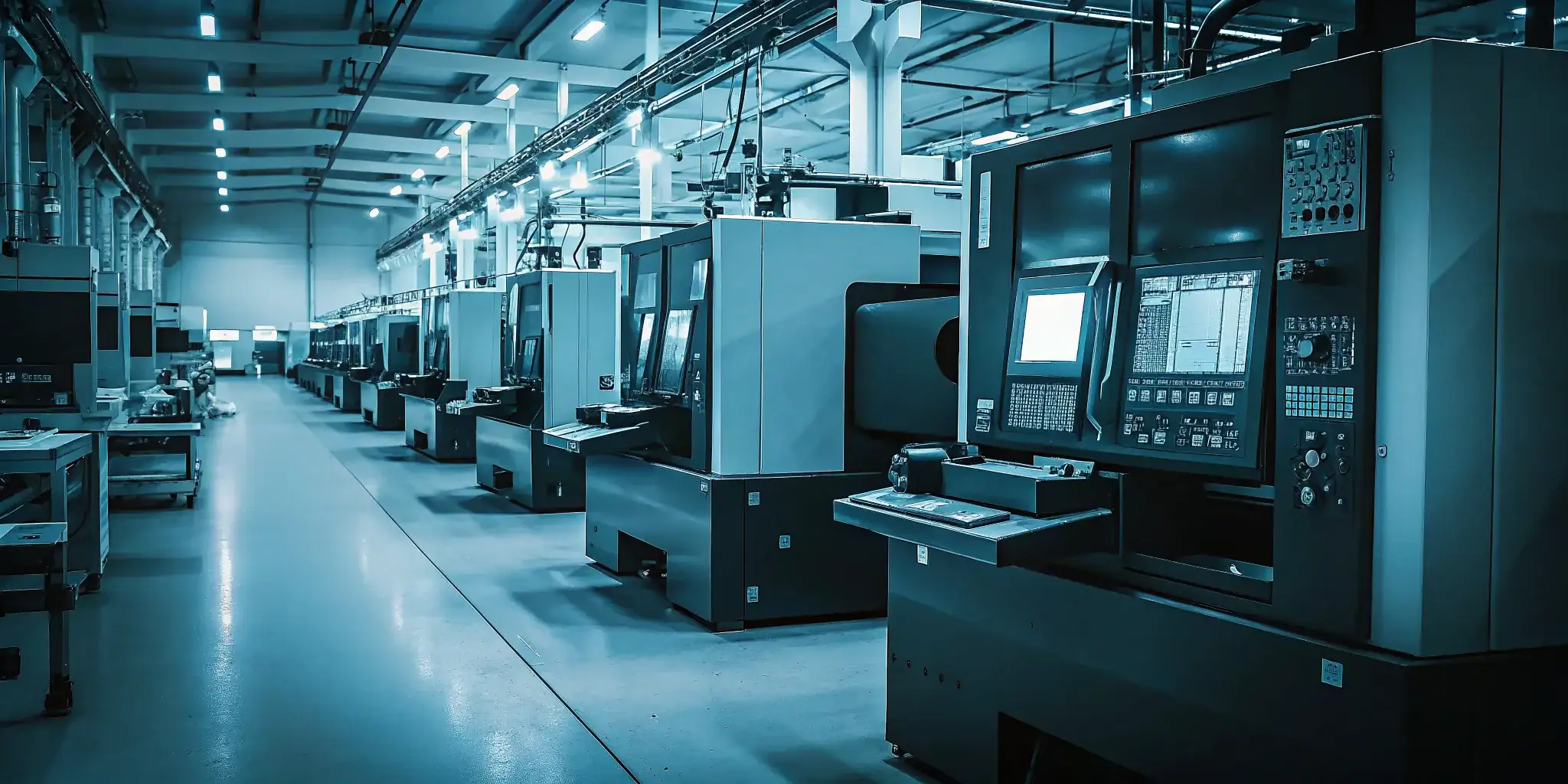

Empty CNC spindles on a Tuesday morning cost your shop floor hundreds of dollars in lost throughput. For a typical machine shop, finding the cost savings of new production software can feel like guesswork. Yet, measuring these operational losses reveals the exact path to real savings.
The ROI of MES software comes from three sources: less machine downtime, less scrap, and simpler labor tracking. A study from the National Institute of Standards and Technology shows how this software links shop floor activities to actual costs. For high-mix, low-volume discrete manufacturers, cutting machine downtime by just five to ten percent yields large and fast cash gains. These outcomes highlight the clear benefits of implementing an MES for mid-sized plants. Replacing paper logs with real-time digital tracking helps typical mid-sized shops achieve full payback within six to twelve months. This investment often delivers a ten to fifteen percent increase in total shop output without adding new equipment. Planners can also run what-if tests to handle rush orders without disrupting current shop schedules.
How do these savings translate to your bottom line, and how much investment is needed to start? To find out, we must begin by evaluating the ROI of MES software alongside the upfront costs. The path begins with Understanding the True Cost of MES Software.
Understanding the True Cost of MES Software
Before you can work out the return of a new platform, you must know what you will spend. Buying software is more than just writing a check for the base platform. A complete budget must include license fees, setup services, training, hardware, and ongoing support.
Licensing and deployment models
For mid-market discrete plants, base MES software costs often range from $25,000 to $100,000. Some vendors offer a cloud choice that starts at the yearly cost of a single full-time worker. A cloud-based approach usually costs between EUR 30,000 and EUR 60,000 per year.
You must also choose between cloud and local hosting. While cloud choices are growing, more than 70% of setups remain on-premise. Local hosting needs you to buy servers and keep up your own hardware, which adds to the first setup cost.
To keep costs low, look for flexible license plans. JobPack uses a seat-license model with yearly service contracts. This modular pricing setup lets you start with one module and add others as needed, which is useful when evaluating the ROI of MES software.
Setup and training timelines
System setup is where many budgets break. The average industry setup timeline is 6 to 12 months, which raises costs and holds back your return. In contrast, JobPack offers a rapid 6-week setup timeline to get your shop floor running and active quickly.
A complete budget must also account for training. You will need to train two groups on the shop floor:
- System Planners: These workers learn to use the scheduling tools and Gantt charts to manage daily production.
- Machine Operators: These workers learn to use shop terminals to log their work and track part counts.
Good training ensures your team can use the system without manual data errors, helping you see the true benefits of implementing an MES. It also helps you avoid the risks of unexpected downtime and quality issues.
Maintenance and ongoing support
Ongoing costs keep your system running without bugs. Yearly support contracts cover software updates, tech help, and system checks. These service fees are key to keep your schedules accurate and your machine data clean over the long term.
A smart budget prepares for these ongoing needs from day one. By planning for licenses, rapid setup, and yearly support, you build an accurate cost baseline. This helps you find a real return for your shop floor assets.
The Three Levers of MES ROI: Downtime, Scrap, and Labor
To get the most value from your shop floor, you must understand how new tools affect your budget. The Symestic framework gives a clear way for evaluating the ROI of MES software. This framework groups your savings into three areas: downtime, scrap, and labor.
Downtime reduction and scheduling
Downtime reduction is the largest source of savings for most shops. It makes up 60-70% of the total return on your software investment. Many shops struggle with unplanned stops because they do not have real-time machine data.
Connecting your CNC machines to a live system allows you to track idle time instantly. You can use machine monitoring to find out why a spindle stops turning. This live feedback helps planners adjust schedules on the fly to avoid bottlenecks.
With these tools, planners can also coordinate shared resources and labor. Good scheduling cuts changeover times and keeps machines running. This keeps your shop floor busy and reduces the need for costly subcontracting.
Scrap reduction and quality control
Scrap and material waste make up the second lever of MES ROI. This area accounts for 20-30% of the financial return. In discrete manufacturing, even a small drop in scrap rates can save thousands of dollars each month.
Paper logs often fail to catch errors before they spread. Real-time data helps shops reduce costs by recognizing defects early. This prevents bad parts from moving to the next workstation where more value is added.
When an operator sees a tool wear out, they can stop the job fast. This direct control stops process drift and keeps your quality high. It also saves money on raw materials and prevents costly rework on finished parts.
Labor tracking and shop floor automation
The third lever of ROI is labor tracking and reporting automation. Manual paper logs are slow and often lead to errors. By using digital tools, shops can track actual labor hours per job without manual entry.
A paperless shop floor speeds up data collection and gives planners instant updates. This connects your shop floor activities directly to your schedule. Planners can see which jobs are on time and which ones need more help.
This real-time visibility lets you see the benefits of implementing an MES. With better scheduling and tracking, you can improve your on-time delivery by up to 17%. This boosts customer trust and helps you win more orders.
With over 1,100 installations globally, JobPack understands how to make these levers work for you. By combining machine tracking with smart scheduling, you can capture full value from your shop assets. These changes turn daily chaos into a smooth, repeatable workflow.
Real-World Savings: What a Typical 20-50 Machine Shop Can Expect
Small machine shops running 20 to 50 CNC machines often struggle with manual steps and paper logs that hide real waste. Finding the ROI of MES software requires looking at real floor data. Linking shop tasks to actual costs helps you stop waste as it happens. This visibility is how manufacturing execution systems protect your profit.
Software licensing and implementation costs
Setting up a new system needs some upfront spend. For a shop with 20 to 50 machines, software licensing fees range from $30,000 to $80,000. Setup, team training, and support services usually add another $10,000 to $25,000. While these initial costs seem high, they are small compared to your big year-one gains.
Annual savings from factory floor efficiency
The largest financial returns come from cutting machine downtime. A typical mid-sized shop can save $75,000 to $150,000 per year by cutting idle time. Real-time tools like visual production scheduling make it easy to spot bottlenecks. These schedule tools stop machines from sitting empty while waiting for jobs.
You can also save $25,000 to $75,000 each year by cutting material scrap. Spotting errors early stops wasted stock on the shop floor. Finally, digital labor tracking saves $15,000 to $40,000 by ending slow manual logs. Better machine use can even slash outsourced work costs by $10,000 to $30,000.
| Financial Category | Type of Impact | Typical Cost or Benefit Range |
|---|---|---|
| Software licensing | One-time or recurring fee | $30,000 to $80,000 (depends on seats and modules) |
| Setup and training | One-time upfront cost | $10,000 to $25,000 (includes setup and onboarding) |
| Downtime reduction savings | Annual ongoing savings | $75,000 to $150,000 (reduces machine idle time) |
| Scrap reduction savings | Annual ongoing savings | $25,000 to $75,000 (reduces process defects) |
| Labor and reporting efficiency | Annual ongoing savings | $15,000 to $40,000 (eliminates manual data logs) |
| Subcontracting cost reduction | Annual ongoing savings | $10,000 to $30,000 (reclaims outsourced machine work) |
| Net annual benefit | Ongoing yearly value | $125,000 to $295,000 (ongoing value after year one) |
| Breakeven timeline | Payback period | 6 to 12 months (typical for mid-market shops) |
Payback timelines and competitor benchmarks
Your net annual benefit ranges from $125,000 to $295,000, leading to a typical breakeven timeline of 6 to 12 months. Industry benchmarks support these rapid returns on investment. For instance, data from Symestic shows a typical mid-sized plant saves about 147,000 Euros per year with a payback time under six months. Smaller shops can adopt these systems quickly because they have fewer IT layers to manage.
Other software studies show that some plants save $20,000 per week with MasterControl, reaching full ROI in under 12 months. These savings go hand in hand with better shop output. For example, JobPack helps shops reach up to a 17% on-time delivery boost. Shipping orders on time avoids late fees and helps secure more high-value client contracts.
How to Calculate Your MES ROI: A Step-by-Step Framework
To find the true value of your software, you need to measure costs and gains. Do this first. When evaluating the ROI of MES software, you must look at both direct and indirect gains. This shows if the system will pay for itself. Tracking these numbers is the best way to prove real value. It also helps you see where you can save the most cash on your shop floor.
Direct cost and benefit baseline
A shop can link production to actual costs to find true profits. Write down what you spend on scrap and late shipments. Overtime costs matter too. Check your run times so you have clear facts. These facts will show you exactly where your shop is losing money each day.
The five-step ROI framework
You can find your return by comparing new benefits to your setup costs. It is simple. Follow five basic steps to find the exact savings for your shop floor. This plan works for any size shop. It uses your own data to turn guesswork into clear facts for smart choices. You will see how small changes can lead to big savings over time.
- List all cost categories: Add up all expenses for the new system, including licenses, training, hardware, and support. Be sure to count any extra IT hours you need for setup. This gives you a clear starting point.
- Measure your current baseline: Gather current data on scrap, overtime, and machine run times. These numbers show the true impact of the system. You will use them to measure your success.
- Estimate your benefit gains: Use industry averages to project your savings, like a 5% to 10% drop in downtime. To find reporting savings, multiply hours saved per week by 48 weeks and your loaded hourly rate. These calculations show you what is possible.
- Apply the ROI formula: Subtract your total annual costs from your total annual benefits. Divide that number by your total cost and multiply by 100 to get your percentage return. This math is simple but very powerful.
- Find your payback period: Divide your total system cost by your annual net benefits to find the breakeven point in years. Since JobPack sets up in six weeks, you will hit this point much faster. You will start seeing a return on your spend almost right away.
Accelerating time to value
Traditional systems take six to twelve months to deploy, which delays your payback. JobPack is different. It lets you start scheduling in six weeks, ensuring a fast return on your investment. By reducing downtime and tracking labor, you will see a rapid payback that keeps your shop running smoothly. This speed helps you beat your rivals, cut wasted costs, and grow your profits today.
Beyond the Numbers: Intangible ROI of MES Software
Measuring the ROI of MES software often focuses on direct savings. You can track machine uptime and scrap rates. But the benefits of implementing an MES go far beyond hard math. These softer gains build a stronger business.
Compliance and Audit Trails
Sectors like aerospace (AS9100), medical devices (FDA), and defense (ITAR) need strict tracking. Manual paper logs make audits slow and prone to error. An MES records every step of production in real time. This digital path makes it easy to pass audits and keep your certifications.
When you can prove your work with clean records, customer confidence grows. Buyers know they will get quality parts on time because your schedule is reliable. This trust helps you win larger contracts and keep your customers happy.
Real-Time Shop Decisions
In many shops, planners make choices based on gut feel. They must react to machine breakdowns, material delays, and late shipments with quick fixes. This constant firefighting causes high stress, wastes time, and lowers work quality. An MES changes this by giving your team real-time production intelligence.
With machine monitoring tools, your team gets instant data to solve bottlenecks. This real-time view works like a digital expert on the shop floor. In fact, research shows that an MES acts as an expert resource to review operations in real time and guide your choices.
Less firefighting means a better quality of life for your staff. Planners spend less time fixing schedules and more time improving shop flow. When the shop floor runs smoothly, stress drops for both the office and the operators. A calm shop is a more productive shop.
Knowledge Continuity and Growth
Many shops rely on a single planner who keeps the schedule in their head. If that person leaves or retires, the shop floor can stall. An MES solves this risk by storing your shop rules in a central system. This means your plans stay with your business, even when people move on.
This digital setup also helps your shop grow. You can take on more jobs without adding office overhead or hiring more planners. The software handles the complex task of scheduling shared resources. This allows your team to focus on output and quality as you scale up your operations.
Frequently Asked Questions
Is MES worth it for small manufacturers?
Yes, MES software is highly valuable for small manufacturers. According to the National Institute of Standards and Technology, an MES serves as a digital expert. It reviews shop floor operations in real time and offers quick recommendations without the high cost of extra staff. This help is vital for small shops with tight budgets and few employees.
How much does MES software cost?
MES software prices vary by deployment type and shop size. A standard setup for mid-market shops ranges from $25,000 to $100,000. According to the National Institute of Standards and Technology, cloud-based systems can start at a yearly rate close to the cost of one full-time worker. Total costs depend on needed modules and training.
What is the typical breakeven period for MES software?
Most small and medium shops see a full return on their investment within 6 to 12 months. This payback timeline depends on how fast the shop connects its machinery and trains its staff. When evaluating the ROI of MES software, cloud tools can achieve payback in under six months because they have lower upfront fees.
What factors affect MES ROI the most?
The main factors are machine downtime, material scrap, and labor tracking. Reducing machine downtime yields the largest gains, often making up 60% to 70% of the total return. Lowering scrap rates contributes another 20% to 30% of the payback. Shops also save time by automated reporting, which cuts down on manual paper data entry.
Ready to Calculate Your Shop’s MES Software ROI?
Every day your shop delays installing modern MES software, you lose valuable profit to machine downtime, slow changeovers, and painful scheduling bottlenecks. Manual planning and paper tracking cannot keep pace with a busy shop floor, leading to late job shipments, unhappy customers, and high overhead costs. By choosing a smart, real-time scheduling system today, you can take back control in only six weeks while evaluating the ROI of MES software.
Ready to start? Call (847) 741-1861 to request a live demo. Our expert manufacturing team is ready to help you set up your online session and show you exactly how to improve machine scheduling. Reduce production waste, and grow your shop’s daily profits.