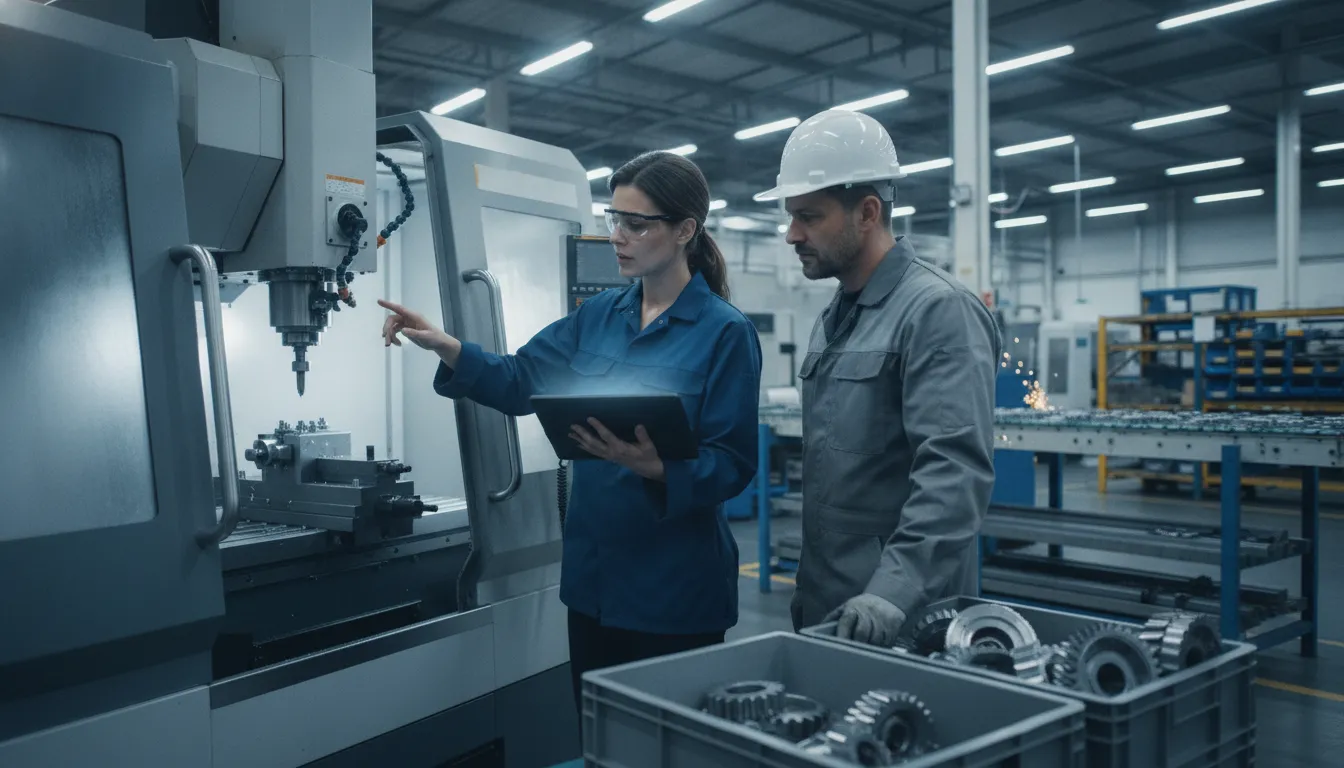
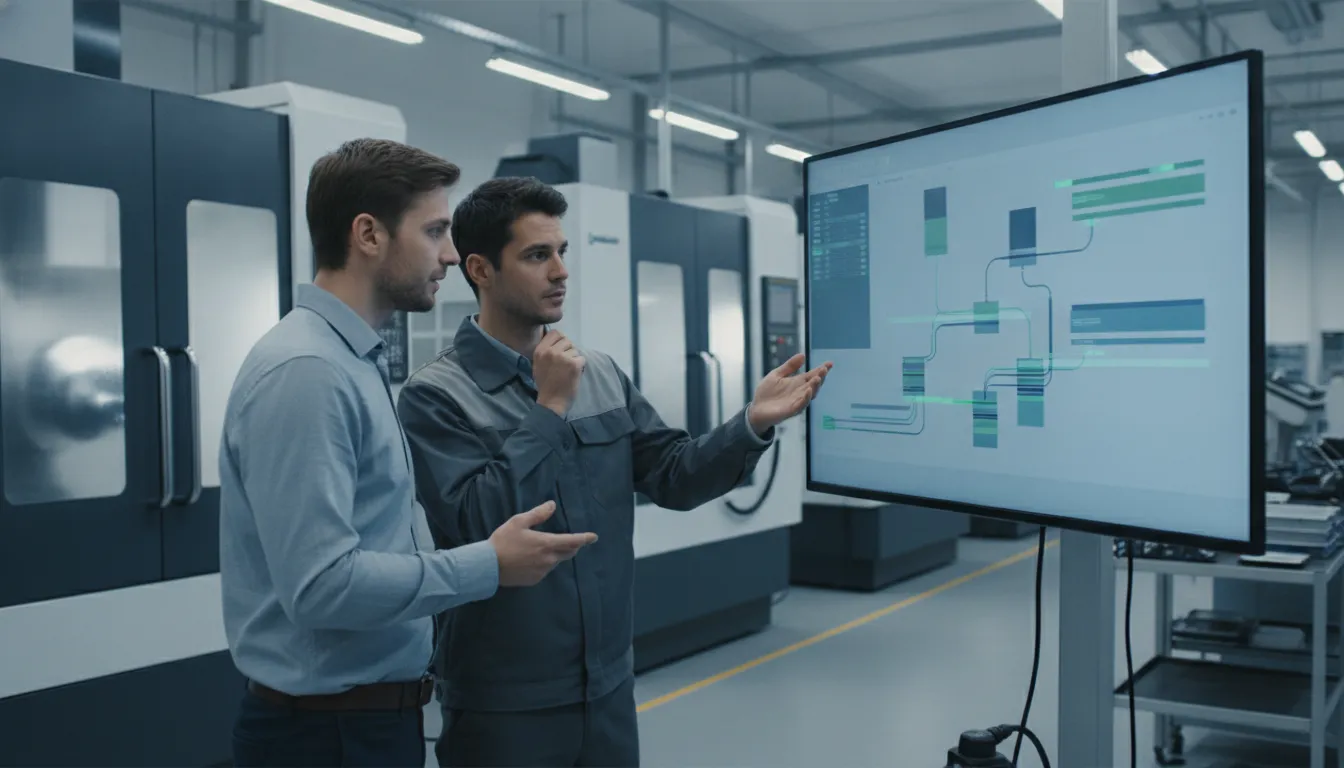
Think of your manufacturing operation as a living body. Your ERP and planning departments are the brain, creating strategies and sending out instructions for what needs to be done. But if there’s no nervous system to carry those signals to the hands and feet—the machines and operators on the floor—the instructions get lost. This disconnect leads to delays, errors, and inefficiency. This is the fundamental role of a control system. If you’re asking what is shop floor control, it is the central nervous system of your factory. It translates high-level plans into real-time actions, monitors every movement, and sends critical feedback back to the brain, ensuring your entire operation is coordinated and responsive.
Key Takeaways
- Get a clear, real-time view of production: A shop floor control system replaces guesswork with a live look at your entire operation, from machine status to job progress, so you can solve problems the moment they arise.
- Make smarter decisions with hard data: By automatically collecting information on machine performance, labor, and quality, the system gives you the insights needed to pinpoint inefficiencies, reduce waste, and drive continuous improvement.
- Align your shop floor with business goals: Integrating your shop floor control system with your ERP creates a single source of truth, ensuring that daily production activities directly support your company’s objectives for more accurate planning and scheduling.
What is Shop Floor Control?
What It Is and Why It Matters
Think of Shop Floor Control (SFC) as the central nervous system of your manufacturing operations. It’s the system that takes your carefully laid production plans and turns them into finished goods on the factory floor. Essentially, it manages and monitors everything that happens in real time, from tracking work orders and materials to keeping an eye on employee productivity and machine performance. Why does this matter so much? Because effective shop floor control is what ensures your production runs smoothly. It helps you minimize waste, maintain high quality, and most importantly, deliver products to your customers on time, every time. It’s the foundational discipline that directly impacts your bottom line, from overall productivity to customer satisfaction.
The Key Components of a Control System
So, what makes up a shop floor control system? It’s not just one thing, but a collection of functions working together to give you a clear picture of your operations. The core components include real-time machine monitoring, which lets you see the status of every job and machine instantly. It also involves managing work orders from start to finish, tracking materials to prevent shortages, and planning your resources (both people and equipment) for maximum efficiency. Another critical piece is quality control, ensuring that standards are met at every step. Together, these components gather vital information through shop floor data collection, giving you the control needed to keep production on track and address issues before they become major problems.
What Does Shop Floor Control Actually Do?
Shop floor control is more than just a dashboard; it’s an active system that directs the flow of work across your entire production environment. It connects your plans to the reality of what’s happening on the floor, moment by moment. By translating high-level goals into concrete actions, it ensures every part of your operation is working in sync. Think of it as the central nervous system for your manufacturing floor, coordinating everything from machine activity to material movement to keep production on track.
Track and Monitor Production
At its core, shop floor control gives you a live, transparent view of your entire production process. It follows each job from the moment it’s released to the floor until it’s complete, tracking its status and location at every step. This means no more guessing where an order is or how much work is left. With effective machine monitoring, you can see which machines are running, which are down, and how efficiently they’re performing. This constant stream of information eliminates surprises and helps you manage work-in-progress (WIP) with confidence, ensuring nothing falls through the cracks.
Manage Resources and Allocation
A great plan can fall apart if the right resources aren’t in the right place at the right time. Shop floor control handles the complex logistics of resource management by making sure your materials, tools, and labor are allocated effectively. The system uses real-time shop floor data collection to confirm that the necessary components are available before a job starts, preventing delays caused by missing parts. It also helps you assign tasks to the right operators and machines, optimizing your workforce and equipment usage to keep the production line moving smoothly and efficiently.
Schedule and Plan in Real Time
Manufacturing rarely goes exactly as planned. Unexpected machine downtime, rush orders, or material shortages can disrupt even the most carefully crafted schedule. Shop floor control excels at helping you adapt to these changes instantly. Instead of relying on a static schedule, it provides dynamic, real-time production scheduling that adjusts as conditions on the floor change. If a machine goes offline, the system can help you reroute jobs and update priorities on the fly. This agility allows you to solve problems as they arise and minimize their impact on your delivery deadlines.
Integrate Quality Control
Ensuring quality isn’t just a final inspection; it’s a process that should be woven into every stage of production. Shop floor control integrates quality checks directly into the workflow, allowing operators to record measurements, report defects, and flag issues in real time. This immediate feedback loop means you can catch problems at the source instead of discovering them after an entire batch is ruined. By leveraging powerful data analytics, you can also identify trends, understand the root causes of defects, and make continuous improvements to your processes, leading to higher-quality products and less waste.
The Core Benefits of Shop Floor Control
Improve Production Efficiency
Think of shop floor control as the conductor of your manufacturing orchestra, ensuring every process works in harmony. It focuses on the execution layer, helping you track work orders, manage job schedules, and collect vital production data. This clarity makes it easier to streamline workflows and keep production moving, resulting in a more productive operation that hits deadlines consistently. With effective production scheduling, you can increase throughput and improve on-time delivery rates. It’s about turning potential chaos into a well-oiled, efficient machine that keeps customers happy.
Reduce Waste and Cut Costs
Every manufacturer wants to reduce waste, and a shop floor control system is a powerful tool for this. It gives you the visibility to spot inefficiencies that drain your resources. By monitoring processes in real time, you can pinpoint where materials are wasted, machines are idle, or labor could be used more effectively. This insight allows you to make targeted improvements that directly impact your bottom line. By optimizing resource use and minimizing scrap, you can lower operational costs. Our customer case studies show how manufacturers use this data to make smarter financial decisions.
Enhance Quality Management
Great quality doesn’t happen by accident; it’s built into your process. A shop floor control system helps you move from reactive to proactive quality management. Instead of waiting for final inspections, you can integrate quality checks throughout the production cycle. Real-time shop floor data collection allows your team to catch potential defects or deviations from standards as they occur. This early detection means fewer reworks, less scrap, and a more consistent final product. It ensures everything leaving your facility meets the exact specifications your customers expect, building trust and protecting your brand.
Make Smarter Decisions with Data
Guesswork has no place in modern manufacturing. Shop floor control replaces assumptions with hard data, empowering you to make informed decisions quickly. It provides a live feed of production activities, so you can track progress and identify issues the moment they arise. With powerful data analytics, you can see bottlenecks, understand the root causes of machine downtime, and measure team performance accurately. This real-time insight allows managers to solve problems before they escalate and adjust plans on the fly. It’s about having the right information to guide your operations with confidence.
How Does the Shop Floor Control Process Work?
Shop floor control isn’t a single event; it’s a continuous, four-step cycle that turns your production plans into finished products. Think of it as a loop: you release a plan, execute it, monitor the progress, and then analyze the results to make the next plan even better. This process ensures that what’s happening on the floor aligns perfectly with your overall business goals, from meeting deadlines to maintaining quality. Let’s walk through each of these key stages.
Release and Initiate Orders
This is where the plan meets the pavement. Releasing an order is the official green light for your production team. It’s more than just saying “go”; it’s about giving your team all the information they need to succeed. A work order package typically includes detailed instructions on what to make, the materials required, the sequence of operations, and the standard time it should take. This step transforms a digital plan from your ERP or scheduling system into a tangible set of tasks for the shop floor, ensuring everyone knows exactly what they need to do, how to do it, and when it needs to be done.
Schedule and Sequence Production
Once orders are released, the next step is to organize the workflow for maximum efficiency. This is where you decide the exact order of jobs and assign them to specific machines and operators. The goal is to create a seamless flow of work that minimizes idle time, prevents bottlenecks, and makes the best use of your available resources. An effective production scheduling system considers machine capacity, operator availability, material readiness, and delivery deadlines to create a realistic and achievable plan. It’s a critical puzzle that, when solved correctly, keeps your operations running smoothly and your costs down.
Monitor and Control Execution
With production underway, the focus shifts to tracking progress in real time. This stage is all about visibility. By using shop floor data collection tools, you can continuously monitor what’s happening at every workstation. Are jobs running on schedule? Are machines performing as expected? Is material consumption matching the plan? This constant stream of information allows you to spot deviations or problems the moment they occur, not hours or days later. This proactive approach means you can make immediate adjustments, like re-routing a job or addressing machine downtime, to keep production on track and prevent small issues from becoming major delays.
Report and Analyze Performance
The final step is to close the loop by analyzing what actually happened. This involves comparing the actual production data against your initial plan. Did a job take longer than estimated? Were more materials used than planned? By examining these variances, you can uncover valuable insights. This data analytics process helps you pinpoint inefficiencies, identify the root causes of problems, and find opportunities for improvement. The lessons learned here feed directly back into your planning and scheduling processes, creating a cycle of continuous improvement that makes your entire operation smarter, faster, and more profitable over time.
What Data Does Shop Floor Control Collect?
A shop floor control system is your eyes and ears on the factory floor, constantly gathering information to give you a clear, real-time picture of your operations. Think of it as the central hub for all production-related data. It doesn’t just collect numbers for the sake of it; it captures specific, actionable insights that help you make smarter decisions. This data is the foundation for everything from daily scheduling adjustments to long-term strategic planning.
The system pulls information from multiple sources, including machines, operators, and work orders, to track four key areas: machine performance, labor and resource use, quality and compliance, and overall production output. By organizing this information, you can move from guessing to knowing, transforming raw numbers into a powerful tool for improvement. Effective data analytics turns this stream of information into a clear roadmap for efficiency, helping you spot trends, fix problems, and find opportunities you might have otherwise missed.
Machine Performance
One of the most critical functions of a shop floor control system is to monitor your equipment. It goes beyond simply knowing if a machine is on or off. The system provides detailed data on machine uptime, downtime (both planned and unplanned), and the specific reasons for any stops. You can track cycle times to see if a job is running as expected and monitor production speeds to ensure optimal performance. This level of machine monitoring helps you identify bottlenecks, predict when maintenance is needed, and understand your true production capacity, which is essential for accurate scheduling and quoting.
Labor and Resource Use
Understanding how your team’s time is spent is crucial for efficiency. Shop floor control systems capture data on labor without being intrusive. This includes operator clock-in and clock-out times for specific jobs, setup times, and the duration of production runs. This information isn’t about watching over your team’s shoulder; it’s about smart resource allocation. With accurate shop floor data collection, you can see which jobs require more labor, identify areas where additional training might be helpful, and ensure your workforce is assigned effectively to meet production goals and avoid burnout.
Quality and Compliance
Maintaining high quality standards is non-negotiable. A shop floor control system acts as your quality watchdog by tracking key metrics in real time. It records data on scrap rates, the quantity of parts that need rework, and the specific reasons for any defects. This immediate feedback loop allows your team to catch quality issues the moment they happen, preventing a small problem from turning into a large batch of wasted material and time. It also helps with compliance by creating a detailed digital record of production and quality checks, which is invaluable for audits and maintaining industry certifications.
Production Output and Cycle Times
At its core, manufacturing is about getting finished products out the door on time. Shop floor control systems give you a live view of your output. The system tracks the progress of every work order, counting the number of good parts produced and comparing actual cycle times against the planned schedule. This data tells you exactly where each job stands and whether you are on track to meet your deadlines. This visibility is fundamental to effective production scheduling, as it allows you to make proactive adjustments, manage customer expectations accurately, and deliver on your promises consistently.
How Shop Floor Control Integrates with Your Systems
A shop floor control system doesn’t operate in a vacuum. Its real power comes from its ability to connect with the other software that runs your business. When these systems talk to each other, you get a complete, real-time picture of your entire operation, from top-level planning to the individual machines on the floor. This integration breaks down information silos and ensures everyone is working with the same accurate, up-to-the-minute data. Think of it as the central nervous system connecting the brain of your business (your planning software) to the hands (your factory floor).
Connecting with Your ERP
Your Enterprise Resource Planning (ERP) system handles the big picture: finances, inventory, and overall business planning. A shop floor control system acts as the essential bridge between your ERP’s high-level plans and the day-to-day reality of production. It takes work orders from the ERP and translates them into actionable tasks on the floor. More importantly, it feeds real-time status updates, material usage, and labor hours back into the ERP. This constant flow of information makes your production scheduling more accurate, your inventory counts more reliable, and your business forecasts much sharper.
Linking to MES and WMS
Shop floor control is often a core component of a broader Manufacturing Execution System (MES). While the MES manages the entire production lifecycle, shop floor control focuses specifically on executing and monitoring tasks as they happen. It provides the digital backbone for the MES. Similarly, integrating with a Warehouse Management System (WMS) ensures that the right materials and components are delivered to the right workstations just in time. This seamless communication prevents delays caused by missing parts and keeps your production lines running smoothly through effective shop floor data collection.
Integrating with Quality Management Systems
Effective shop floor control gives you a direct line to quality management. Instead of waiting until the end of a production run to inspect for defects, you can monitor quality in real time. The system can flag anomalies or deviations from standards as they occur, allowing operators to make immediate corrections. This real-time feedback loop helps you catch issues early, reduce scrap and rework, and maintain consistent product quality. By analyzing this data, you can identify trends and find the root causes of quality problems, leading to continuous improvement across your operations.
Leveraging IoT and Industry 4.0
Modern shop floor control is at the heart of Industry 4.0. By connecting with Internet of Things (IoT) devices and sensors on your machines, the system can automatically gather performance data without any manual input. This includes everything from cycle times and machine uptime to temperature and vibration. This rich stream of data powers advanced data analytics and can even enable predictive maintenance, alerting you to potential machine failures before they happen. This level of digital integration is no longer a futuristic concept; it’s a practical strategy for staying competitive and efficient.
What Manufacturing Challenges Does Shop Floor Control Solve?
Every shop floor has its share of headaches, from surprise machine failures to tracking down the status of a critical order. These aren’t just minor annoyances; they’re operational hurdles that cost time and money. A shop floor control system directly addresses these common pain points by replacing guesswork with clear, actionable data. It’s designed to tackle the persistent issues that keep managers up at night, turning operational chaos into controlled, predictable processes.
Gain Real-Time Visibility
Managing a shop floor without real-time data is like driving with a blindfold on. You often don’t know about a problem until hours later, after the damage is done. Shop floor control software gives you live dashboards with an up-to-the-minute view of every machine and job. You can see what’s running, what’s down, and how production is tracking against the schedule at a glance. This level of machine monitoring means you can spot potential delays as they happen, not after the fact. Instead of reacting to yesterday’s problems, you can proactively manage today’s production flow and keep everything on track.
Minimize Manual Processes and Errors
Relying on paper travelers or manual spreadsheet updates is a recipe for mistakes. A single typo or a misplaced decimal point can throw off inventory counts, material orders, and even customer delivery dates. A shop floor control system automates the flow of information. By implementing effective shop floor data collection, you can capture production counts, cycle times, and operator activity directly from the source. This eliminates the need for manual entry, which drastically reduces the risk of human error. With more accurate and consistent data, your team can trust the information they’re working with, leading to better planning.
Manage Unplanned Downtime
When a machine unexpectedly stops, the clock starts ticking. Every minute of unplanned downtime costs money and puts your production schedule at risk. The longer it takes to identify and address the issue, the bigger the impact. With shop floor control, you get instant alerts the moment a machine goes offline. The system tracks downtime reasons, helping you distinguish between a short setup change and a serious maintenance issue. This immediate feedback allows your team to respond faster and get equipment back up and running. Over time, you can analyze this data to identify recurring problems and schedule preventative maintenance.
Break Down Data Silos
Often, the planning department has one set of data, the production team has another, and quality control has a third. When these systems don’t communicate, no one has the full picture. Shop floor control acts as the central nervous system for your operations, connecting disparate data points into a single, unified view. It pulls information on machine performance, work-in-progress, and labor productivity into one place. This integrated approach ensures everyone is working with the same information. By turning raw numbers into clear data analytics, you can make more informed decisions about everything from resource allocation to process improvements.
How to Choose the Right Shop Floor Control Software
Selecting the right shop floor control software is a big decision that will shape your operations for years to come. It’s not just about buying a tool; it’s about finding a partner that understands your unique manufacturing environment and can help you achieve your goals. With so many options available, it’s easy to feel overwhelmed. The key is to focus on what truly matters for your business: core functionality, data intelligence, future growth, and security. A system that excels in these four areas will become an indispensable part of your daily operations, rather than just another piece of software to manage.
Think of this process as building a foundation for a more efficient and data-driven future. The right system will provide clear visibility into your production, empower your team to make smarter decisions, and adapt as your company evolves. It connects your people, machines, and processes, creating a single source of truth that eliminates guesswork and reduces friction on the shop floor. To help you find the perfect fit, let’s break down the essential criteria you should consider. By evaluating potential software against these key areas, you can confidently choose a solution that not only solves today’s challenges but also supports your long-term vision for a smarter, more connected factory.
Must-Have Features and Capabilities
At its core, your shop floor control software should give you a firm handle on your entire production process. Look for a system that offers robust production scheduling to help you plan and prioritize jobs effectively. It must also include comprehensive tools for tracking work orders from start to finish, giving you real-time status updates on every part and process.
Another critical component is automated shop floor data collection. The system should effortlessly capture information directly from machines and operators, eliminating manual entry errors and providing an accurate picture of what’s happening on the floor. Make sure it also supports quality documentation and management, allowing you to maintain standards and address issues as they arise.
Real-Time Analytics and AI
In modern manufacturing, waiting for yesterday’s data is no longer an option. The right software will deliver real-time information that allows you to monitor production, track labor efficiency, and identify bottlenecks instantly. This immediate feedback loop is essential for making quick, effective decisions that keep production on track and on budget.
Beyond just displaying data, look for a system with powerful data analytics that turn raw numbers into actionable insights. The software should help you understand performance trends, calculate OEE, and pinpoint opportunities for improvement. Some advanced systems even incorporate AI to predict maintenance needs or suggest scheduling adjustments, helping you move from a reactive to a proactive operational model.
Scalability and Customization
Your business isn’t static, and your software shouldn’t be either. Choose a shop floor control system that can grow with you. Whether you’re adding new machines, expanding to another facility, or increasing production volume, the software should scale seamlessly without requiring a complete overhaul. A flexible system ensures that your initial investment continues to pay off as your company evolves.
Equally important is the ability to customize the software to fit your specific workflows. A one-size-fits-all solution rarely works perfectly. The best systems are highly adaptable, allowing you to configure dashboards, reports, and data entry fields to match your processes. This ensures your team has the tools they need to work efficiently, making the software a natural extension of your operations. You can learn more about why JobPack prioritizes this adaptability.
Security and Data Protection
As manufacturing becomes more connected, cybersecurity is more important than ever. Your production data is a valuable asset, and your shop floor can be a target for cyber threats. Many older control systems were not built with modern security in mind, leaving them vulnerable. When evaluating software, ask pointed questions about its security features.
Look for a provider that prioritizes data protection through features like user-based access controls, data encryption, and secure cloud hosting. The system should be part of a larger Industry 4.0 strategy that treats security as a core component, not an afterthought. Partnering with a vendor who provides regular security updates and follows best practices is crucial for protecting your operations and your customers’ trust.
How to Implement a Shop Floor Control System
Putting a shop floor control system in place is more than just a software installation; it’s a strategic move to refine your entire production process. A successful rollout requires careful planning, team involvement, and a clear vision for what you want to achieve. By breaking the implementation into manageable steps, you can ensure a smooth transition and start seeing the benefits much faster. Think of it as building a new foundation for your operations, one that supports greater efficiency and smarter decision-making from day one.
Assess and Plan Your Rollout
Before you do anything else, map out your strategy. Start by defining clear, measurable goals. Are you trying to reduce machine downtime, improve on-time delivery rates, or get a better handle on material waste? Document your current workflows to identify bottlenecks and areas ripe for improvement. This initial assessment will help you configure the system to solve your specific challenges. A well-defined plan is the best way to ensure your new shop floor control system delivers exactly what you need.
Train Your Team and Manage Change
Your team is the most critical part of a successful implementation. The best software in the world won’t make a difference if no one uses it correctly. Focus on training that explains the “why” behind the change, not just the “how.” Show your operators, supervisors, and planners how the new system will make their jobs easier and help the company succeed. When your team understands the benefits, they are more likely to embrace the new workflows. Effective production scheduling and real-time tracking empower your staff, turning them into active participants in the optimization process.
Overcome Common Integration Hurdles
Many manufacturers run on a mix of systems, some of which might be decades old. Your shop floor control system must be able to communicate seamlessly with your existing software, especially your ERP. When evaluating solutions, prioritize systems built for easy integration. This prevents data silos and ensures that information flows freely between your shop floor and your front office. Don’t overlook security, either. As you connect more of your operations, you need a system with robust, up-to-date security protocols to protect your valuable production data.
Measure Success and Keep Improving
Implementation isn’t the finish line. To get the most out of your investment, you need to track your progress and continuously look for ways to improve. Before you go live, establish the key performance indicators (KPIs) you’ll use to measure success, like Overall Equipment Effectiveness (OEE) or cycle times. A good system provides real-time feedback through machine monitoring and dashboards, making it easy to see what’s working. Use this data to make informed adjustments and foster a culture of continuous improvement.
Related Articles
- 4 Core Benefits That Will Transform Your Manufacturing Floor – Shop Floor Management Software – JobPack
- How Tracking on the Shop Floor Transforms Manufacturing Businesses – Shop Floor Management Software – JobPack
- How User Interface Design Affects Manufacturing Productivity – Shop Floor Management Software – JobPack
- shop floor transparency Archives – JobPack
Frequently Asked Questions
My company already has an ERP system. Isn’t that the same as shop floor control? That’s a common question, and it’s smart to clarify the difference. Think of your ERP as the company’s brain; it handles high-level planning like finance, inventory, and sales orders. A shop floor control system is the central nervous system that connects the brain to the hands. It takes the plans from the ERP and manages the real-time execution on the factory floor, then sends live performance data back to the ERP. They are two distinct systems that work best as a team.
Is a shop floor control system only for large manufacturing companies? Not at all. The challenges of tracking jobs, managing machine downtime, and reducing waste exist in shops of all sizes. In fact, smaller operations can see a huge impact from the efficiency gains. A modern shop floor control system is scalable, so it can fit the needs of a growing business without being overly complex. The goal is visibility and control, which is valuable whether you have five machines or five hundred.
How much training is involved, and will my team be able to adapt? Change can be intimidating, but a well-designed system should be intuitive for your team. The best approach is to focus training on how the software makes their jobs easier, for example, by replacing manual paperwork or providing clear, instant access to job priorities. When operators and supervisors see that the system helps them solve daily problems and work more smoothly, they usually adapt very quickly.
What’s the biggest mistake companies make when implementing a shop floor control system? A frequent mistake is diving in without first defining clear goals. Before you even look at software, you should know what specific problems you want to solve. Are you trying to reduce setup times by 15% or improve your on-time delivery rate? Without a specific target, it’s difficult to configure the system properly or measure your return on investment. A little planning upfront makes the entire process much more successful.
This sounds great, but where do I even begin? The best first step is to simply observe and document. Take a walk through your shop and identify your top three production headaches. Is it unplanned machine downtime? Are you struggling to find the real-time status of a critical job? Once you have a clear list of your most pressing challenges, you’ll have a much better idea of what you need a system to do for you. This simple assessment gives you a powerful starting point for any future conversations.