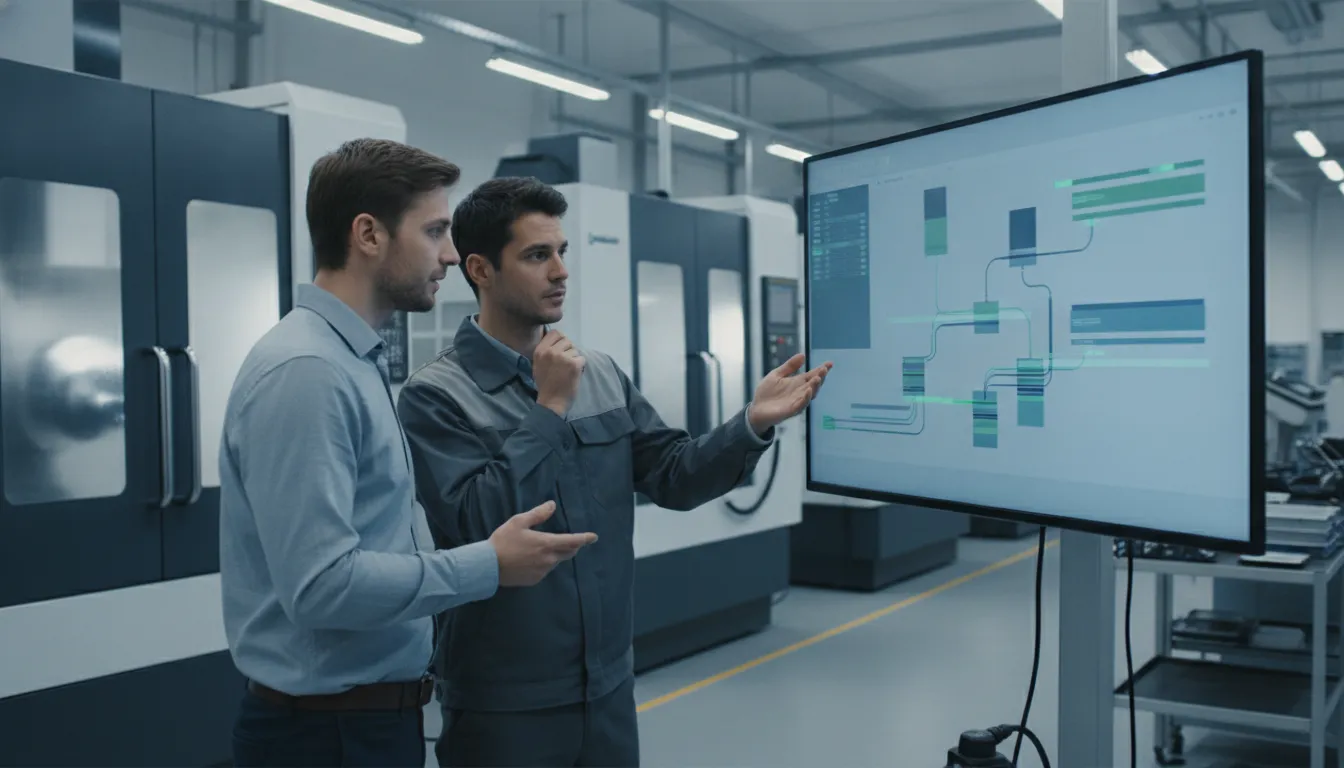

Think of your shop floor as an orchestra. Each machine, operator, and material is an instrument. Without a conductor and a musical score, you just get noise. With them, you get a symphony. Production planning and scheduling are your conductor and score, turning potential chaos into a coordinated, efficient, and profitable operation. This guide is about giving you the conductor’s baton. We’ll cover everything from foundational management methods to the powerful software that provides real-time visibility. By the end, you’ll have a clear understanding of how to orchestrate every element of your shopfloor to ensure you deliver on time and within budget.
Key Takeaways
- Replace Guesswork with Data: An efficient shop floor runs on facts, not assumptions. Implementing real-time machine monitoring and digital data collection gives you an accurate, live picture of your operations, helping you identify the root cause of delays and make smarter decisions on the fly.
- Build a Strong Scheduling Foundation: A dynamic production schedule is the backbone of an organized shop. It provides a clear roadmap for your team, helps prevent bottlenecks before they start, and creates the structure needed to manage resources effectively and deliver work on time.
- Connect Your Shop Floor to Your Business: Your shop floor does not operate in a vacuum. Integrating your production management software with your ERP system creates a single source of truth, ensuring everyone from sales to shipping is working with the same up-to-date information for a more cohesive and profitable company.
What Is a Shop Floor?
Let’s start with the core definition. The shop floor is where the magic happens in manufacturing. It’s the main area in your factory where raw materials are transformed into the products you sell. Think of it as the heart of your operation; it’s where your team performs the hands-on work of creating, assembling, and finishing goods. This space is buzzing with activity, from machine operators and technicians to quality inspectors and supervisors, all working together to bring your products to life.
While it might seem like just a physical space, the shop floor is a complex ecosystem. Everything that happens here directly impacts your company’s bottom line, from production speed and product quality to employee safety and morale. It’s the source of truth for your entire operation. Are you on schedule? Is a machine about to go down? Are you producing more scrap than usual? The answers are all found on the shop floor. Understanding how to manage this environment effectively is the first step toward running a more efficient, predictable, and profitable business. When your shop floor runs smoothly, the entire organization benefits. That’s why getting a clear picture of its activities through real-time machine monitoring is so critical for making smart decisions that drive growth and reduce waste.
Shop Floor vs. Top Floor
It’s helpful to draw a line between the shop floor and the “top floor.” The shop floor is dedicated to production, the hands-on work of making things. This area does not include offices or places where administrative tasks like paperwork or planning happen. That’s the domain of the top floor, where management, finance, and strategic planning take place.
Think of it this way: the top floor sets the goals (what to make and when), and the shop floor executes the plan. While they have different functions, they are completely codependent. A disconnect between them can lead to serious issues, like production schedules that don’t account for machine capacity or inventory reports that don’t reflect reality. Effective shop floor data collection bridges this gap, ensuring everyone is working from the same accurate, up-to-the-minute information.
The Main Job of the Shop Floor
The main job of the shop floor is summed up by a concept called shop floor control (SFC). This refers to the systems and methods you use to manage every part of the manufacturing process as it happens. SFC is all about monitoring your production activities in real time, from the moment a job starts to its final quality check. It’s how you keep track of the creation, assembly, and inspection of every product.
Beyond just tracking jobs, a huge part of shop floor control is managing your inventory of materials and work-in-progress. The goal is to find that sweet spot where you have exactly what you need, without tying up cash in excess stock or halting production due to a shortage. A strong production scheduling system is the backbone of good SFC, helping you organize workflows, prevent bottlenecks, and ensure every order is completed on time and within budget.
A Day in the Life of the Shop Floor
The shop floor is the heart of any manufacturing operation, a place of constant motion and transformation. From the moment the first shift clocks in, it’s a carefully orchestrated dance of people, machines, and materials. You can feel the energy as raw components arrive, operators get to work at their stations, and forklifts move finished parts to the next stage. This is where your company’s products physically take shape, and where your team’s skill and dedication turn abstract plans into tangible reality. The sounds of machinery, the focus of your team, and the steady output of goods are all signs of a healthy, productive environment.
But a typical day is more than just making things; it’s a continuous cycle of problem-solving and coordination. A machine might go down unexpectedly, a critical part might be running low, or a rush order could require a complete reshuffle of priorities. Every day brings a unique set of challenges and opportunities that test your team’s agility. Managing this dynamic environment effectively is what separates a good manufacturing business from a great one. It requires visibility into every corner of the operation and the ability to make smart decisions quickly. Let’s walk through the core activities that define a day on the shop floor and see how they all fit together.
Assembly, Machining, and Fabrication
This is the core of the action. The shop floor is where your products are actually made, whether that involves intricate assembly, precise machining, or heavy fabrication. Workers operate machinery, weld components, and piece together parts to create the final product. This is the value-add stage where raw materials are transformed into something your customers need. The efficiency and quality of these hands-on processes directly impact your output, costs, and reputation. A well-organized floor ensures that every task, from the simplest to the most complex, is completed safely and correctly.
Quality Control Checks
Quality isn’t just an afterthought; it’s woven into the fabric of daily shop floor activities. Throughout the day, operators and quality inspectors perform checks to ensure every part meets specifications. This involves everything from visual inspections to using precise measuring tools. Catching a defect early saves significant time and money compared to finding it in a finished product. Modern shops use real-time data analytics to monitor quality trends as they happen, allowing teams to address root causes immediately instead of just reacting to problems after the fact.
Managing Inventory and Materials
Nothing stops production faster than running out of a critical component. A huge part of the day involves managing the flow of materials. This means ensuring raw materials are available for upcoming jobs, tracking work-in-progress (WIP) as it moves between stations, and storing finished goods. The goal is to have just enough inventory to keep things running smoothly without tying up cash in excess stock. Accurate shop floor data collection is essential here, giving you a clear view of what you have and where it is at all times.
Coordinating and Scheduling Your Team
Behind every successful production run is a well-coordinated team. A manager’s day is filled with assigning tasks, communicating priorities, and making sure every operator has what they need to do their job. When unexpected issues arise, it’s up to the floor leadership to adjust the plan on the fly. Effective production scheduling provides the roadmap for the day, but it’s the clear communication and quick thinking of your team that keeps everything moving in the right direction, ensuring that customer deadlines are met without sacrificing quality or efficiency.
What Is Shop Floor Control (SFC)?
If the shop floor is the heart of your manufacturing operation, then Shop Floor Control (SFC) is the brain. Think of it as the system that directs and monitors everything happening in production, from the moment an order is released until the final product is shipped. It’s about moving beyond clipboards and spreadsheets to gain a live, accurate view of your entire process. SFC involves tracking production activities as they happen, so you always know the status of jobs, the location of materials, and the performance of your machines and team.
The main goal of an SFC system is to make sure the right work is being done at the right time, using the right resources. It helps you answer critical questions instantly: Is this job on schedule? Do we have the materials we need for the next shift? Which machine is available? By providing real-time information, SFC allows you to manage your operations proactively instead of just reacting to problems. This level of oversight is what helps you deliver work on time, stick to your budget, and reduce the waste that eats into your profits.
The Key Parts of Shop Floor Control
A good Shop Floor Control system isn’t just one thing; it’s a combination of several key functions working together. First is production scheduling, which creates the master plan for what needs to be produced and when. Next is execution and dispatching, which involves releasing work orders to the floor and making sure your team knows what to work on next.
Another critical part is real-time shop floor data collection. This is how the system stays updated, by capturing information directly from machines and operators. Finally, there’s performance analysis, where all that collected data is turned into easy-to-understand reports. This helps you track key metrics, identify bottlenecks, and find opportunities for improvement across your entire operation.
Managing Materials and Work-in-Progress (WIP)
One of the biggest challenges on any shop floor is managing inventory, especially work-in-progress (WIP). WIP refers to all the partially finished goods moving between workstations. Too much WIP ties up cash and clutters the floor, while too little can bring production to a halt. An SFC system gives you clear visibility into your materials and WIP by tracking them in real time. You can see exactly where parts are, how long they’ve been there, and where they need to go next.
This visibility is a game-changer for efficiency. It helps you minimize bottlenecks because you can spot them before they cause major delays. It also ensures operators have the materials they need right when they need them, preventing downtime spent searching for parts. By using data analytics to monitor your inventory flow, you can reduce waste, improve throughput, and make your entire production process much smoother and more predictable.
Why SFC Is Your Key to Efficiency
Ultimately, Shop Floor Control is your key to running a more efficient, predictable, and profitable manufacturing business. It replaces guesswork and outdated information with hard facts. Instead of relying on manual updates that are often late or inaccurate, you get a live picture of your operations. This empowers your team to make smarter, faster decisions. You can adjust schedules on the fly to handle unexpected machine downtime or rush orders without throwing the whole week into chaos.
Modern SFC systems are a core part of Industry 4.0, connecting your machines, people, and software into one intelligent network. This integration gives you the control needed to improve on-time delivery rates, provide customers with accurate lead times, and find hidden capacity you didn’t know you had. It’s about creating a more resilient and competitive operation that is ready for whatever comes next.
Proven Shop Floor Management Methods
If you’re looking to bring more structure and efficiency to your operations, you don’t have to reinvent the wheel. Decades of manufacturing have produced several powerful management methods that are tested and proven to work. Think of these as frameworks you can adapt to fit your specific needs. You can implement one or combine elements from several to solve your biggest challenges, whether that’s reducing waste, improving quality, or creating a more organized workspace. The key is to find the approach that helps your team work smarter, not just harder. These methods provide a clear path to continuous improvement and operational excellence.
Lean Manufacturing
At its heart, lean manufacturing is a philosophy focused on one simple goal: maximizing customer value by eliminating waste. In this context, “waste” is anything that consumes resources without adding value to the final product. This includes things like overproduction, unnecessary inventory, waiting time between steps, and defects that require rework. By systematically identifying and removing these wasteful activities, you can streamline your entire production process. This leads to lower costs, faster delivery times, and higher quality products. Adopting a lean mindset encourages a culture where every team member is actively looking for ways to make the process better.
The 5S Methodology
The 5S methodology is a straightforward, hands-on system for creating a clean, organized, and efficient workplace. It’s based on five Japanese principles: Seiri (Sort), Seiton (Set in Order), Seiso (Shine), Seiketsu (Standardize), and Shitsuke (Sustain). You start by sorting through everything in a work area, removing unnecessary items. Then, you set everything in a logical, designated place. Next comes shining, which is about cleaning the workspace regularly. The final two steps, standardizing and sustaining, are about creating rules to maintain this order and turning it into a long-term habit. A 5S system reduces wasted time searching for tools and improves safety, making it a foundational practice for any efficient shop floor.
Kanban
Kanban is a visual scheduling system designed to manage workflow and prevent bottlenecks. Originally developed for just-in-time (JIT) manufacturing, it uses visual cues, like cards or digital boards, to signal when work can move to the next stage. This approach helps balance your production capacity with incoming demands, ensuring you only produce what is needed, when it is needed. A Kanban system makes your entire workflow transparent, so everyone can see the status of tasks at a glance. This visibility is crucial for improving flow and making your production scheduling more responsive to real-time changes and customer orders.
Total Productive Maintenance (TPM)
Total Productive Maintenance (TPM) shifts the responsibility for routine maintenance from a dedicated team to the machine operators themselves. The goal is to increase productivity by dramatically reducing downtime and improving equipment effectiveness. Instead of just reacting to breakdowns, TPM focuses on proactive and preventative care. Operators are trained to clean, inspect, and perform minor maintenance on their own equipment, fostering a sense of ownership. This approach helps catch small problems before they become major failures, leading to more reliable machinery and smoother operations. Real-time machine monitoring provides the data needed to make a TPM strategy successful.
Six Sigma
Six Sigma is a highly disciplined, data-driven approach aimed at achieving near-perfect quality. Its core principle is to improve processes by identifying and eliminating the root causes of defects and minimizing variability. Using a set of statistical tools and techniques, teams work to make processes more consistent and predictable. The ultimate goal is to reduce defects to fewer than 3.4 per million opportunities. While it requires a significant commitment to training and data analysis, implementing Six Sigma can lead to dramatic improvements in product quality, customer satisfaction, and profitability. It transforms your operation by making decisions based on hard data analytics rather than guesswork.
The Power of Production Planning and Scheduling
Think of your shop floor as an orchestra. Each machine, operator, and material is an instrument. Without a conductor and a musical score, you just get noise. With them, you get a symphony. Production planning and scheduling are your conductor and score, turning potential chaos into a coordinated, efficient, and profitable operation. Planning sets the long-term strategy, determining what needs to be produced and by when. Scheduling gets into the nitty-gritty, assigning specific jobs to specific machines and operators in a precise sequence.
Effective scheduling is more than just a calendar of tasks; it’s a dynamic roadmap that guides your entire production process. It ensures that you have the right materials, people, and equipment ready to go, minimizing downtime and maximizing output. When your schedule is optimized, you can see potential bottlenecks before they happen, make smarter decisions about resource allocation, and ultimately deliver jobs on time and within budget. This level of control is what separates a reactive shop floor from a proactive, high-performing one. It’s the foundation for meeting customer expectations and growing your business.
Why Scheduling Is the Backbone of Your Operation
A well-crafted schedule is the central nervous system of your shop floor. It’s the system that manages and coordinates all the moving parts of the manufacturing process, from the moment raw materials arrive to when a finished product ships out the door. This involves watching production activities as they happen, ensuring that products are being made, assembled, and checked for quality according to the plan. Without a clear schedule, teams operate in silos, machines sit idle, and deadlines are missed, leading to frustrated customers and lost revenue.
Effective production scheduling brings order and predictability to your operations. It helps you allocate resources efficiently, preventing situations where one work center is overloaded while another is waiting for work. By creating a clear and visible plan, you empower your team to understand priorities, anticipate next steps, and work together seamlessly. This structure is not about being rigid; it’s about creating a reliable framework that supports consistent performance.
Adjusting Schedules in Real Time
Even the most perfect plan will meet reality on the shop floor. A critical machine might go down, a high-priority order might come in, or a material shipment could be delayed. In a traditional setup, these disruptions can throw the entire week’s schedule into disarray. Modern shop floor management, however, uses technology to adapt on the fly. With access to live information, you can manage production far more effectively, especially as customer needs and factory conditions change.
This is where real-time machine monitoring becomes a game-changer. Instead of finding out about a problem hours later, you can see performance dips or machine stoppages the moment they occur. This allows you to immediately adjust the schedule, reroute jobs to available machines, and update timelines with minimal disruption. The ability to make quick, informed decisions keeps production moving forward, turning potential disasters into manageable adjustments.
Aligning Production with Customer Demand
Ultimately, your shop floor exists to meet customer demand. A powerful schedule does more than just organize tasks; it directly connects your production capacity to your customers’ needs. By using data-driven insights, you can prioritize jobs based on deadlines, profitability, and customer importance, ensuring you’re always working on what matters most. This strategic approach helps you build a reputation for reliability and on-time delivery, which is a major competitive advantage.
Proper scheduling also helps you manage inventory levels, from raw materials to work-in-progress. It prevents you from having too much capital tied up in materials you don’t need yet or, conversely, running out of a critical component mid-production. By using data analytics to understand production trends and forecast demand, you can optimize your schedule to reduce waste, improve cash flow, and ensure you consistently deliver what your customers want, when they want it.
How Technology Is Transforming the Shop Floor
The days of running a shop floor with clipboards and spreadsheets are quickly fading. Technology is no longer just a tool for the front office; it’s the new engine of the factory itself. By connecting machines, automating processes, and capturing data in real time, manufacturers are creating “smart factories” that are more efficient, flexible, and profitable. This shift isn’t about replacing people with robots. It’s about empowering your team with the information they need to make better decisions, solve problems faster, and keep production running smoothly. Let’s look at the key technologies making this happen.
IoT and Real-Time Machine Monitoring
If you’ve heard the term Internet of Things (IoT) and wondered what it means for your shop, here’s the simple version: it’s about connecting your machines to a network. By placing sensors on your equipment, you can stream data directly from the source. This allows for powerful real-time machine monitoring that gives you a live view of your entire operation from a single screen. You can instantly see which machines are running, which are idle, and which are down for maintenance. This visibility helps you spot bottlenecks as they happen, not hours later. Instead of guessing why a job is behind schedule, you can look at the data and see that a specific machine was idle for 45 minutes. This information is crucial for improving efficiency and making accurate production plans.
Automation and Predictive Maintenance
When we talk about automation on the shop floor, it’s not just about physical robots. It’s also about automating data collection and analysis to predict the future. This is where predictive maintenance comes in. Instead of waiting for a machine to break down, you can use data trends like temperature, vibration, and output to anticipate when it will need service. This proactive approach helps you schedule maintenance during planned downtime, avoiding costly emergency repairs and production halts. Think of it as your equipment telling you it needs a check-up before it gets sick. By connecting even older legacy machines with modern automation hardware, you can extend their life and get the data you need to keep them running reliably.
Digital Shop Floor Data Collection
Accurate data is the foundation of an efficient shop floor, but manual data entry is slow and prone to errors. Digital shop floor data collection replaces paper forms and spreadsheets with easy-to-use terminals, tablets, or even automated sensors. Operators can quickly log job progress, material usage, and quality checks with a few taps, or the system can capture it directly from the machine. This ensures the information you’re collecting is timely and correct, creating a reliable dataset for your entire operation. With clean data, you can trust your analytics, make more accurate job costing calculations, and get a true picture of your shop’s performance. It closes the gap between what’s happening on the floor and what the data says is happening.
Integrating with ERP and MES
Your shop floor doesn’t operate in a vacuum. It’s connected to every other part of your business, from purchasing to finance. Integrating your shop floor systems (like a Manufacturing Execution System, or MES) with your Enterprise Resource Planning (ERP) system creates a seamless flow of information across the company. This gives everyone, from the CEO to the machine operator, a single source of truth. When a job is marked complete on the shop floor, the ERP can automatically update inventory levels, trigger an invoice, and adjust financial reports. This eliminates redundant data entry and ensures that business-level decisions are based on the most current production realities. A fully integrated system connects the top floor to the shop floor, aligning your entire organization around common goals.
The Rise of Industry 4.0 and Smart Manufacturing
All these technologies, from IoT sensors to integrated software, come together under the concept of Industry 4.0, or the “smart factory.” This is the next phase of manufacturing, where physical production and digital technology merge. In a smart factory, machines and systems communicate with each other to optimize processes, predict issues, and adapt to changes in demand without constant human intervention. This isn’t a futuristic dream; it’s a practical strategy for staying competitive. By embracing these tools, you can create a more agile and resilient operation that uses data to drive continuous improvement. The goal is to make your factory more productive and profitable by empowering your team with the insights they need to work smarter, not just harder.
Key Metrics to Track on Your Shop Floor
You can’t improve what you don’t measure. It’s a classic saying because it’s true, especially on the shop floor. To get a handle on your operations and drive meaningful improvements, you need to track the right key performance indicators (KPIs). These metrics aren’t just numbers on a dashboard; they are the vital signs of your production process. They tell you what’s working, what’s not, and where you can make changes to improve efficiency and profitability. Let’s look at three of the most important metrics every shop floor should be tracking.
Overall Equipment Effectiveness (OEE)
Overall Equipment Effectiveness (OEE) is a powerhouse metric. It gives you a complete picture of your manufacturing efficiency by rolling three key factors into one score. First is Availability, which tracks any downtime that stops production. Second is Performance, measuring how fast your machines are running compared to their potential speed. And third is Quality, which accounts for any defective parts that don’t meet standards. By tracking OEE, you can pinpoint exactly where you’re losing productivity. It helps you move from guessing to knowing, allowing you to make targeted improvements and get the most out of your equipment. The insights you gain from strong data analytics are the foundation for improving this crucial metric.
Cycle Time and Throughput
How long does it take to make one part, and how many parts can you make in a day? That’s what cycle time and throughput are all about. Cycle time is the total time from the start of a process until it’s finished. Throughput is the rate of production, or how many units you produce over a specific period. Monitoring these two metrics together helps you understand your shop’s capacity and efficiency. If your cycle time is long or your throughput is low, it’s often a sign of a bottleneck somewhere in your process. Improving your production scheduling is one of the most direct ways to shorten cycle times and increase throughput, ensuring a smoother flow of work.
Scrap and Rework Rates
Nobody likes waste. Scrap and rework rates are the metrics that tell you exactly how much waste you’re creating. Scrap refers to defective parts that have to be thrown away, while rework is the extra time and resources spent fixing a part that wasn’t made correctly the first time. High rates in either of these areas can eat into your profits and signal deeper problems in your production process. Tracking these numbers is the first step to reducing them. With real-time machine monitoring, you can often catch the issues that cause defects before they lead to a pile of scrap, saving you time, materials, and money.
Common Shop Floor Challenges (and How to Solve Them)
Even the most organized shop floor runs into trouble. From surprise equipment failures to supply chain hiccups, these challenges are a normal part of manufacturing life. The key isn’t to avoid problems entirely (which is impossible) but to build resilient processes that help you handle them effectively. Think of these hurdles as opportunities to refine your operations. By tackling them with the right strategies and tools, you can turn potential setbacks into significant improvements in efficiency and output. Let’s walk through some of the most common issues managers face and discuss practical ways to solve them.
Integrating Legacy Systems
It’s rare to find a shop floor where every single machine is brand new. Most facilities operate with a mix of modern equipment and trusted legacy machines that have been running for years. The challenge is that these older systems often don’t communicate with newer technology, creating isolated pockets of information. Instead of a costly overhaul, the solution is to find a way to bridge this technology gap. Modern shop floor data collection systems can connect to a wide range of equipment, regardless of age or brand. This allows you to pull data from all your assets into one unified platform, giving you a complete picture of your operations without replacing machinery that still works perfectly.
Closing Data and Visibility Gaps
Are you making decisions based on last week’s reports or a gut feeling? If you can’t see what’s happening on your shop floor right now, you’re flying blind. This lack of real-time visibility leads to slow response times, inaccurate inventory counts, and schedules that quickly become irrelevant. The answer is to implement a system that gives you a live view of your entire production process. With real-time data analytics, you can track job progress, monitor machine status, and see work-in-progress (WIP) levels at a glance. This immediate insight empowers you and your team to make quick, data-driven decisions that keep production moving smoothly and efficiently.
Minimizing Equipment Downtime
Nothing brings an operation to a halt faster than unexpected machine downtime. It throws schedules into chaos, creates bottlenecks, and costs you money every minute a machine isn’t running. While some downtime is unavoidable, you can drastically reduce unplanned stops by moving from a reactive to a proactive maintenance strategy. Real-time machine monitoring is your best tool for this. By tracking metrics like Overall Equipment Effectiveness (OEE), you can identify performance trends and get alerts about potential issues before they lead to a full-blown failure. This allows you to schedule maintenance on your own terms, keeping your equipment in top shape and your production lines running.
Handling Supply Chain Disruptions
You can have the most perfect schedule in the world, but a single late material shipment can throw the entire plan off course. Supply chain volatility is a major headache for manufacturers, causing delays and frustrating customers. While you can’t control your suppliers, you can improve how you react to disruptions. An agile production scheduling system is essential. When a delay occurs, you need the ability to see the impact instantly and easily adjust your schedule. This might mean reprioritizing jobs, reallocating resources, or communicating new timelines to customers. A flexible system turns a potential crisis into a manageable adjustment.
Improving Communication Between Teams
When your planners, floor supervisors, and operators aren’t on the same page, mistakes happen. Information passed through word-of-mouth or stacks of paper can get lost or misinterpreted, leading to incorrect setups, quality issues, and delays. The most effective way to fix this is to create a single source of truth for everyone. A centralized digital platform ensures that the schedule a planner creates is the same one the operator sees on a screen at their workstation. As seen in many successful implementations, this direct line of sight into job priorities and production data eliminates confusion and fosters better collaboration across all departments. You can see how other shops have achieved this in our case studies.
Addressing Workforce Skill Gaps
Finding and retaining employees with the right technical skills is a persistent challenge in manufacturing. When you do bring on new team members, getting them up to speed quickly is critical for maintaining productivity. Technology can be a powerful ally here. Intuitive, user-friendly software with a visual interface can significantly shorten the learning curve for new operators. Instead of relying on one person’s tribal knowledge, you can use digital work instructions and real-time feedback to guide employees through tasks. This not only helps with training but also standardizes your processes, ensuring work is done correctly every time, no matter who is at the machine. That’s a core reason why JobPack was designed to be so visually intuitive.
Protecting Against Cybersecurity Risks
As you connect more of your shop floor equipment to your network, you create more entry points for potential cyber threats. A security breach could do more than just compromise data; it could shut down your entire operation. Protecting your shop floor is no longer just an IT issue; it’s a critical component of operational stability. The first step is to ensure your network is secure, especially if you need to comply with standards like CMMC. Partnering with a technology provider that prioritizes security is also crucial. As you move toward a smarter, more connected factory, make sure your Industry 4.0 strategy includes a robust plan for cybersecurity to protect your assets and your business.
Strategies to Overcome Shop Floor Hurdles
Facing challenges on the shop floor is part of the job, but they don’t have to be permanent roadblocks. With a thoughtful approach, you can turn these hurdles into opportunities for growth and refinement. It’s about being strategic, investing in your people, and choosing the right partners to help you build a more resilient and efficient operation. The key is to move forward with intention, one step at a time.
Start with a Pilot Project
Jumping into a full-scale technology overhaul can feel overwhelming and risky. A much more manageable approach is to start with a pilot project. Think of it as a test run. You can introduce new software or machinery to a single production line or even just one machine. This controlled environment allows you to see the real-world impact on a smaller scale. You can gather data, get direct feedback from the operators using the new tools, and work out any issues before a company-wide rollout. This method helps you build a strong business case for further investment and gets your team comfortable with change.
Invest in Your Team’s Training
Your team is your greatest asset, and new technology is only effective if they know how to use it well. Investing in comprehensive training is non-negotiable. Go beyond a simple one-day session. Create internal experts or champions who can support their colleagues long after the initial training is over. When your team feels confident with new systems, they are more likely to use them correctly and find new ways to improve processes. This investment shows your team you value their role and are committed to their success, which fosters a more engaged and capable workforce. Proper training ensures you get the full value from your shop floor data collection tools.
Build a Culture of Continuous Improvement
Solving shop floor challenges isn’t a one-and-done task; it’s an ongoing commitment. Building a culture of continuous improvement means empowering every person on your team to identify and solve problems. Methodologies like 5S, Kanban, and Total Productive Maintenance (TPM) provide excellent frameworks for creating a clean, efficient, and proactive environment. When your team is encouraged to look for small, daily improvements, those incremental changes add up to significant gains in quality and productivity. This culture is fueled by accurate information, which is why powerful data analytics are so crucial for modern manufacturing.
Partner with the Right Technology Provider
You don’t have to solve every problem on your own. The right technology provider acts as a partner, not just a vendor. They should take the time to understand your specific challenges and offer solutions that fit your unique operation. Look for a provider that offers robust support, seamless integration with your existing systems, and a clear path for growth. A true partner is invested in your success and provides the tools and expertise you need to connect your machines and streamline your workflow. Reading through case studies can give you a great sense of how a provider works with companies like yours to achieve real results.
What to Look For in Shop Floor Management Software
Choosing the right shop floor management software can feel like a huge task, but it boils down to finding a system that gives you clarity and control. Think of it as the central nervous system for your entire operation. It connects your people, machines, and processes, turning a sea of complex data into a clear, actionable picture. The goal isn’t just to collect information; it’s to find a tool that helps you make smarter, faster decisions that directly impact your bottom line.
When you’re evaluating your options, don’t get bogged down by flashy features you’ll never use. Instead, focus on the core capabilities that solve your biggest challenges. You need a system that can create realistic schedules, show you what’s actually happening with your machines in real time, and collect accurate data without creating extra work for your team. It also needs to work seamlessly with the other systems you already rely on, like your ERP. The right software will feel less like another program to manage and more like a trusted partner in improving your shop’s performance.
Production Scheduling Tools
At the heart of any great shop floor software is a powerful production scheduling tool. This is what transforms your list of jobs into a dynamic, visual plan. Instead of relying on spreadsheets or whiteboards, you get a clear view of your entire workflow, from start to finish. This allows you to see potential bottlenecks before they happen, allocate resources effectively, and make sure every job is on the most efficient path. A solid scheduling tool gives you the foresight to manage capacity, sequence jobs logically, and confidently provide customers with delivery dates you can actually meet. It’s the foundation for running a predictable and profitable operation.
Machine Monitoring and Analytics
You can’t improve what you can’t measure. That’s where real-time machine monitoring comes in. This feature connects directly to your equipment, whether it’s CNC, fabrication, or even manual machines, to give you an honest, up-to-the-minute look at performance. It tracks key metrics like Overall Equipment Effectiveness (OEE), which tells you how well your machines are truly working. But collecting data is only half the battle. The software should also provide clear data analytics that turn those numbers into insights. This helps you spot trends, understand the root causes of downtime, and make data-driven decisions to keep your machines running at their peak potential.
Shop Floor Data Collection Capabilities
Accurate data is non-negotiable for effective management. Modern software replaces paper travelers and manual time tracking with streamlined shop floor data collection. This means your team can easily log job progress, labor hours, and material usage directly from terminals on the floor. The best systems make this process quick and intuitive, ensuring the information you receive is both timely and correct. By automating data entry, you not only reduce the risk of human error but also free up your skilled operators to focus on what they do best: making quality parts. This gives you a true, unbiased look at job costs and production status as it happens.
Seamless ERP Integration
Your shop floor software shouldn’t operate in a silo. To achieve true efficiency across your entire business, it must integrate seamlessly with your Enterprise Resource Planning (ERP) system. This connection creates a two-way street for information, ensuring that data from sales orders and inventory management flows directly into your production schedule. In return, real-time progress from the shop floor updates your ERP, giving everyone from sales to accounting a single source of truth. This level of connectivity eliminates redundant data entry, improves company-wide visibility, and is a critical step toward building a smarter, more connected factory in line with Industry 4.0 principles.
Putting It All Together with JobPack
Finding a single solution that excels in all these areas is key. JobPack is designed to be that comprehensive system, tying everything together with a visual and intuitive interface. We combine dynamic production scheduling with real-time machine monitoring and simple data collection to give you a complete, 360-degree view of your shop floor. Our software integrates smoothly with your existing ERP, ensuring data flows freely and everyone is working from the same playbook. The reason we built JobPack was to empower manufacturers to optimize daily operations, increase efficiency, and use data-driven insights to reduce waste. It’s all about giving you the tools you need to deliver on time and within budget, every time.
Related Articles
- Shop Floor Tracking Software: Boost Manufacturing Efficiency | JobPack
- Why Machine Monitoring Is the Missing Link in Your Production Scheduling – Shop Floor Management Software – JobPack
- How Machine Monitoring Aids Overall Equipment Effectiveness – Shop Floor Management Software – JobPack
- Machine Monitoring for Smarter Production Scheduling | JobPack
- Industrial Machine Monitoring System: A Guide
Frequently Asked Questions
My shop floor feels chaotic. What’s the most important first step to take? That’s a very common feeling, and the best place to start is by simply getting a clear picture of what’s happening right now. Before you can fix bottlenecks or reduce waste, you need to know where your problems truly are. This means moving away from guesswork and starting to collect accurate data on your production process. Establishing this baseline gives you the foundation to measure the impact of any changes you make, whether it’s reorganizing a work cell or implementing a new scheduling strategy.
Should I focus on implementing a management method like Lean or on adopting new technology first? It’s a great question, and the answer is that they work best together. Think of technology as the tool that makes management methods truly powerful. You can commit to a Lean philosophy, but without real-time data on machine performance, downtime, and quality, you’re just guessing where the “waste” is. Technology provides the hard facts, giving you the visibility to apply methods like Lean or Six Sigma effectively and see the results of your efforts instantly.
Our shop has a lot of older, legacy equipment. Can we still benefit from modern shop floor software? Absolutely. This is a situation most manufacturers are in, and modern shop floor systems are designed with this reality in mind. You don’t need a factory full of brand-new machines to get the benefits of real-time data. Many systems can connect to older equipment using external sensors or provide simple, user-friendly terminals where operators can log information. The goal is to capture essential data (like cycle times, uptime, and part counts) to bring all your assets into one unified view, regardless of their age.
We already have an ERP system. Why do we need separate shop floor management software? This is a key point. Your ERP is excellent for managing the overall business: things like accounting, sales orders, and high-level inventory. Think of it as defining what needs to be made. Shop floor software, or a Manufacturing Execution System (MES), focuses on the how. It manages the live, minute-by-minute execution on the factory floor. When you integrate the two, you create a perfect loop where the plan from the ERP is guided by the real-time realities of the shop floor, ensuring everyone is working with the most accurate information.
We’re a smaller manufacturing shop. Do all these concepts and technologies still apply to us? Yes, they are just as relevant, and sometimes even more critical. For a smaller shop, the financial impact of reducing scrap or improving on-time delivery can be huge. The key is that you don’t have to do everything at once. The principles of improving flow and tracking performance are universal. You can start small with a pilot project on a single machine or production line to prove the value. Modern software is often scalable, allowing you to adopt the tools that fit your needs now and expand as your business grows.